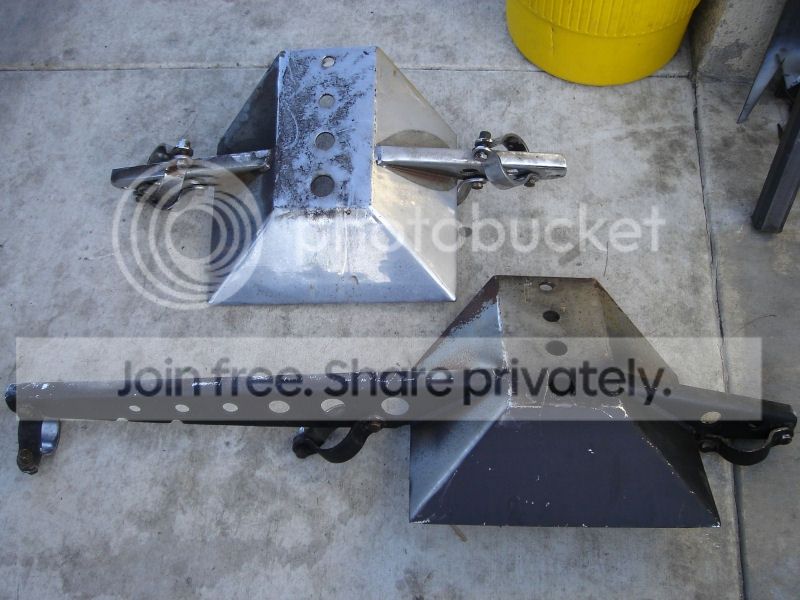
CK5
Register an account today to become a member! Once signed in, you'll be able to participate on this site by adding your own topics and posts, as well as connect with other members.
I may have to do all the mock-up work and then ship all the parts to a specialty shop for final welding and alignment.

Before I went that far I'd figure out how much "warp" is acceptable for things to still work ok. I find it difficult to believe that GM (or the Germans in the case of unimog) would build an axle incapable of tolerating some sagging/bending/warping/etc.

-Brian
 
Ideally you'd brace and fixture the hell out of it, weld it all, and send it out for stress relief (big oven, ~500F or more, slow cool) then remove all the bracing etc. That'll remove all the stresses from the welded assembly while it's being held artificially.

Do you have a sketch of how all the trussing is planned and where the welding will be? That'd give me a better idea of how it's going to pull and how best to brace it.

Rene
 
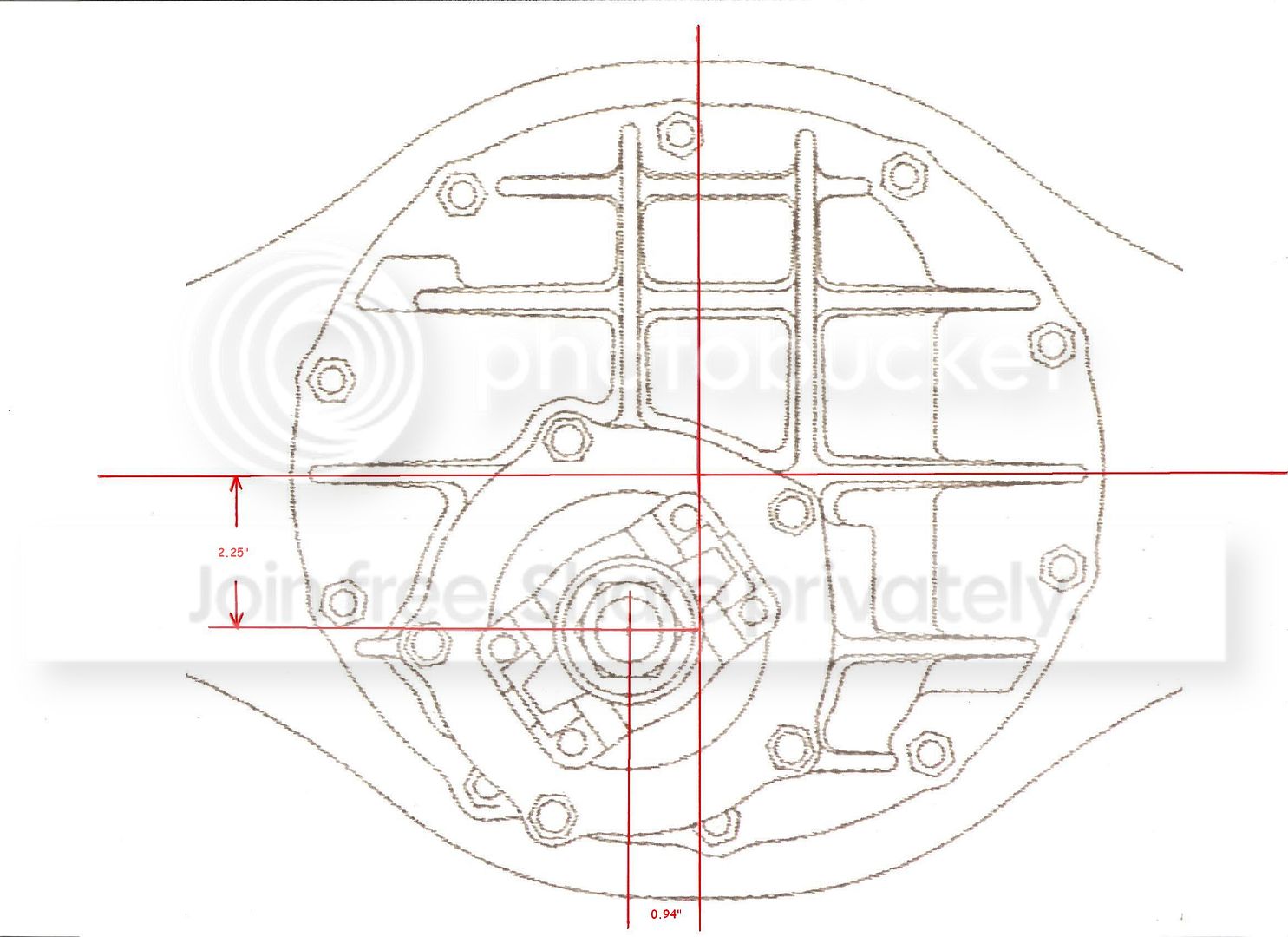
If anyone has accurate dimensions for these two pinion centerline (horizontal and vertical) for a Ford 9-inch, please post them up....

The vertical offset appears to be accurate, but the horizontal one is my best estimate based on this scale drawing and my best attempts to measure it accurately.

Ford9-inchPinionOffset-1.jpg


:usaflag:
 
Last edited:
a little bit of info:

http://www.pirate4x4.com/forum/showthread.php?t=343947

More:

"
I have the actual Ford Motor Company blue prints for the 9", with any and every dimension imaginable on them. From centerline of the Nodular case, to the centerline of the pinion is .970". Dont ask how I got these prints...
icon_smile.gif

__________________
Kyle Curley
Curley's Racecars & Components
(916)-397-3465
www.curleysracecars.com "


More chatter:

Here are the dimensions from a cad drawwing I picked up somewhere. Be sure to confirm before you order axles or anything from this.

Housing center is at zero point. All dimensions from front side, looking into housing.

Top stud: .25" left, 4.875" up
Bottom stud: .25" right, 5.0" down

Pinion centerline: .970" left, 2.25" down

Cut the slot for your tape at .970" left, zero down, to represent the point where the axles meet. You can see that the slot is to the left of both studs in the pic below.
Remember to cut the slot for your tape measure so that one edge is directly at the housing centerline. Pull the tape against it easuring one side, push againstit measuring the other.
 
Thanks Zim!

I'm starting to stress-out over the next step..... Axle trussing.

I know what I want to do, but everything I'm reading about welding on the axle tubes says that it's going to warp and move around a lot, even with heavy-duty fixturing and a chromoly alignment bar.

It's got me concerned, and I'm not sure how I'm going to resolve it. I may have to do all the mock-up work and then ship all the parts to a specialty shop for final welding and alignment. :thinking:


:usaflag:


Why not do a bolt on style truss?
 
Why not do a bolt on style truss?

Rob,

I'm trying to come up with some clever ideas that would add let me do a bolt on truss, but still be functional and strong.

For now I'm building truss mock-ups out of 1/4" foam core board...looking for some inspiration. Working in 3-D really helps me visualize my options and sometimes reveals unusual solutions that I don't see with simple graph paper and pencil.

Even with a weld-on truss, my current design has me welding at exact 180-degree opposite sides of the axle tube... So if I alternate my welds from side to side the heat /shrinking should be more uniform than if I just tried to burn the truss to the top edge only.


:usaflag:
 
2011.07.01 - UPDATE! - FOAM CORE & BLUE TAPE TRUSSES....

There is no way I'd have time to render all of my permutations in steel, and for that I'm actually glad.

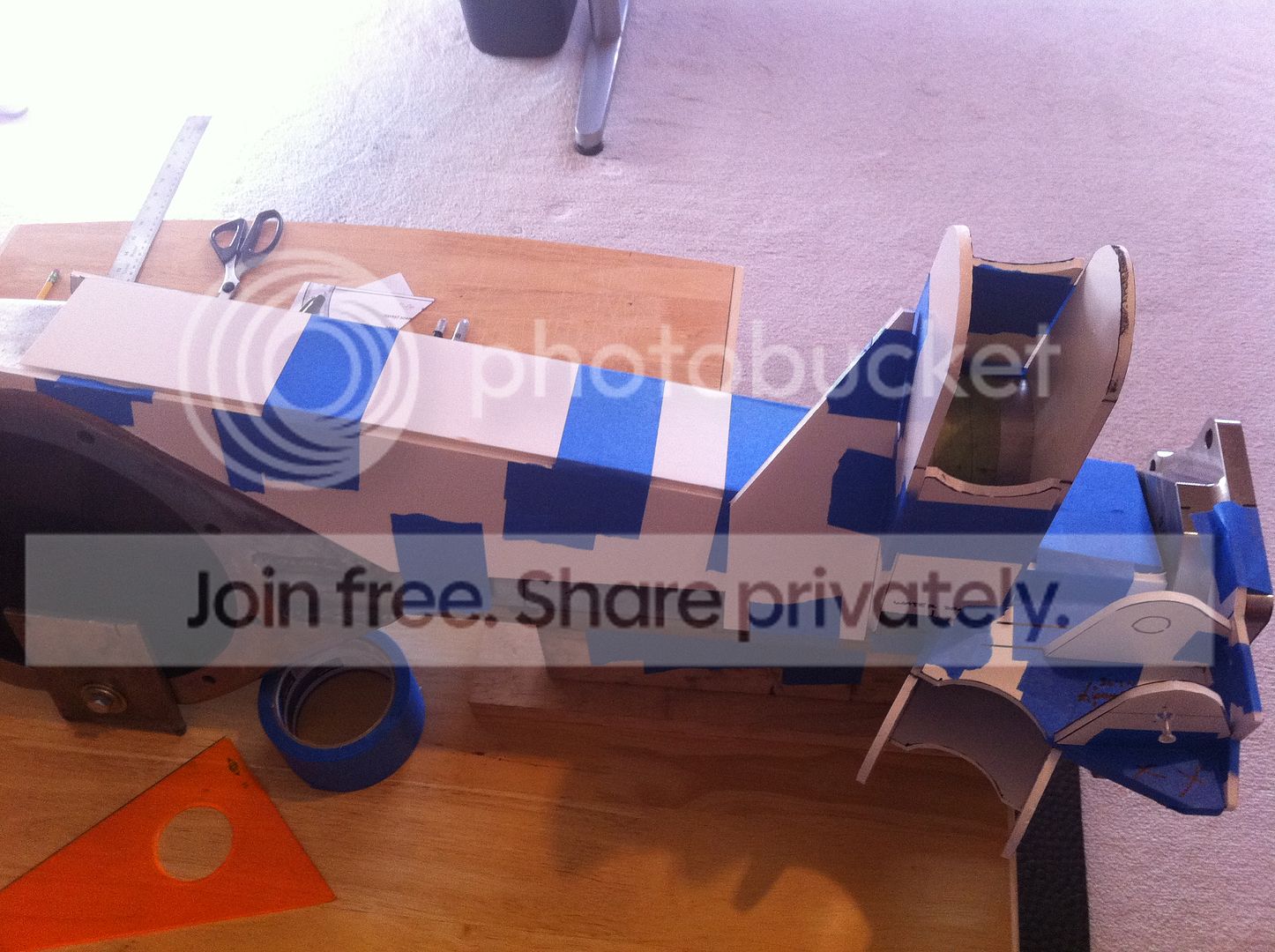
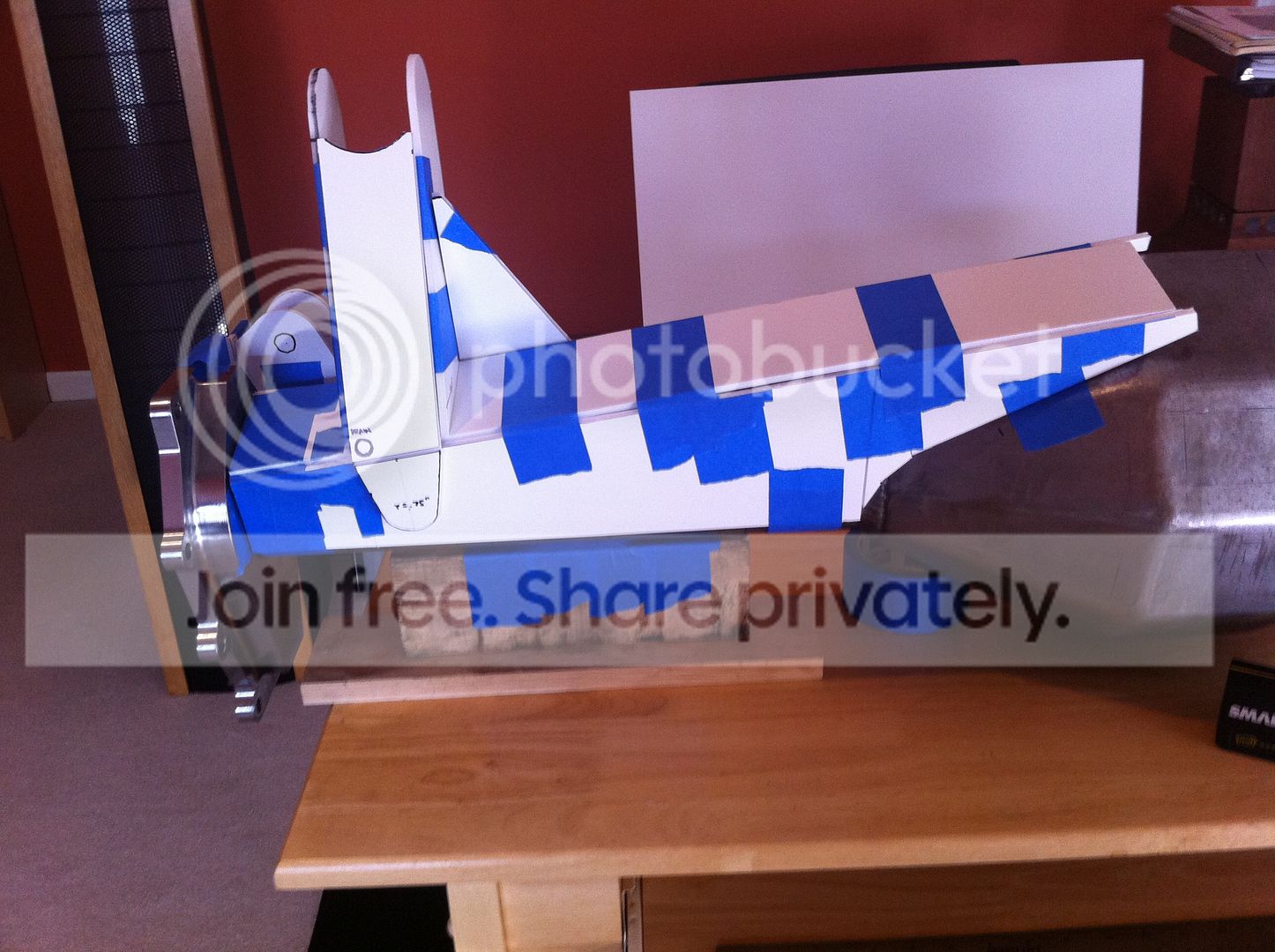
As I've found spare time here and there, I've been mocking up the truss design using 1/4" foam core board (to simulate 1/4" steel plate)....and lots of blue painters tape! :D Many of the ideas that I thought would work, simply don't translate to the actual part so it's nice to be able to quickly pull some tape and foamcore off and throw it into the trash to start over.

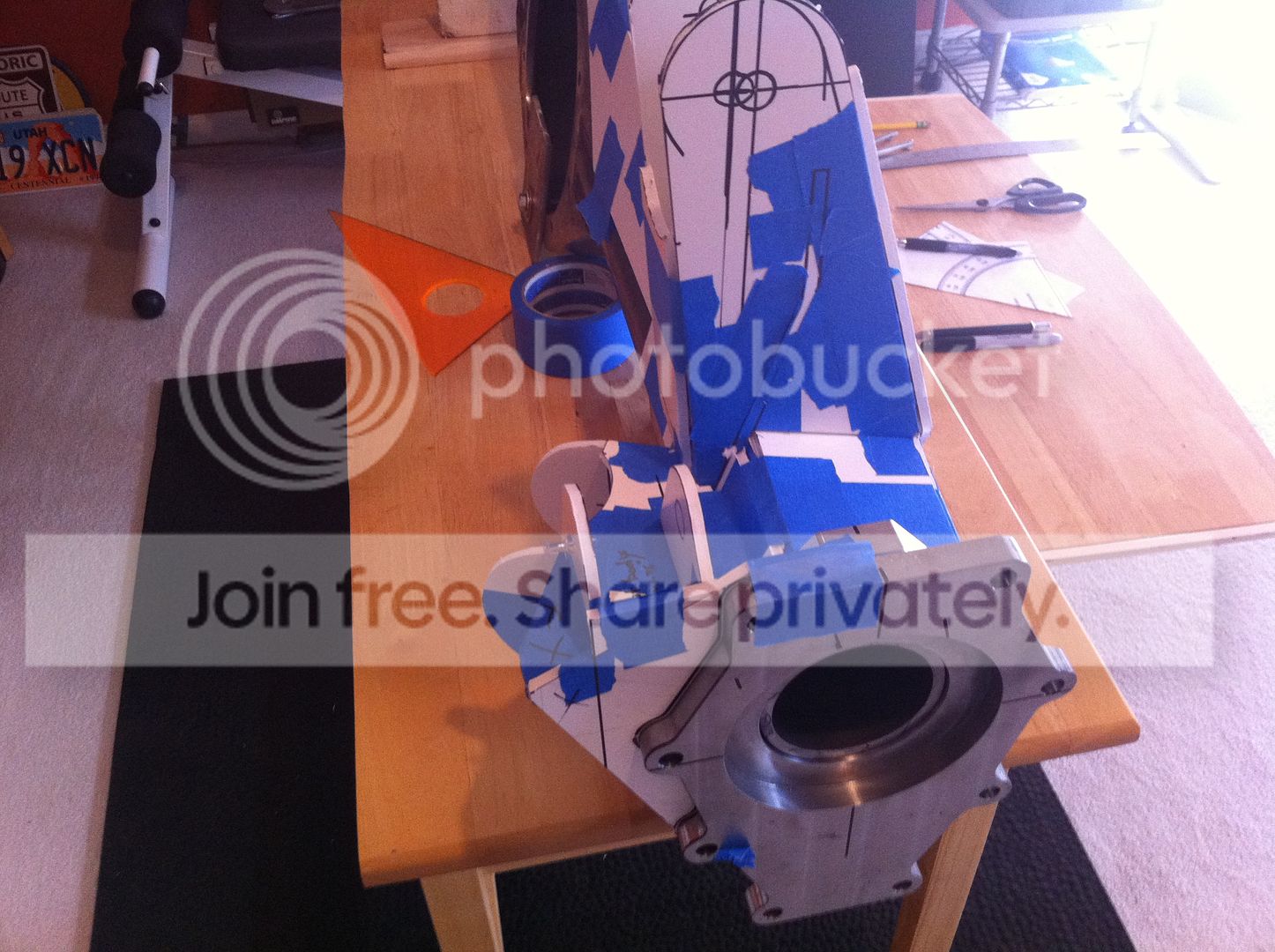
These photos represent what I'd guess is about the 5th iteration of the design. The first problem is that the pumpkin is rotated 10* to account for the rear pinion angle that I need, so the truss must also be built off that angle....putting it a little out-of-whack with the new Mog adapters.


This is an end-shot of what would be the driver's side rear wheel area...

IMG_1005.jpg


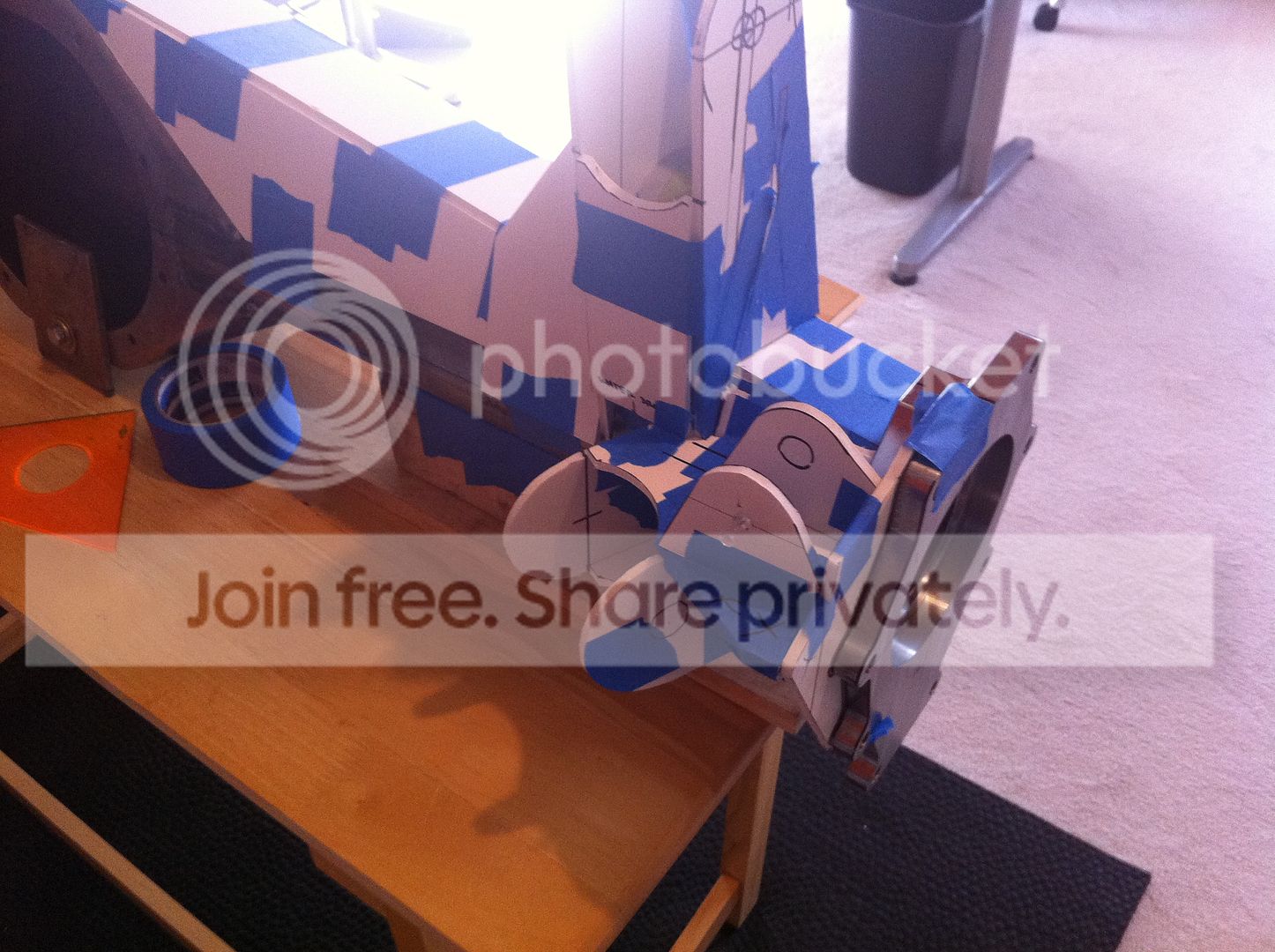
You can see here that the bottom edge of the truss actually sits about 1" higher than the axletube centerline to keep it flush with that large flat mating surface for the 3rd member.

IMG_1006.jpg


This is a better shot that shows the three main considerations that needed to fit in this small space.... the tall upper link mount, the lower link mount and the lower coilover (ORI Strut, actually) mount. Things get pretty tight in a hurry and I'm not 100% sure that everything will clear when the suspension is cycled, but this is the best of the designs I've tried so far....

IMG_1007.jpg


A slightly higher view of the same area....

IMG_1008.jpg


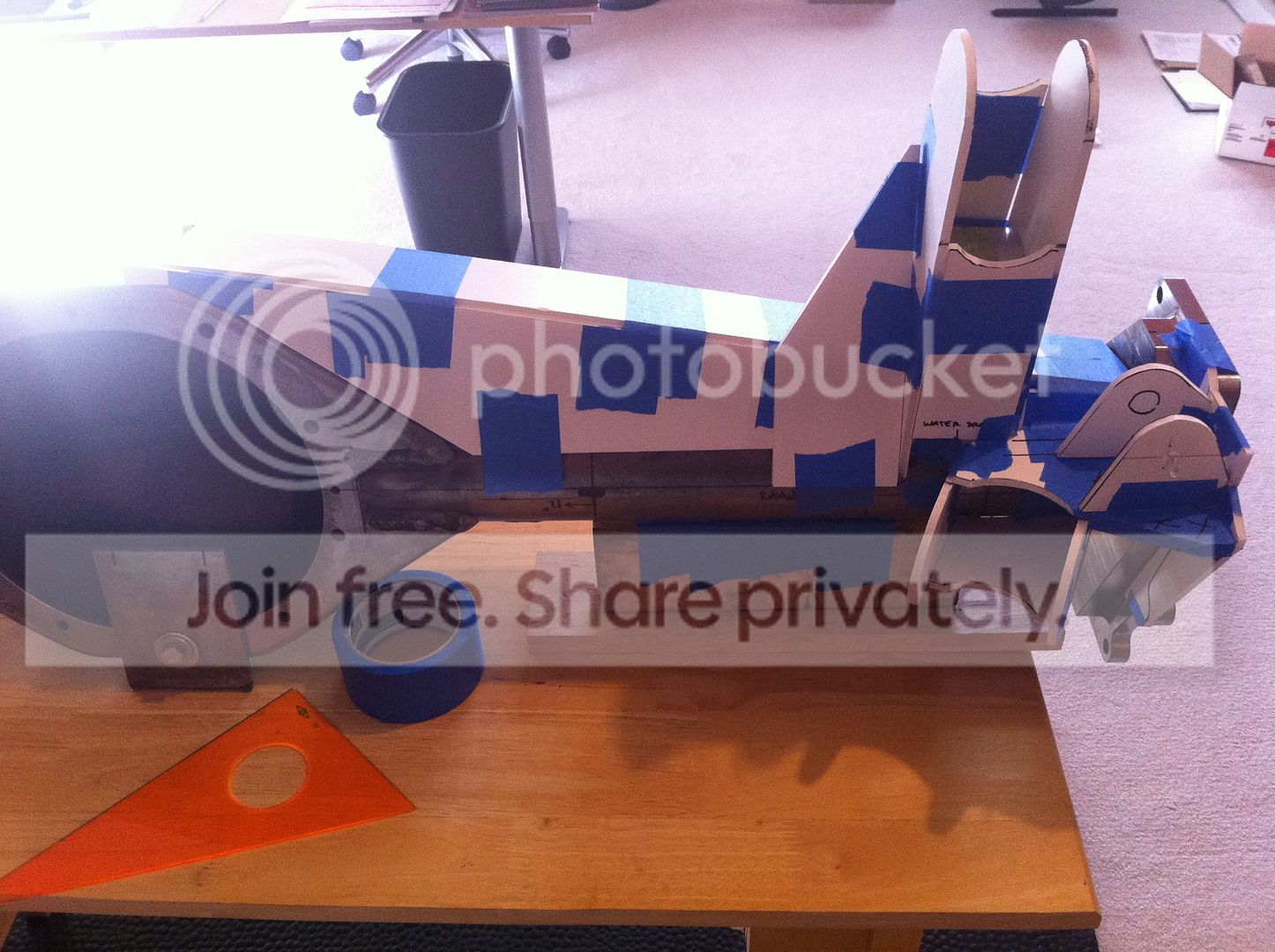
And a view from the the rear of the axle which shows the truss position on this side. It's substantially lower than the opposite side; not quite a true 180* opposite, but VERY close to that. I'm hoping that Rene and/or some of the other welding experts will tell me that this type of layout will make my life a lot easier when it comes time to burn this all in! :dunno:

IMG_1009.jpg


Odds are good I won't get any shop time over this holiday weekend, but at least I can be pondering over this mock-up design and refining it in my head. :thinking:

:usaflag:
 
My god man, even with foam core board you are ten times the fabricator I'll ever be! It's amazing the way you apply ideas into a realistic approach that most like me would never think of. looking good!!!
 
Based on what I see you'd have very little distortion if you do one simple thing with your design. Have the major part of your truss formed rather than making it out of three pieces and welding it. The the only long welding on the housing will be cancelling each other out and you should end up with a very straight final assembly.

An alternative would be to tack it up, add a couple of braces and pre-weld the big main piece...the final fit, tack and weld it to the housing. Another advantage is you could weld it inside and out, rather than just the outside.

Regardless I would still add a "back brace" for peace of mind. Think of a "Go Rhino!" truss from the 80's. Then remove that after everything has cooled.

Rene
 
This...?

634ce011.jpg


Presumably attached to the underside of the axle to help add some "pre-load" to the housing while the welding happens?

My plan was definitely to tack everything up, then remove the truss and fully weld it separately before doing the final welding to the actual axle housing. There is a chance that I could use a length of rectangular box tubing for the majority of this structure then simply add-in the bracketry to that.


:usaflag:
 
Yes on the brace pic, just to help hold the housing from curling.

Box tubing might work pretty good if you can find a size that will work for you.

Rene
 
Hey Greg, for future reference the foam core board is pretty easy to fold with a couple of cheap tools. Just use an x-acto knife to slice through just one layer of the paper at the centerline of the fold. You can then run a small scrap of hardwood down into the cut of the paper to crease the foam underneath. Then the board will fold up along that crease. If you run a bead of hot glue in the crease before folding it, the glue will set pretty quick and you won't have to mess with so much blue tape.

I built tons of mockups like that with foam-core and once you get the technique down, it's way quicker and cleaner. Another advantage is that you can unfold the form(assuming you didn't glue it) and use it as a template for cutting the metal version.


-Brian
 
So, either you've recently carpeted the man-space, or your wife let you bring the axle into the house AND put it on top of the furniture.
 
So, either you've recently carpeted the man-space, or your wife let you bring the axle into the house AND put it on top of the furniture.

Maybe I've set up shop at JC Penny??? :D

That way I can hold my wife's purse and still get things accomplished.
:haha:


:usaflag:
 
Hey Greg, for future reference the foam core board is pretty easy to fold with a couple of cheap tools. Just use an x-acto knife to slice through just one layer of the paper at the centerline of the fold. You can then run a small scrap of hardwood down into the cut of the paper to crease the foam underneath. Then the board will fold up along that crease. If you run a bead of hot glue in the crease before folding it, the glue will set pretty quick and you won't have to mess with so much blue tape.

I built tons of mockups like that with foam-core and once you get the technique down, it's way quicker and cleaner. Another advantage is that you can unfold the form(assuming you didn't glue it) and use it as a template for cutting the metal version.


-Brian


Brian,

Yeah, I'm sure that there would be a "cleaner" way to do the mockup work. I think my approach was somewhat myopic since I was treating the foam core exactly like I would cut the 1/4" steel plate. On the plus side, I was able to move quickly through about 5 variations of the design using the blue tape method.... Quick and dirty, though perhaps a bit out of character for me. :D

I need to keep reminding myself that I have a 20-ton press in the shop, so I can do some press-brake bends in metal also. Not everything needs to be cut as flat plate and welded back together to form the shapes I need. Swag Offroad has a simple, cost effective brake attachment specifically designed for the HF presses.

:usaflag:
 
Looking great Greg. About the warping, etc. The thing that worked for me when I welded on my axles a lot was waiting. I would tack everything in place first, and then only weld 2" at a time, and then let the axle cool, and move around. I would weld 2" on the DS, then 2" on the PS, then let it cool and do something else, then come back and weld another 2" on each side. It's time consuming, but it seams to work pretty well without warping anything. There was always something else to work on in between welds for me.

Rene is this a legitimate method? I have heard that you either need to keep it hot, or keep it cool, but whatever you choose, don't change halfway through.
 

Latest Posts

Top Bottom