CK5
Register an account today to become a member! Once signed in, you'll be able to participate on this site by adding your own topics and posts, as well as connect with other members.
So......

For those of you following along to see what the actual specs are for the convoluted sections of the floor, I can share this:
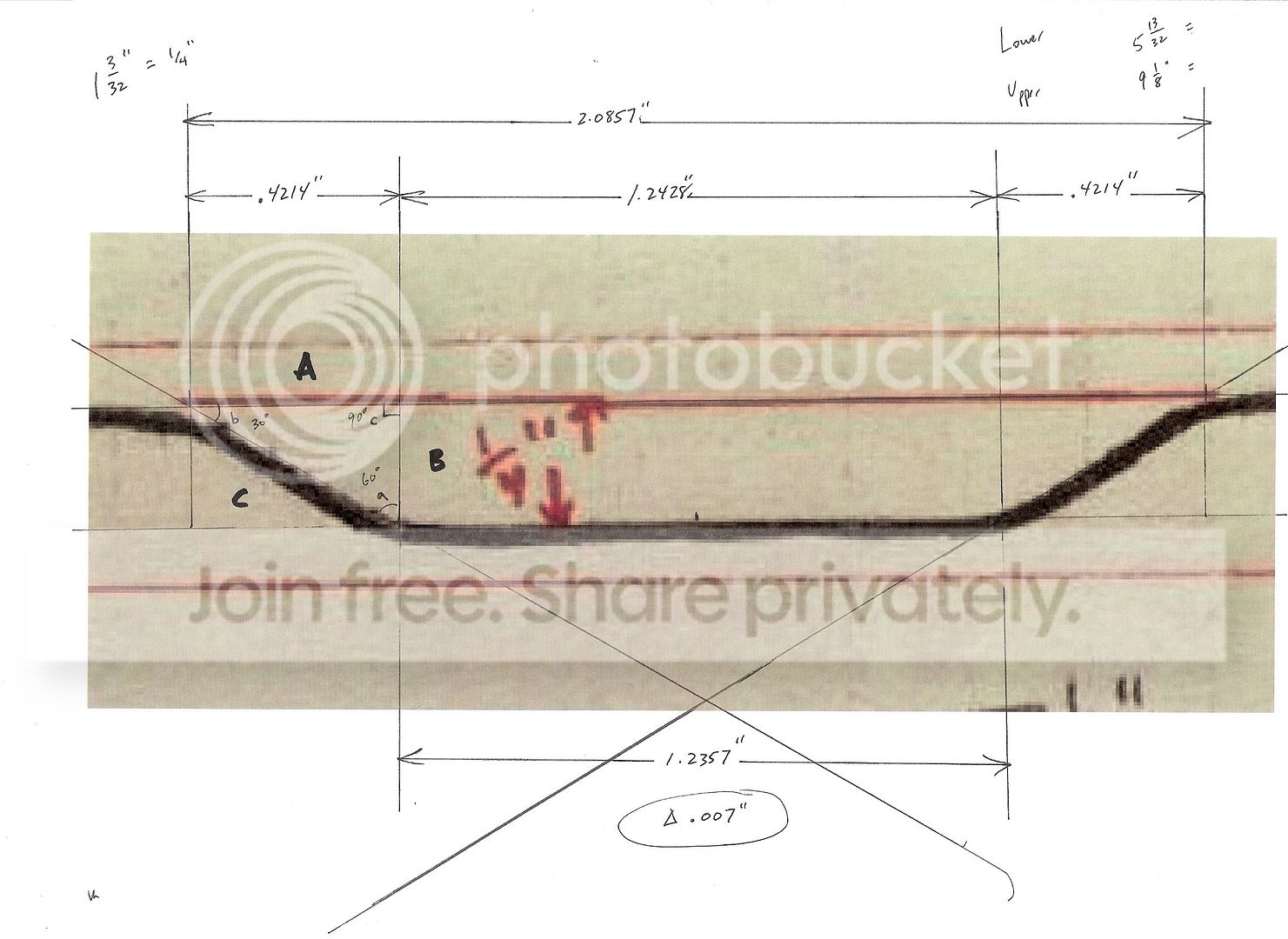
DetailFloorPlate.jpg


These dimensions were all extracted from a large blow-up of my original drawing (transferred from my profile gauge).... so they are going to have slight measurement errors, but from what I can see they are pretty darned close.

Here's what I think is really going on:

Across the top: 2.0857" <- Probably 2.000"
Across the valley: 1.2428" <- Probably 1.250"
Angle of bevel in valley: 59.322* <- Probably 60.0*
Angle of bevel at top plate: 30.677* <- Probably 30.0*

Basically, I'm convinced that GM just used a 30-60-90 triangle as the template for the floor pleats and the stamping process itself ends up creating the small upper and lower radius at the transition points.

:thinking:

I know that my big APEX grinding disc has an adjustable table for setting up angles, so maybe I'll try to make one of these over the weekend to confirm....


-G
 
Good idea. :waytogo:

If I were doing this I think I would cut the filler plate square and make the beveled edge with a perimeter weld along with a few plug welds in the field.
 
If I were doing this I think I would cut the filler plate square and make the beveled edge with a perimeter weld along with a few plug welds in the field.


You're insane...... :haha:

Completely filling up an area that's 1/4" deep and more than 3/8" wide on thin sheetmetal with weld??????....... Yikes.


:D

-G
 
If it's only 1/4" deep, use a 1/4" thick piece of steel, cut a square out of the floor and weld it in flush with the top of the ribs.

I also agree that when you get the bedliner sprayed in, you need to mask off the mounting points for the cage so it's steel to steel contact.
 
You're insane...... :haha:

Completely filling up an area that's 1/4" deep and more than 3/8" wide on thin sheetmetal with weld??????....... Yikes.


:D

-G


I have been called worse. I don't think you understand what I'm talking about. I'll clarify outside the thread .
 
If it's only 1/4" deep, use a 1/4" thick piece of steel, cut a square out of the floor and weld it in flush with the top of the ribs.

I also agree that when you get the bedliner sprayed in, you need to mask off the mounting points for the cage so it's steel to steel contact.

This.

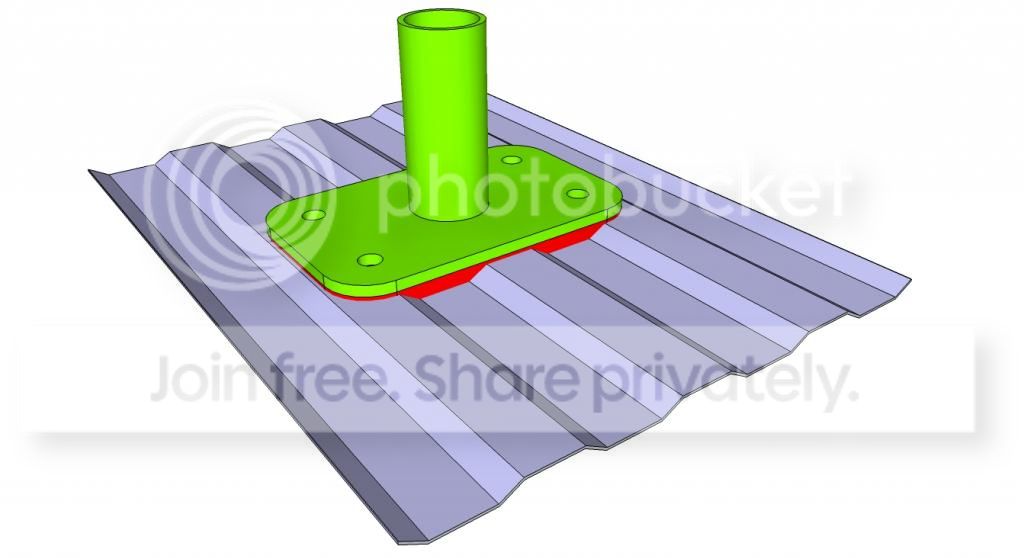
This is drawn to your dimensions with a 7.25" x 4.5" x 0.375" plate welded in to be flush with the bottom of the floor pan. The top plate is drawn in at 0.25" thick with 1.75" x 0.125" tubing to give you an idea of scale.

RecessedCagePlate_zps4e25f500.jpg
 
Last edited:
2014.09.21 - UPDATE! - REAR MINI-TUBS UNDERWAY...!!!

While I wait for some of my rockslider tubing to arrive, I decided to have some fun cutting up more of the rear bed area and getting ready for some rear suspension flex testing... :D

As I mentioned previously. There are a number of cross-sills under the rear floor with about 1/2" flanges supporting the floor. By carefully measuring and cutting down the center of the floor on top of those flanges, it is possible to retain a good "landing spot" for new sheetmetal when things get moved around.

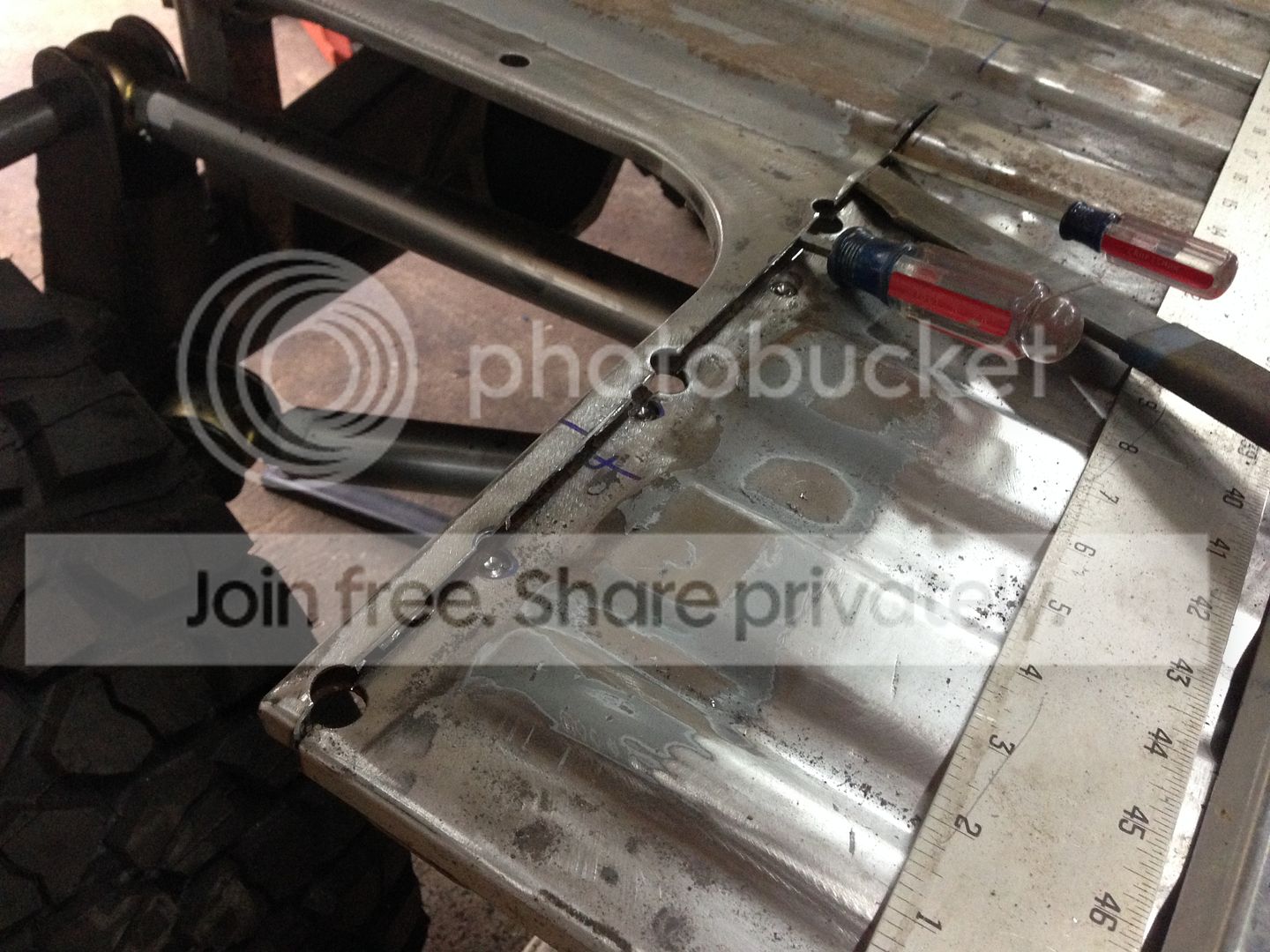
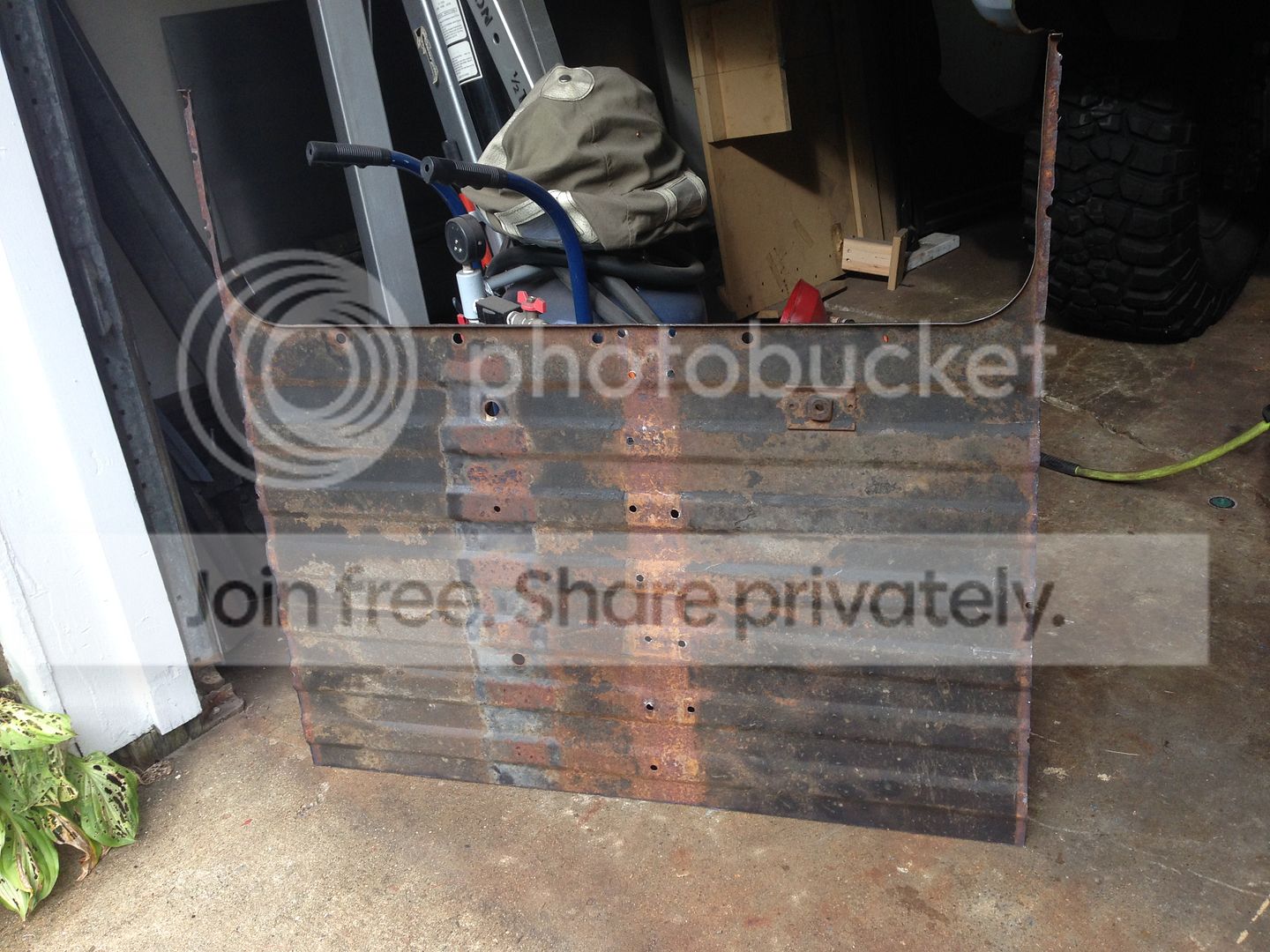
With some careful paint stripping, it is easy to reveal the small divots where the factory spot welds were made, and with a spot-weld cutter, those can be broken loose. Here's the start of the process for the rear passenger tire area.

IMG_0864.jpg


Basically, it's just a gentle process of cutting until you get through the top-layer of metal (the bed floor), and stopping as you start to cut into the support flange itself... it takes a bit of finesse, but with a little practice it's not bad.

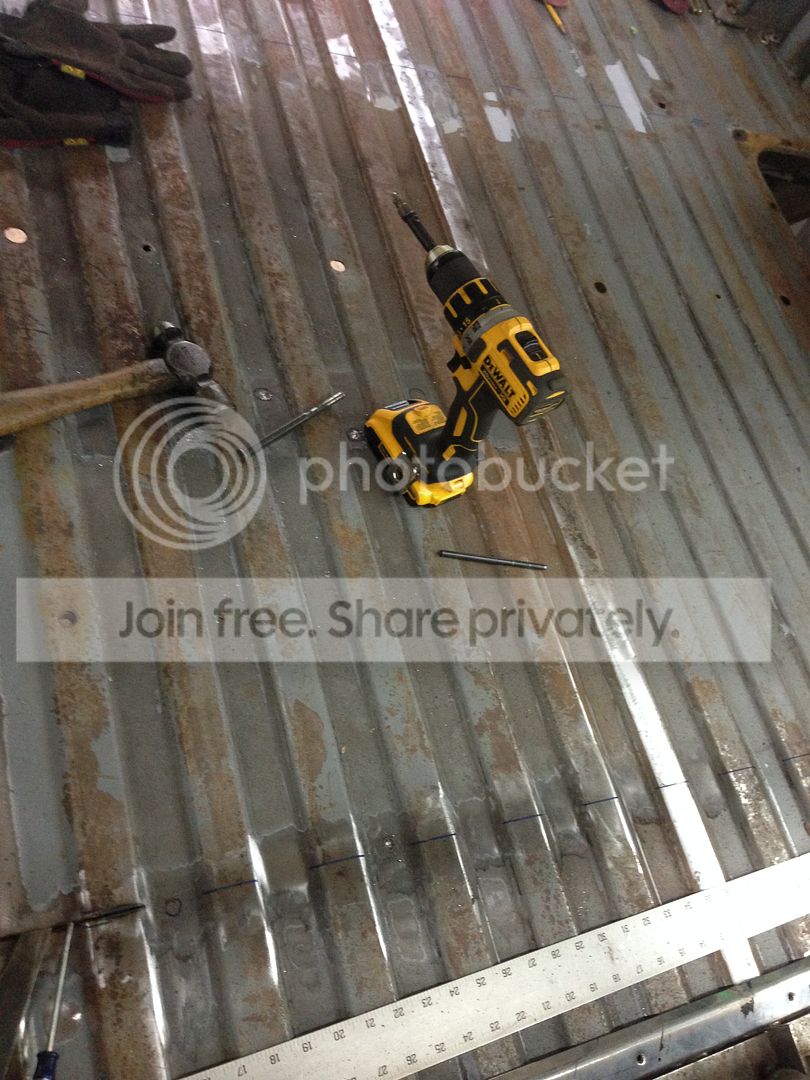
Here's the overall area that was selected to cut (the shiny rail is the center of the truck floor):

IMG_0870.jpg


That's basically a parallel cut along both of the cross-sills to save 1/4" of the flange for re-installation, and then a cut at the center of the bed (front-to-back) so that I can remove basically 1/2 of the bed area and have lots of working room around the frame, etc. While this does require a lot more cutting across the convoluted sections, it allows me to only do ONE weld at the center of the truck to re-join the panels later on instead of two (if I had cut smaller sections on each wheeltub)

After a bit of careful spot-weld cutting and cutoff wheel work, and gentle prying to break the floor free from the cross sills.....

IMG_0876.jpg


Even though the bed floor seemed pretty rusty, I think with a careful soda-blasting, this might actually clean up pretty well. :thinking:

IMG_0878.jpg


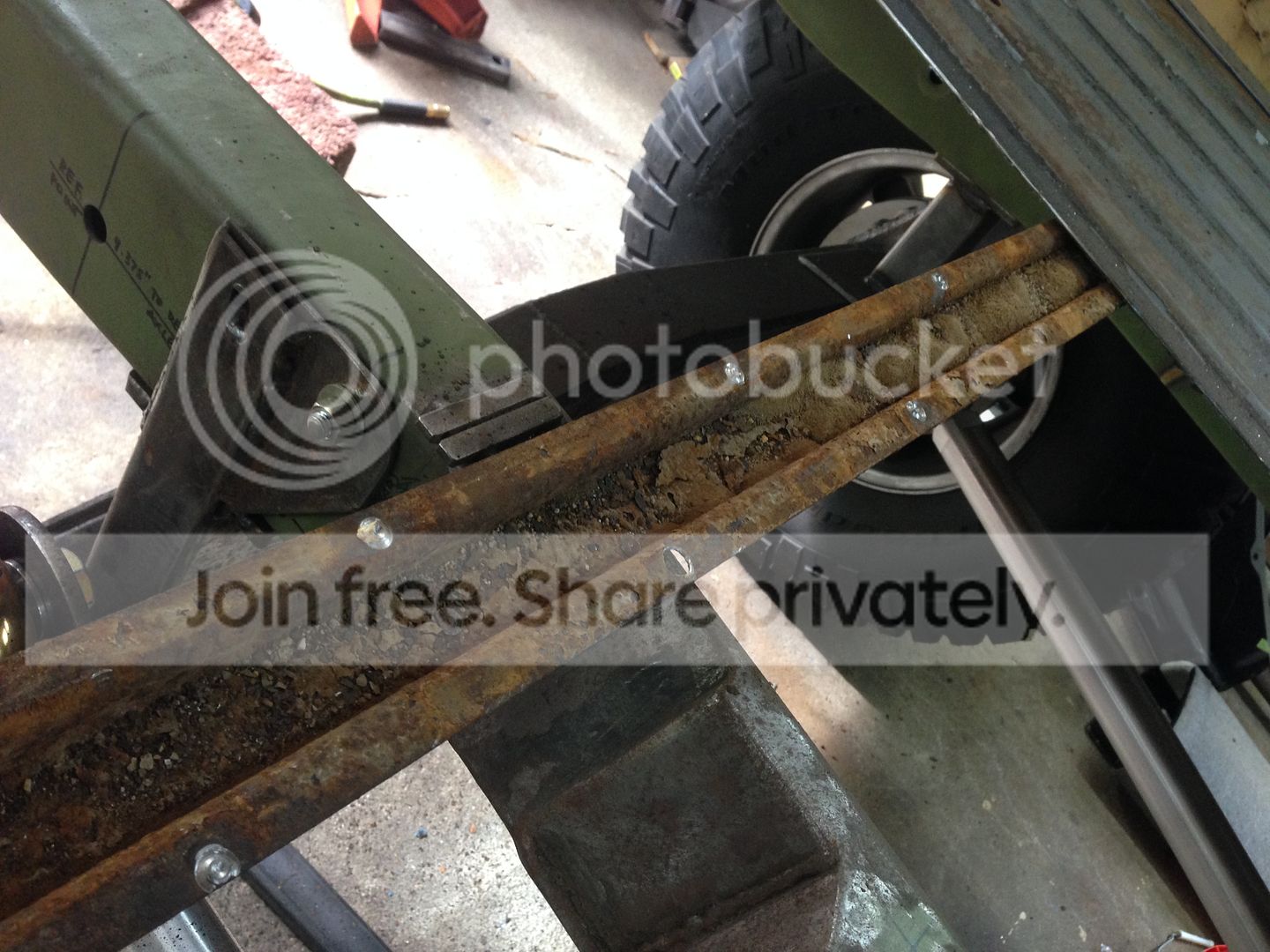
As I had always suspected, the cross sills are a magnet for dirt and debris. Since they don't fit tightly to the profile of the floor underneath, all sorts of stuff can get thrown up into those crevices and get trapped forever.

The sills were basically packed solid with sand. I'm going to have to come up with a better solution when this all goes back together.

IMG_0880.jpg


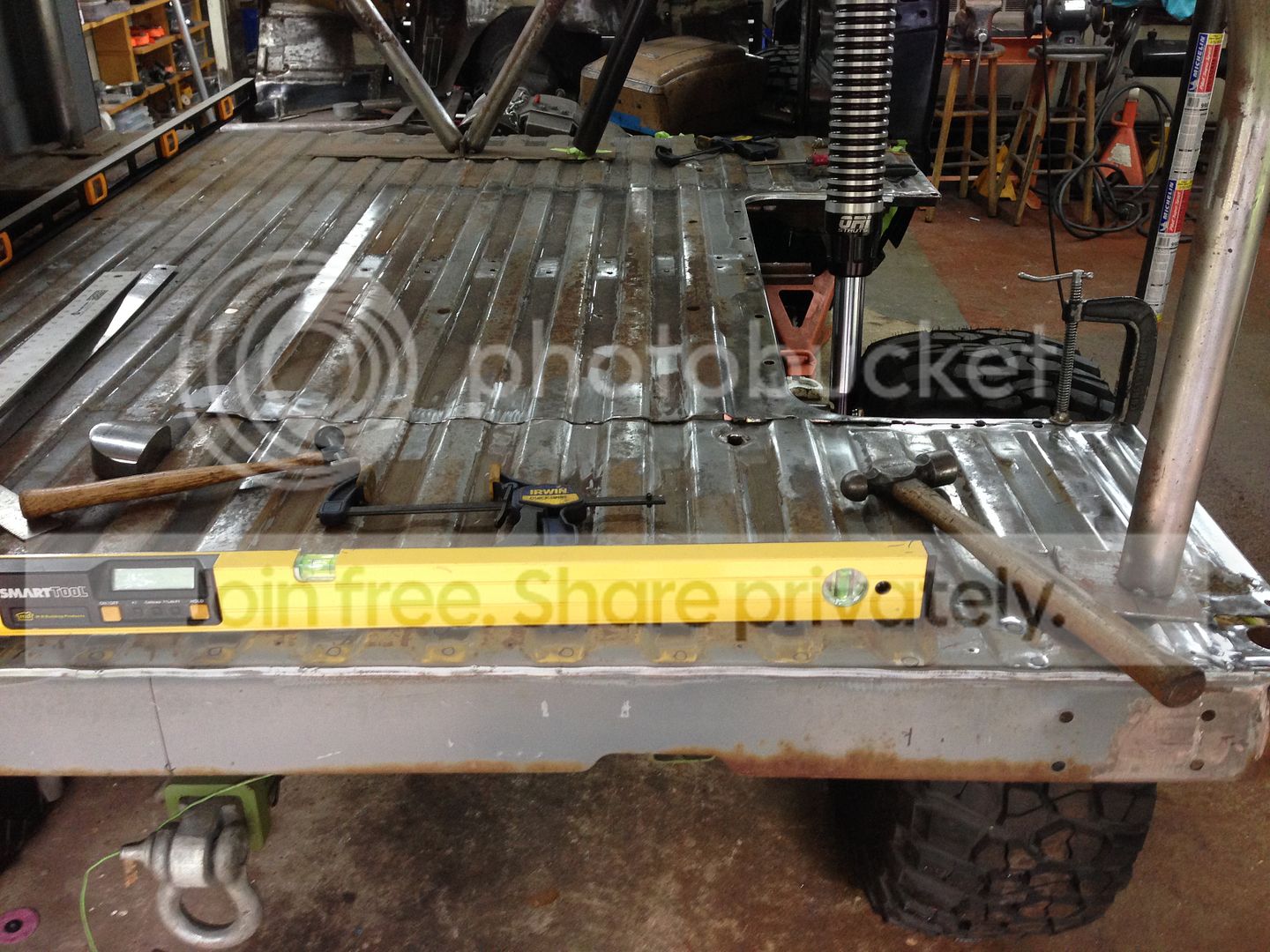
After vacuuming out the "sand rail", I dropped the floor section back into the bed, and moved it inboard by 1 "pleat" until everything lined up again. For the record, the floor can be moved in 3.5" increments to create a matching floor pattern.

This is what a 3.5" mini-tub ends up looking like:

IMG_0885.jpg


I think that is more than enough room to get the tire fully stuffed without any issues, but I will need to build my new wheels and install them to be 100% sure.

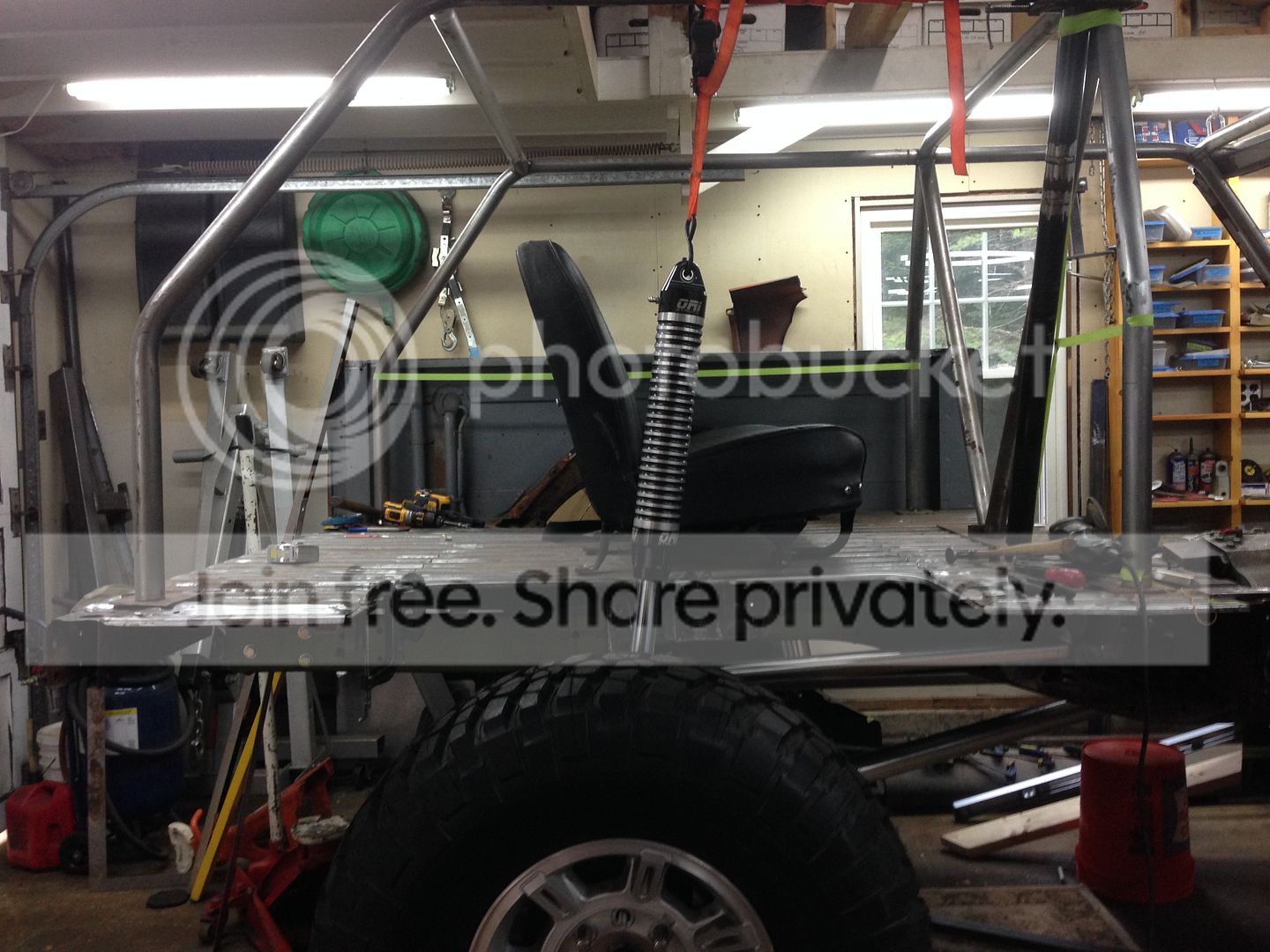
The final step of the day was to place the stock rear seat back into position, using the original floor mounting holes as a reference to set it's location (front to back) in the bed. This was a good chance to see what sort of oddball issues I'm going to have building an upper strut mount and while still trying to get a rear passenger seat in that space.

IMG_0890.jpg


Obviously, the seat will end up being about 7" narrower than it is now so that it will fit between the minitubs. It will be a bit snug to get two adults back there, but for a couple of younger kids it will be plenty of room. :waytogo:


-G
 
Slick way of doing that Greg. Nice work.

What kind of ideas do have for sealing the cross sills? Just body sealer, or something more substantial?
 
Slick way of doing that Greg. Nice work.

What kind of ideas do have for sealing the cross sills? Just body sealer, or something more substantial?


Well, now that I know the dimensions of those pleats pretty accurately I can get someone to make me a bunch of strips cut to those dimensions, then just chop them down into little 1/2" wide chunks and tack weld them to the cross sill in the appropriate places (once the cross sill is completely sandblasted and cleaned-up of course!).

That will allow the cross-sill to perfectly follow the underside contours of the floor. I'll re-do the top side plug welds to secure the floor to the cross sill, then as a final step, probably still do a nice seam sealer on all the underside areas where the floor touches the cross sill.

I'm tempted at that point to just cap the ends of the cross sills as well. There's no point in allowing water to get back in there if they are truly sealed everywhere else!


-G
 
Last edited:
Very nice!

I'm up in the air still for when I redo my floor. If I keep it stock-ish, I'll probably just do that as well. If I go the diamond plate route I may just use rectangular tube to make new cross sills that are much sturdier and tie into the cage and the floor.

I suppose I need to get my truck back as a first step to that...:rolleyes:
 
If you do the pleat strips, I bet if you had extras made, you could sell them. I would have bought some had they been available when I built my truck.
 
If you do the pleat strips, I bet if you had extras made, you could sell them. I would have bought some had they been available when I built my truck.

Absolutely!

I have no interest in being a Vendor, but if one of the existing vendors wanted to steal this idea and run with it, be my guest.

(p.s. - Send me a few for "testing" and we'll call it even! :deal: )


-G
 
I wouldn't seal the sand traps if I were you. Better to have better drainage, than to seal it up and have it rot because the stuff that'll get in anyways will get moist. Every bad rust area I've seen has been in an area that had little to no ability to drain. Don't forget it'll be likely to get condensation inside it with the topside 'heated' and the underside cooler (Say fall or early winter)

That's just my two cents.
 
I agree with Rene. I think it would be cool to bend up the peice and dimple die the bottom. Not only would it help strength make it drain easy and be easy to flush out, it will make you go faster
 
2014.09.22 - UPDATE! - BACK-HALF'ED 1ST GEN...????

Another night in the shop..... and a few more setbacks.

After consulting with my inner circle of advisors about what my rear shock goals should be, it was unanimously agreed that the rear 16" struts should be set up with 7" of bump travel. This would be well-matched to the front 14" struts (which have 6" of bump travel)... and I'd end up with a bit more bump and droop out back.

Seemed like a simple plan.

The first order of business was to establish that axle position in the rear to see what sort of interferences would occur. I'd already "leveled" the truck at the wheels by running a LONG digital level across the wheel hubs. The concrete slopes down toward the door, so I needed to eliminate that from the equation.

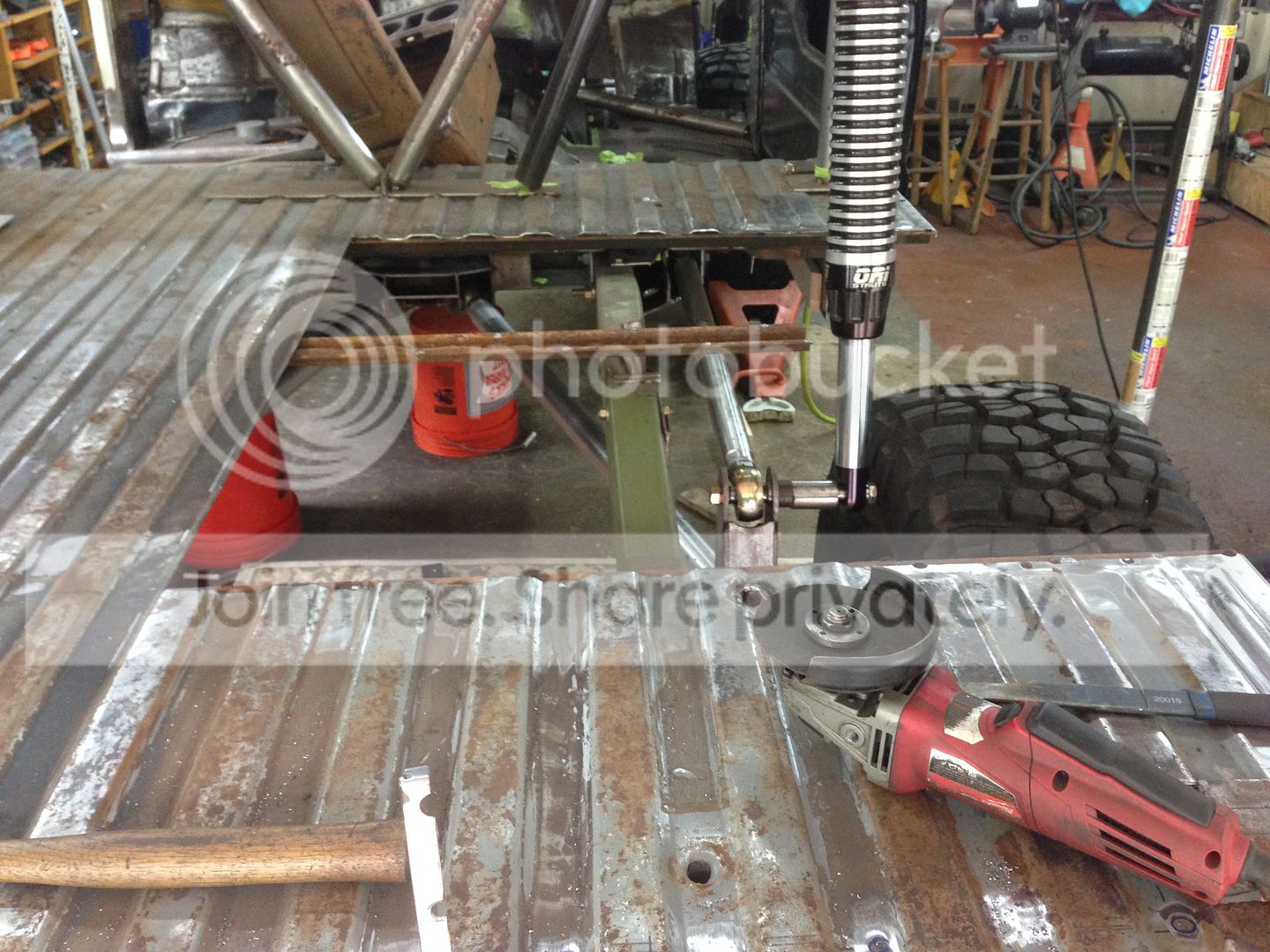
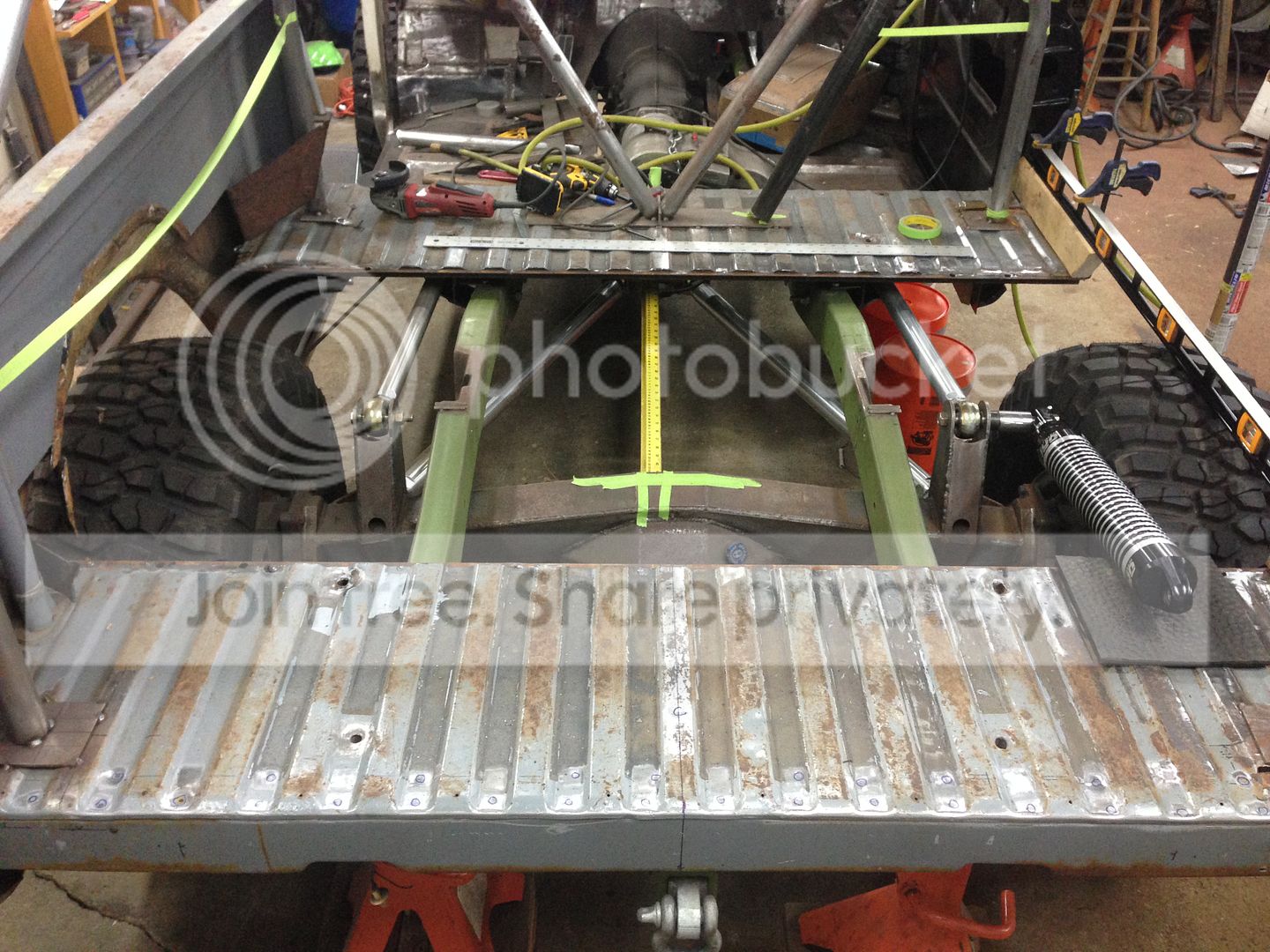
I'm finally getting smarter.... and decided to drop the truck and do this work at "full bump". So I dumped all the nitrogen in the front struts and put it down on the bumpstops. Then I tried to drop the rear to match.... the problem is that the DS tire was hitting the center floor section, and the upper link mounts were hitting the cross sill as well.... so I decided to chop out that side of the floor as well to get the clearance I needed.

IMG_0926.jpg


That kept things moving along pretty well. My "reference" in the rear is when the bedrail angle is raked forward to a measurement of 1.0*. I have found that is the stance that I prefer on this truck.... no saggy butt, no stinkbug. :D

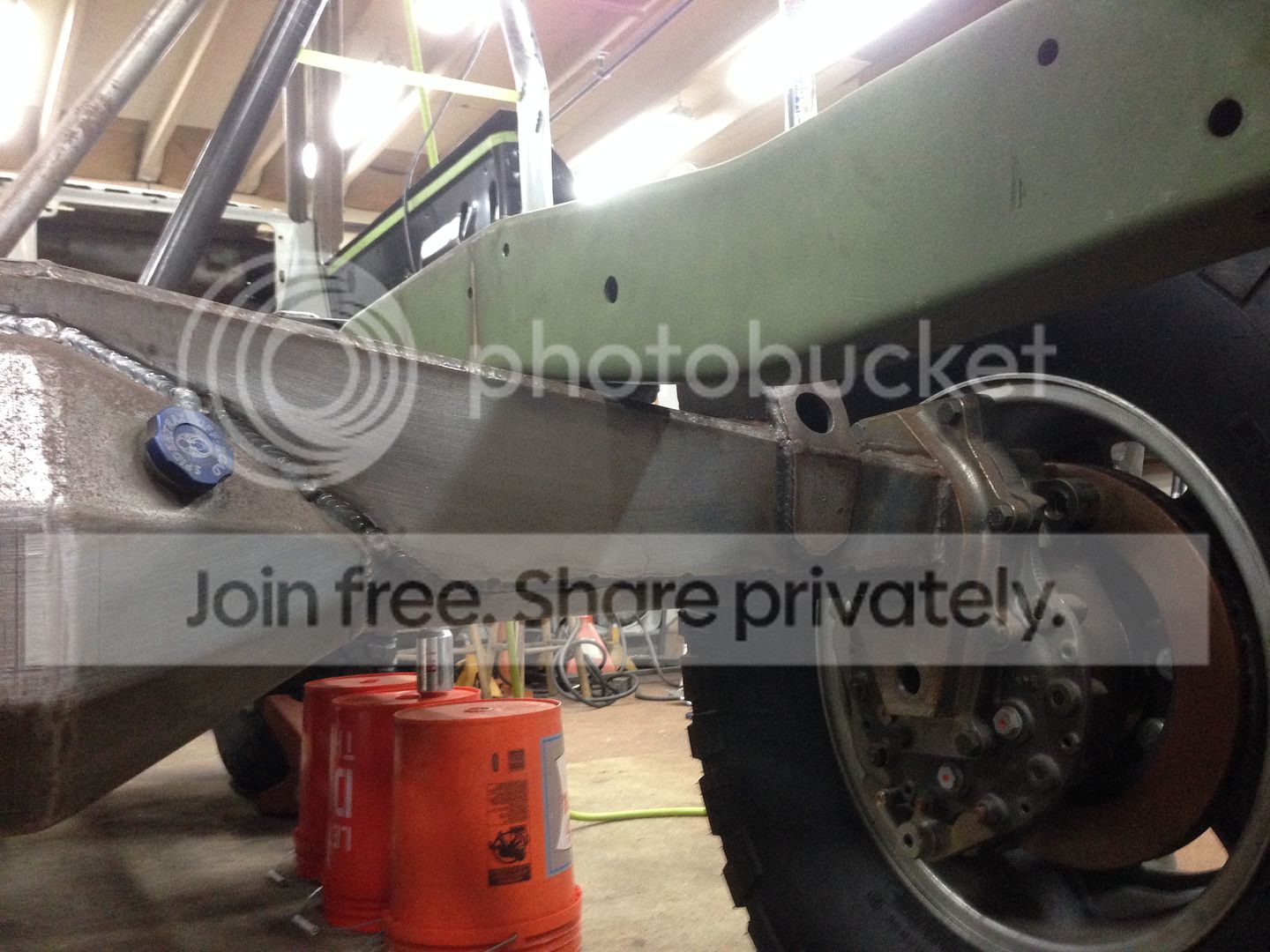
Unfortunately, I hit more interferences before getting the truck set up for that 7" bump value. The underside of the framerails hits the rear axle.


IMG_0923.jpg


There are actually a few problems going on back there. The most obvious is that the frame needs to be notched (or moved) to let the axle move up about 1" more. The more serious problem is that the framerails are too far apart and collide with the upper link mounts when they articulate. That's the reason why you see those goofy, heavily angled cutouts in the vertical part of the frame. Back when the axle was 2" further forward, those were the pockets where the upper link towers would end up... but at the expense of almost all the frame strength in that area.

My idea is to severely rework the entire back half of this framerail (from about where the monolith ends) to make it about 5" narrower (overall) and also sweep it up about 1" higher to tuck it more tightly to the bed floor. Also, there is really no need to bring it back down once it clears the rear axle, so I'd probably run the new frame straight along the underside of the bedfloor until it got to the rearmost cross sill.

Anyway.... no idea how I would actually "merge" a design like that into the existing frame safely and strongly, but I need to start thinking about a plan.

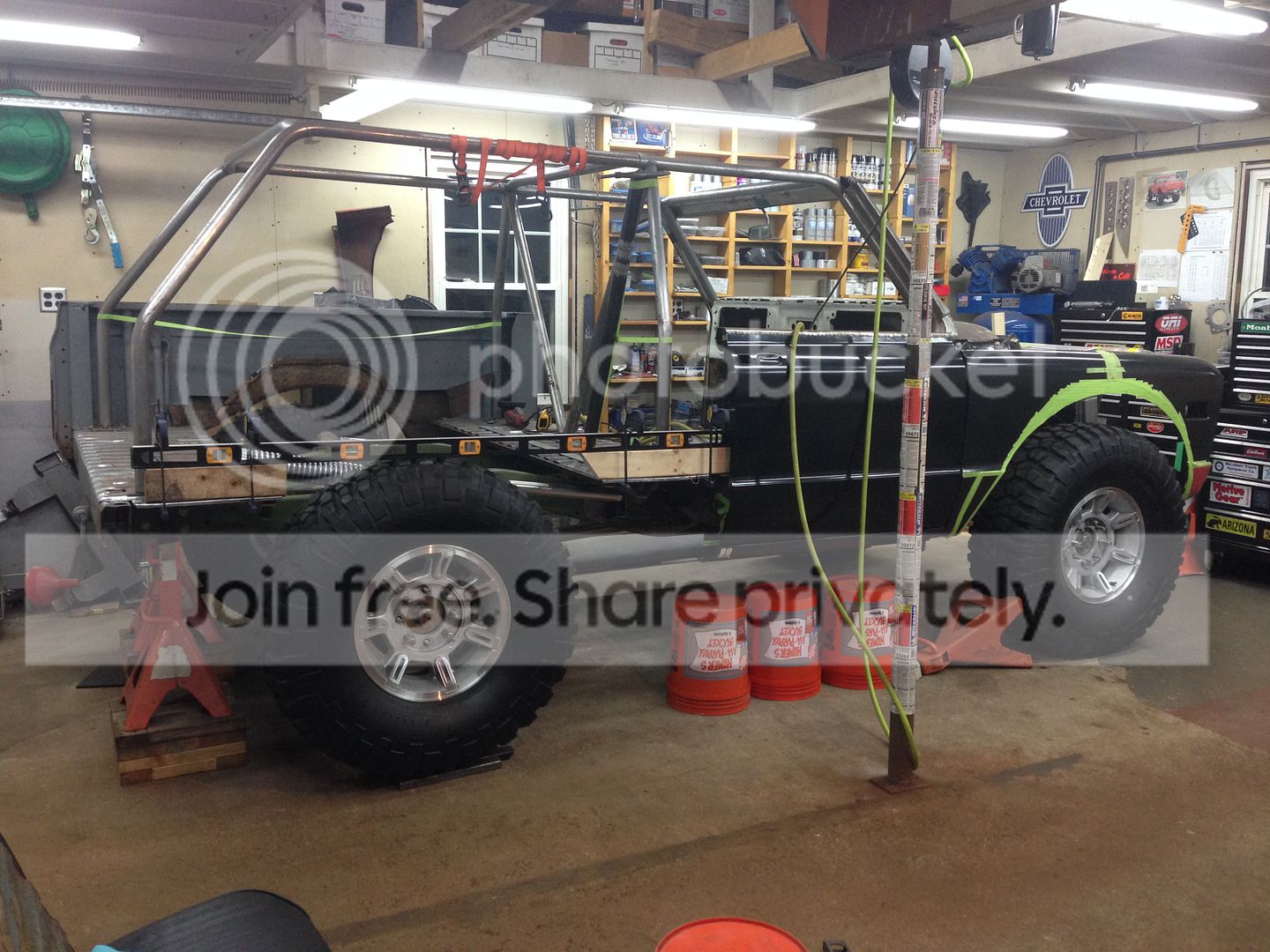
Finally, here's a side shot of the truck "laid out" on the bumpstops. There is only 21" inches of clearance from the floor to the underside of the outer rocker panel.


IMG_0931.jpg


To be 100% accurate, since the truck is set up with 1* of forward rake in this photo the rear axle should be raised one additional inch on some blocking to represent the 7" of bump travel it's going to get. When the front suspension is maxed-out at 6", the rear should still have 1" of travel remaining..... otherwise the photo is pretty cool, I think. :waytogo:


-G
 
So this sucks because I realize the effort put into your frame. But cut it off

Just my advice
 
Eric,

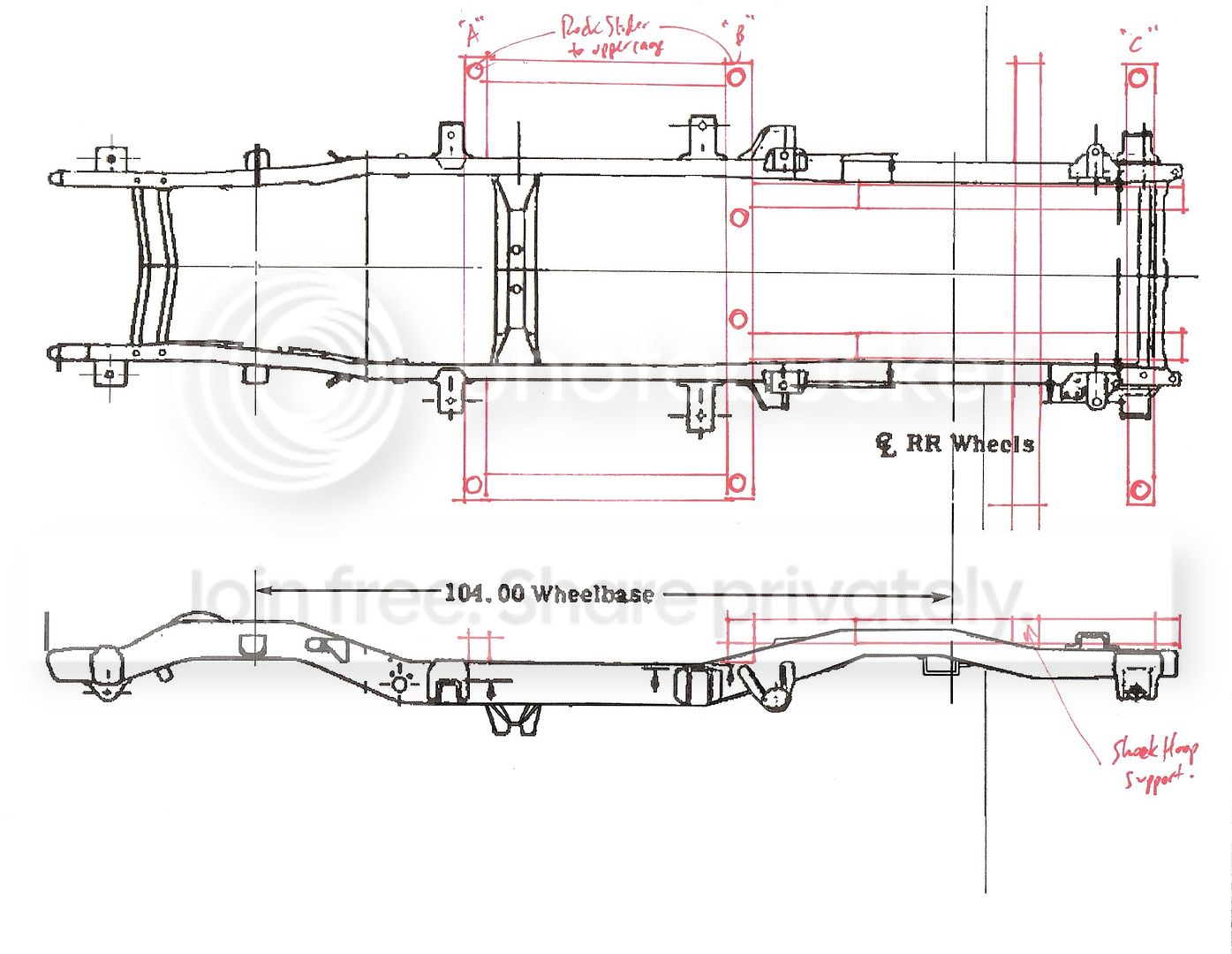
Here's a quick idea that I put together.....

BackHalfFrame.jpg


I need to create some "outriggers" for the a-pillar and b-pillar areas anyway so that I can connect the rollcage mounting points down into the rockslider area.... so those two cross sills are going to get installed regardless of how I solve the rear frame issue.

The "C" cross sill will allow me to attach the rearmost cage legs to the frame as well. You'll notice that for all 3 of those, there is actually enough room to lay the new 3" x 2" rectangular tube on TOP of the existing framerails.... from a pure loading perspective that is awesome and strong, but I don't have a brilliant way to attach them to the original frame yet.

I sketched in a cross sill just behind the rear axle as a possible place to land one of the upper strut mount tubes. This might allow be to save a little room by not going to the top of the frame for structural support (which is further inboard)... unfortunately, I can't do a similar cross sill in front of the axle because the upper link will hit it on bump.

In this sketch, I also laid-in a new set of rails on the inside of the stock ones. This type of width would allow me to avoid all the notching for the upper link mounts that I did last time, but again I'm just not sure how to "merge" all this new tubing into the old frame if I simply chop it off behind the monolith area....??? :dunno:


-G
 
You have an advantage because the monolith should hold the front of the frame in place.

But yeah chop it off.

You must make sure the front part of the frame doesn't move. Thats the hardest part
 

Latest Posts

Top Bottom