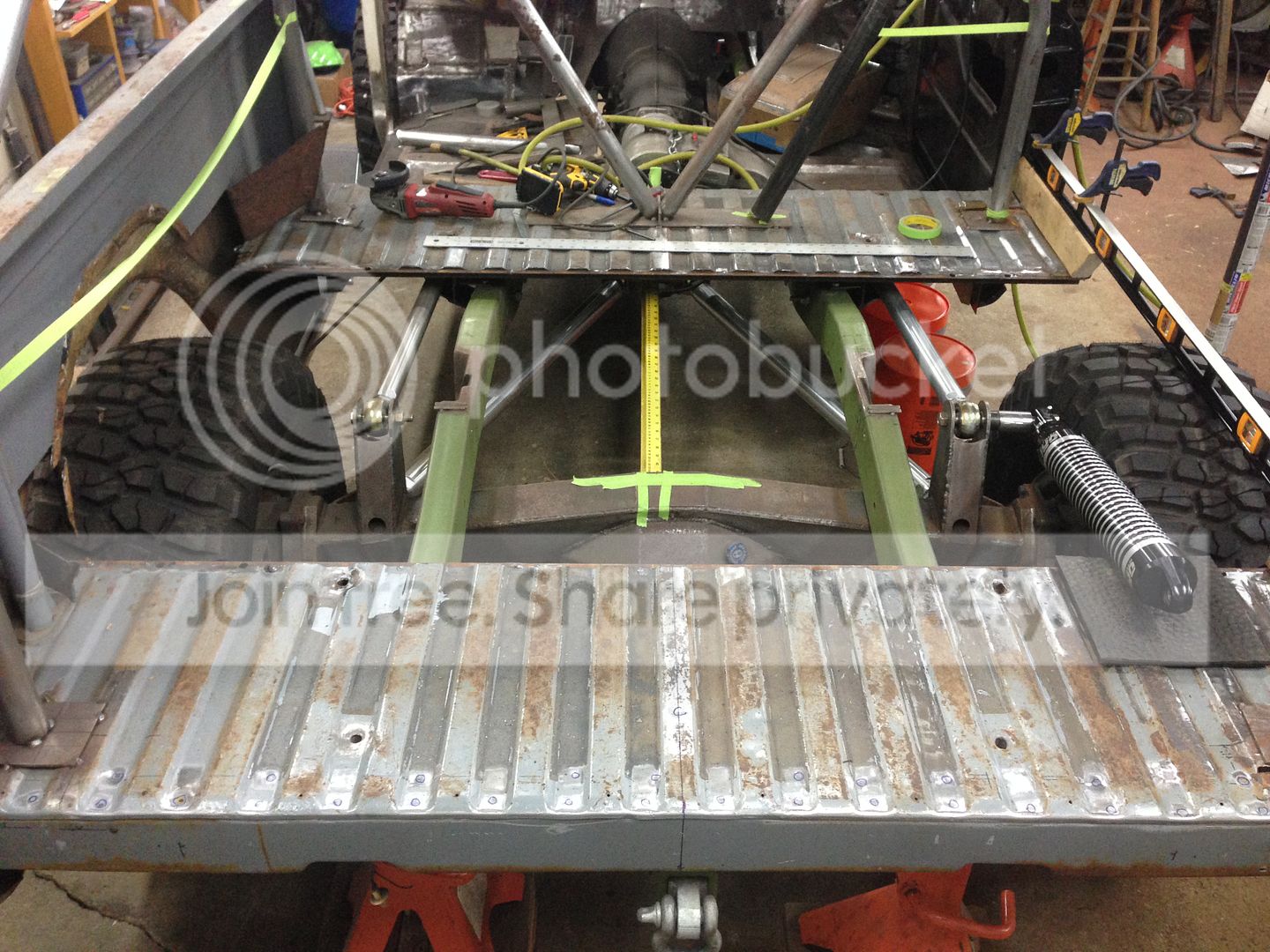
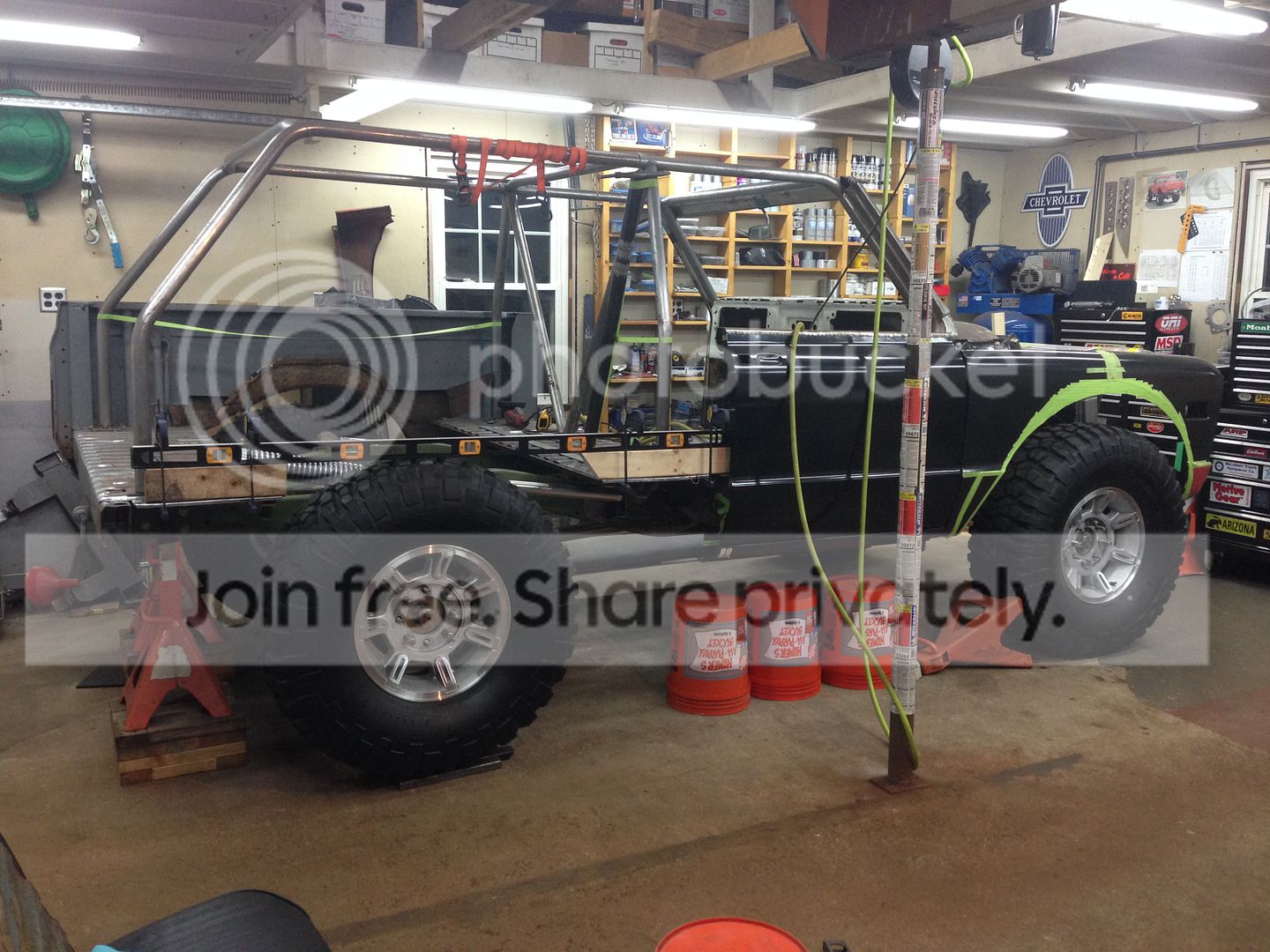
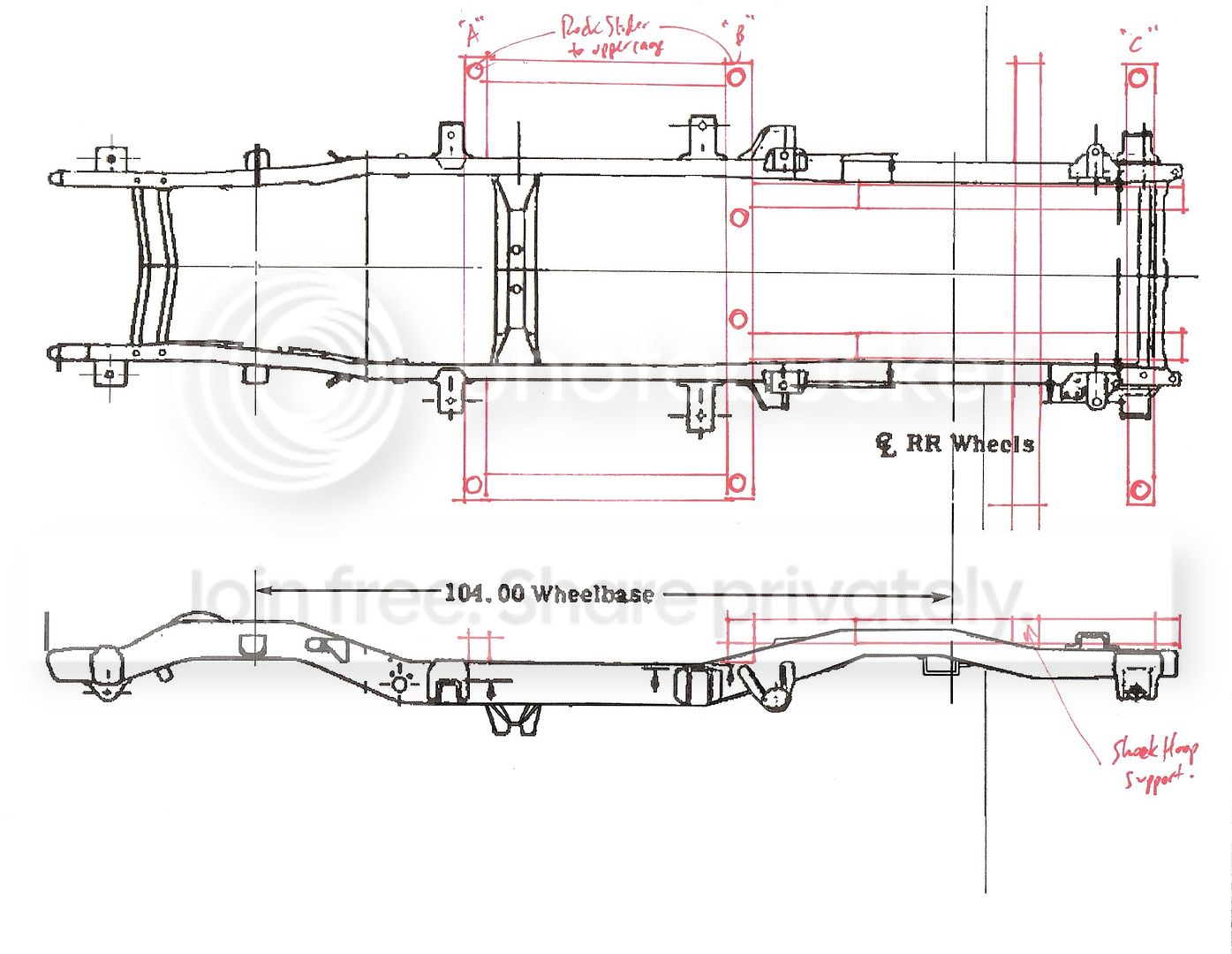
So......
For those of you following along to see what the actual specs are for the convoluted sections of the floor, I can share this:
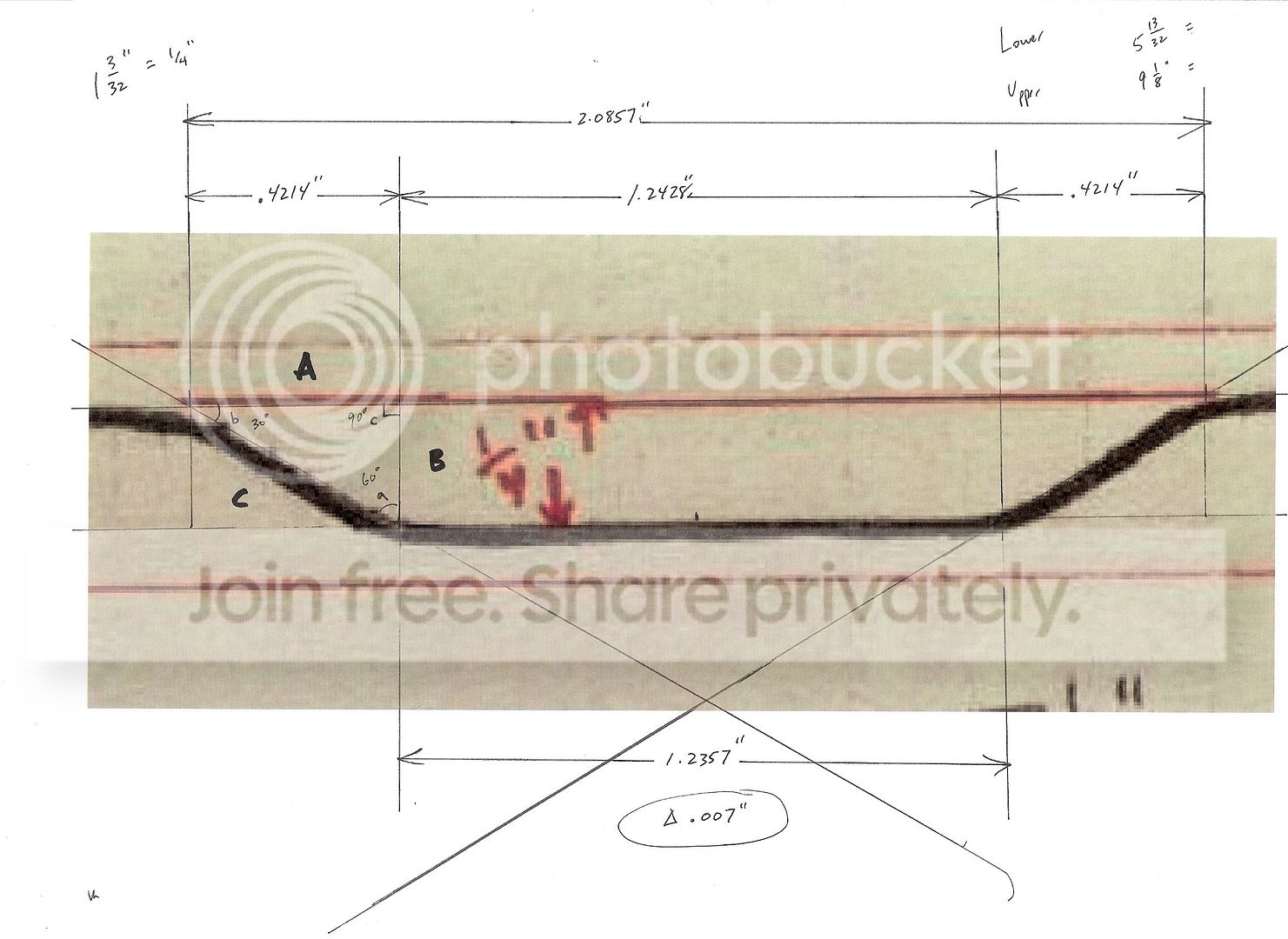
These dimensions were all extracted from a large blow-up of my original drawing (transferred from my profile gauge).... so they are going to have slight measurement errors, but from what I can see they are pretty darned close.
Here's what I think is really going on:
Across the top: 2.0857" <- Probably 2.000"
Across the valley: 1.2428" <- Probably 1.250"
Angle of bevel in valley: 59.322* <- Probably 60.0*
Angle of bevel at top plate: 30.677* <- Probably 30.0*
Basically, I'm convinced that GM just used a 30-60-90 triangle as the template for the floor pleats and the stamping process itself ends up creating the small upper and lower radius at the transition points.

I know that my big APEX grinding disc has an adjustable table for setting up angles, so maybe I'll try to make one of these over the weekend to confirm....
-G
For those of you following along to see what the actual specs are for the convoluted sections of the floor, I can share this:
These dimensions were all extracted from a large blow-up of my original drawing (transferred from my profile gauge).... so they are going to have slight measurement errors, but from what I can see they are pretty darned close.
Here's what I think is really going on:
Across the top: 2.0857" <- Probably 2.000"
Across the valley: 1.2428" <- Probably 1.250"
Angle of bevel in valley: 59.322* <- Probably 60.0*
Angle of bevel at top plate: 30.677* <- Probably 30.0*
Basically, I'm convinced that GM just used a 30-60-90 triangle as the template for the floor pleats and the stamping process itself ends up creating the small upper and lower radius at the transition points.
I know that my big APEX grinding disc has an adjustable table for setting up angles, so maybe I'll try to make one of these over the weekend to confirm....
-G






 )
)