CK5
Register an account today to become a member! Once signed in, you'll be able to participate on this site by adding your own topics and posts, as well as connect with other members.
Based on my analysis, I'm not surprised.


-G
We ran em on cars. 500+ hp cars barely noticed they were on there. Had a set on the 72 for awhile.

The Super Turbo has a nice sound, not too loud.
 
Greg, just catching up a bit here, but have you considered adding mudflaps (removables?)....the cops like to see em in Moab!
 
Fwiw, I have a single 3" Magnaflow #11259 set up on my K5. Naturally, it's way quieter than the dual Flowmasters on my old K10 but by no means silent, more of a "turbo muffler" sound. Still very reasonable, it's nice to be able to talk while driving which is something that was difficult in my old K10 with the Flows.
 
I've got 2.5" dual exhaust with Magnaflows on a moderately built 383 and they are freaking loud! Not certain about the case size, but they are decent size mufflers, offset inlet, center outlet. Sounds good at idle and cruise, but even under mild acceleration they are way too loud and high pitched for my taste. Sounds almost like glass packs.
 
What about using a set of supertrapps as your resonators? You can adjust their sound by adding/removing the packing discs. They also come in a BUNCH of different configurations as well.

Just a thought.

Later,
Buddy
 
What about using a set of supertrapps as your resonators? You can adjust their sound by adding/removing the packing discs. They also come in a BUNCH of different configurations as well.

Just a thought.

Later,
Buddy


My guess would be Supertraps would really kill flow, especially by the time you add enough discs to make them quiet. :dunno:

-G
 
2016.07.25 - UPDATE! - EXHAUSTING WOODWORKING..!!!!

For those of you who don't know, yesterday was a "Man Points Sunday" event hosted by @NorCal69... and a lot of guys got in on the action. It's a great way to get re-motivated to work on a build and a great opportunity for some friendly smack-talking as well. :waytogo:

The exhaust system planning is coming along nicely, and the pieces of the puzzle are almost all ready for assembly. Since the exhaust system will be going together soon... I really needed to get the headers finish-welded, and there is also a need to double-check the new Brodix exhaust ports to insure that they flow cleanly and without obstruction into the rectangle-port exhaust flanges. The biggest obstacle to all of this is the lack of space in the garage, and the loss of my workbench a few months ago as a storage spot for my replacement rear bedside floor. It seemed like a good a time as any to finally resolve my space issues, and get this project "flowing" again.

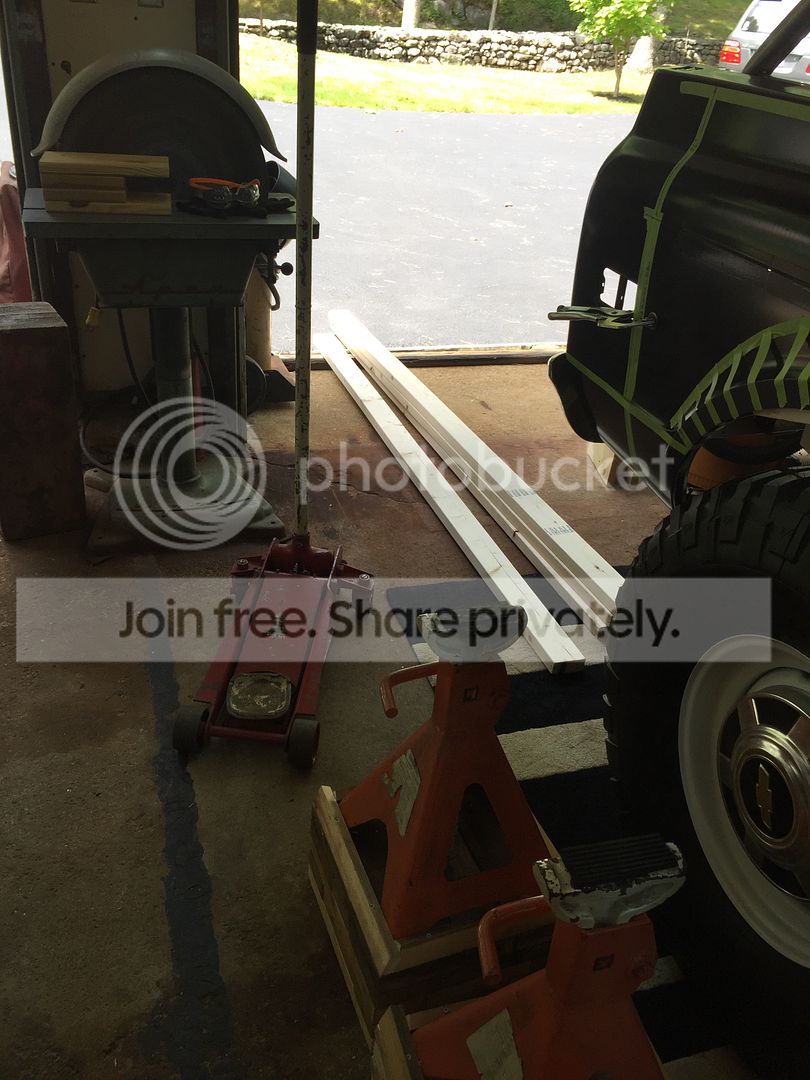
Any good project starts with a pile of fresh 2x4's from the local lumberyard!!! :)

IMG_1731.jpg


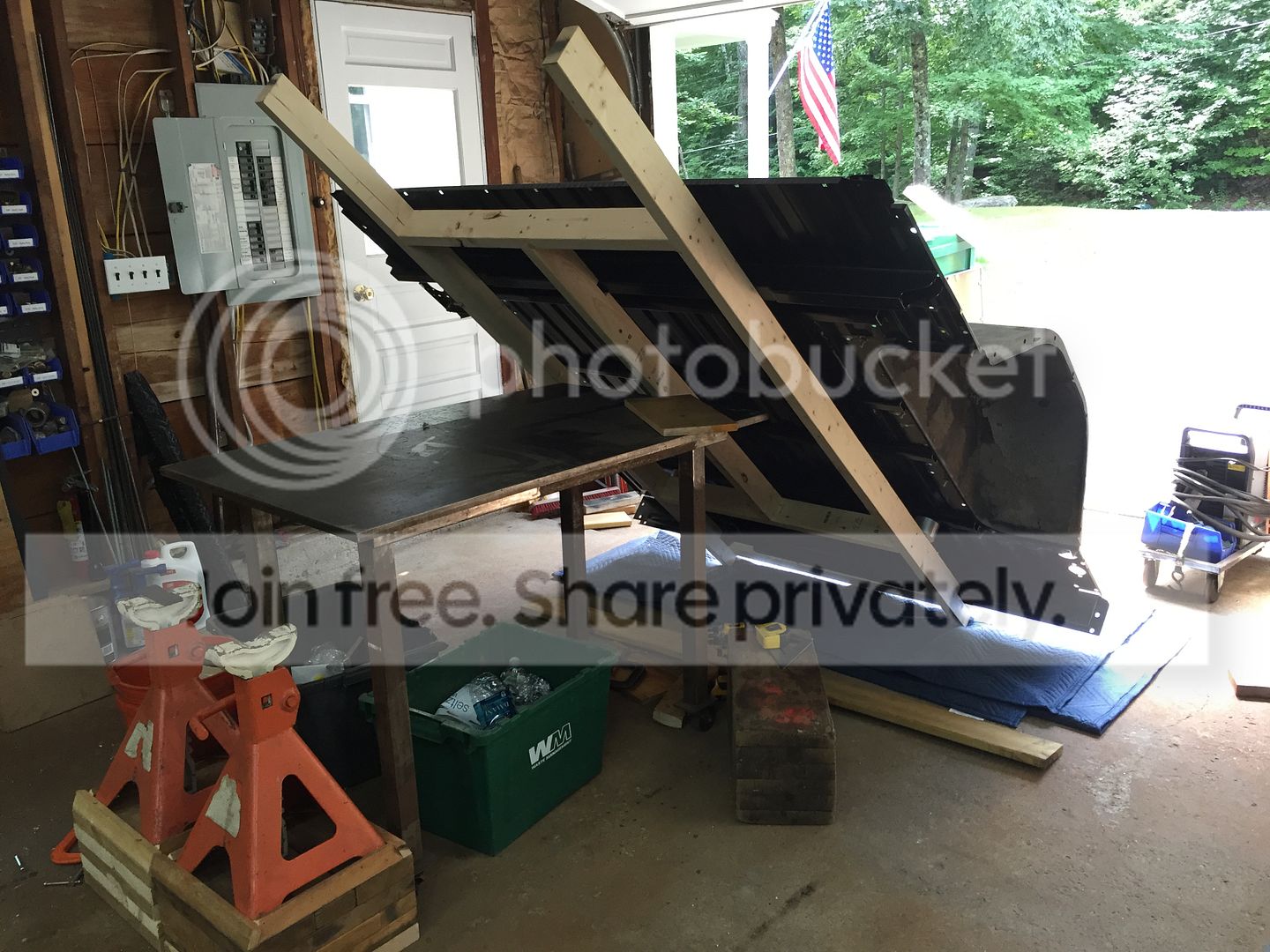
The bedfloor has never really been very stable sitting on the workbench. It's surprisingly flexible torsionally, so I wanted to make sure that there would be a safe way to move it without putting a permanent kink, or damage in the part. So the basic idea was to run a couple of 2x4's down along the underside and run lag-bolts down through the factory body mount holes to lock it down....then run a few wooden "cross members" to increase the stiffness as well. One final 2x4 was run right down the center to help gently slide it off the workbench, since the outer 2x4s were wider than my workbench. Taking small steps, I was able to walk the bedfloor off the edge of the bench and gently ease it to the floor....

IMG_1742.jpg


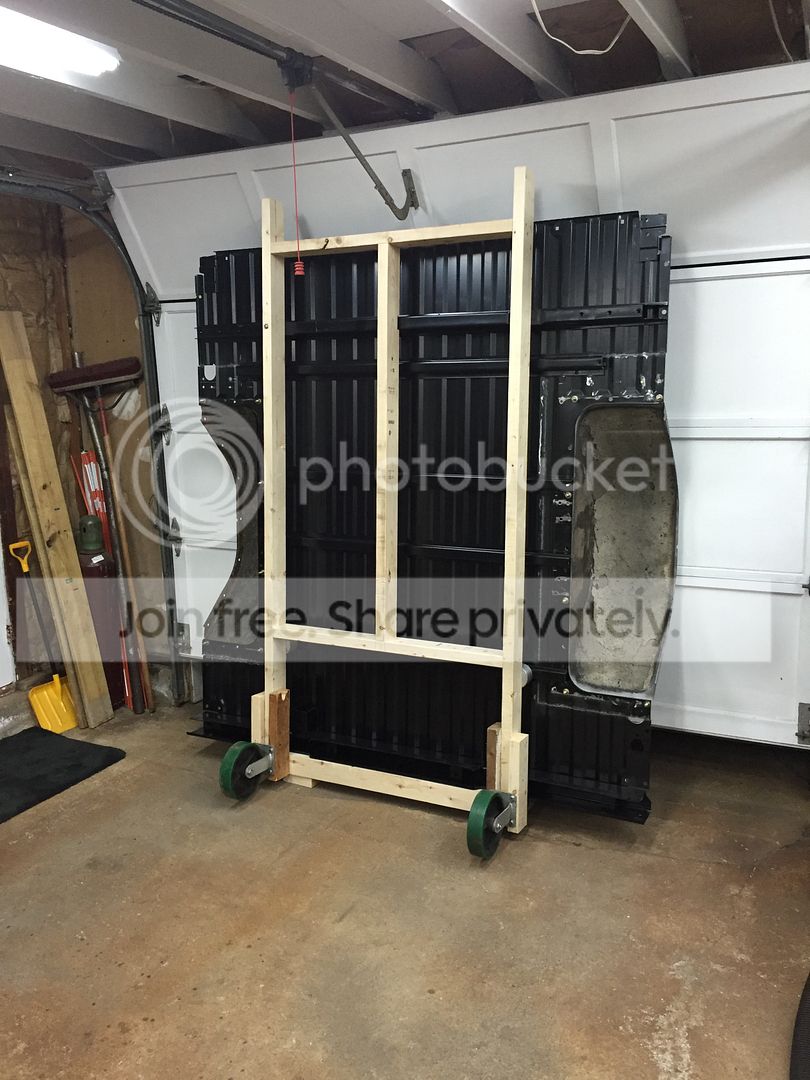
I had a leftover set of big casters left over from when I finally finished up the front axle / suspension portion of the build, so I bolted them on as well... just to make things easier to move around as needed.

IMG_1759.jpg


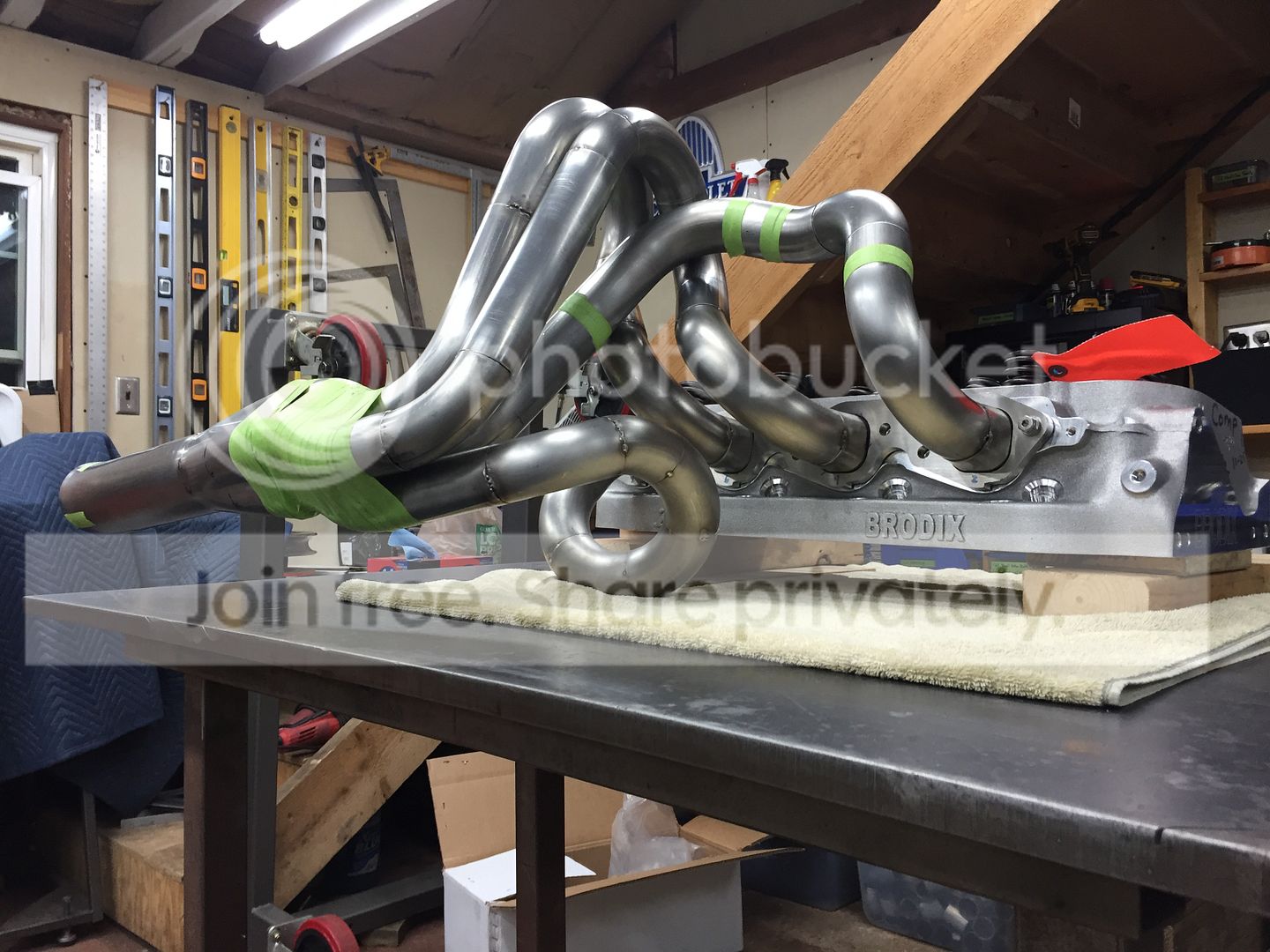
FINALLY....... by around 7PM, I was already tired, but was ready to get to the business of doing some exhaust-related work. I pulled the ORI strut out of the way, and unbolted the PS header so that I could bring it over to the workbench for a test fitting (which had never been done before).
IMG_1758.jpg


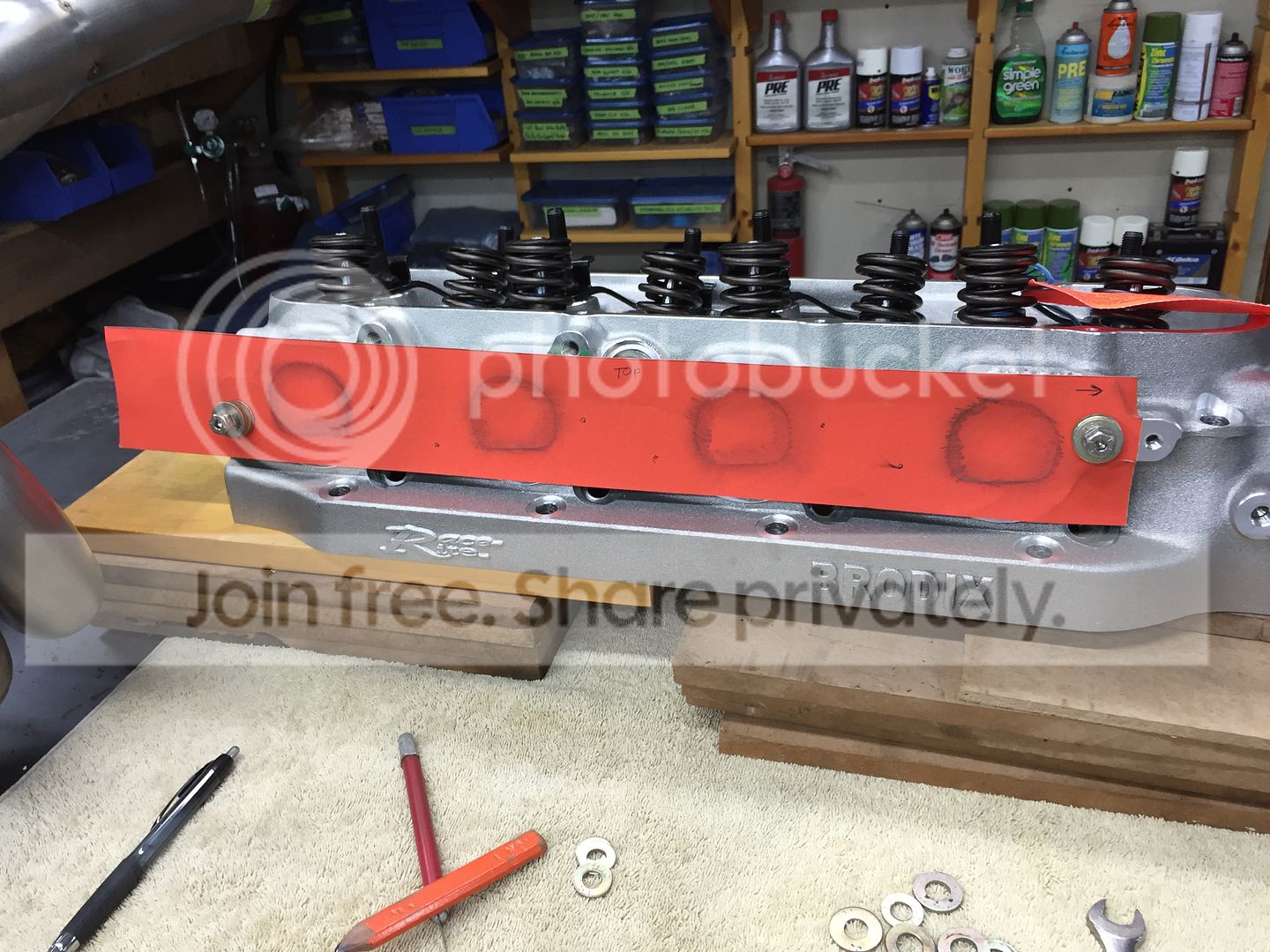
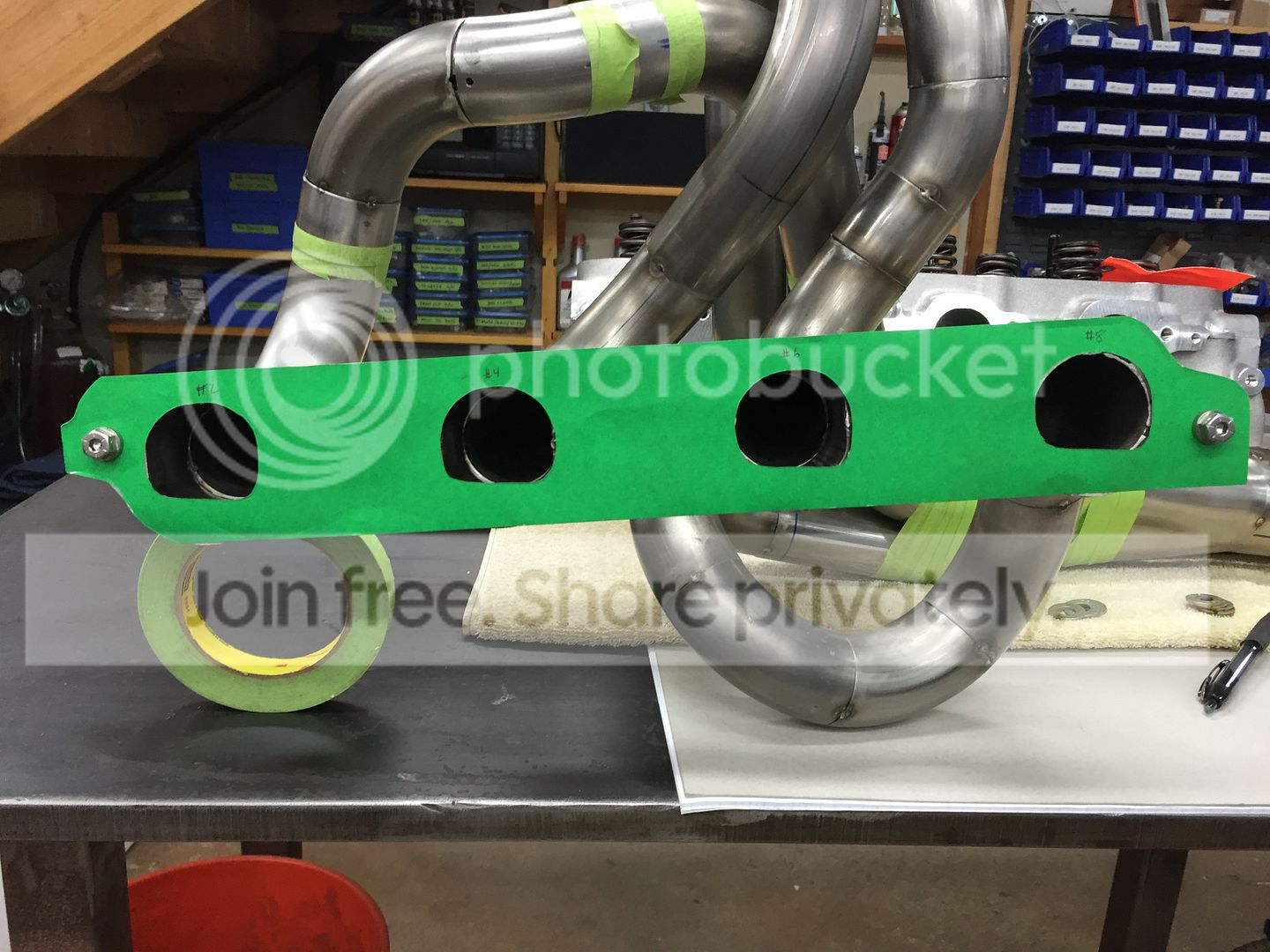
This particular Brodix head is a lot nicer than the factory iron 502 head that I have on the engine now, but it maintains the original exhaust port height. That will obviously save me a lot of time and rework of the headers. The one thing that is quite different is the shape of the exhaust ports themselves. The new ones are a pretty pronounced "D" shape, whereas the old heads are more rectangular. The main concern was making sure that there wouldn't be any "overhang" of the header flange that might block the exhaust flow into the headers, or any sharp edges that could create turbulence. So it carefully fit-up a piece of construction paper and transferred the Brodix port shape to a template.... then laid it over the headers to see how bad things were going to be.


IMG_1762.jpg


The end result isn't too bad:

IMG_1765.jpg


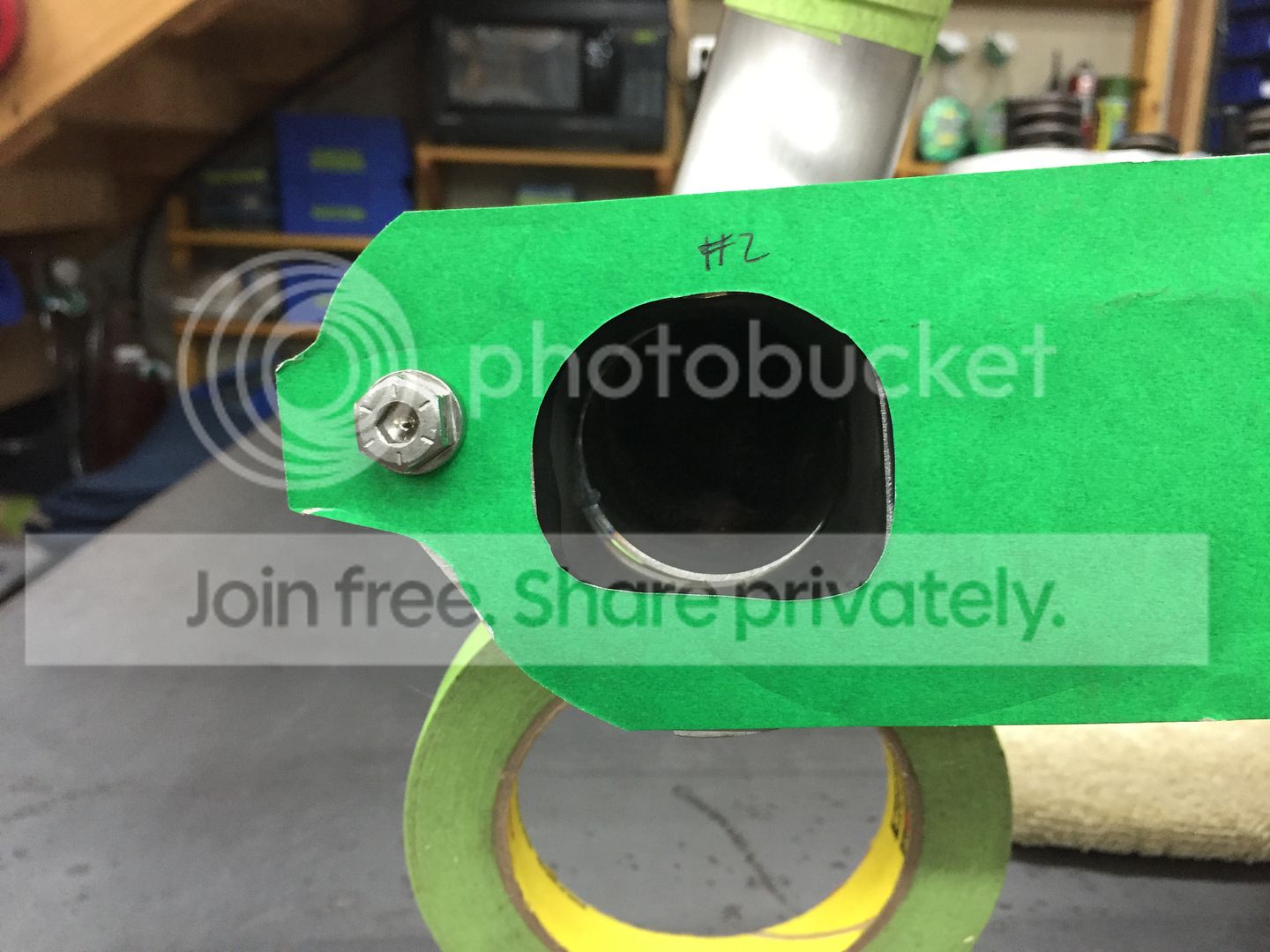
There are a few places where the header flange encroaches into the port by maybe 1/16" like you can see on the right side of this port:

IMG_1766.jpg


So... I think in those areas I can simply mark them, then when I cut the tubes out of the flange to do the individual welding of the primary tubes, I can take a die grinder to the header flange to open those spot up just a tad... then when the tube is re-installed I can just hammerform it to the slightly larger shape and everything should be perfect. :thinking:


-G
 
I forgot how crazy looking those headers that you made are. You been practicing any tig?

It was a fun day yesterday. Felt good to get back into the garage.
 
I forgot how crazy looking those headers that you made are. You been practicing any tig?

It was a fun day yesterday. Felt good to get back into the garage.


In fact I am practicing my TIG.....thanks for asking.

I started this conversation on FB, but I'll continue it here.... (the basic feedback thus far is that I was welding with too much amperage (55A) for 16GA stainless)

Maybe you guys can explain this a bit more. With the pulse turned on, my MAX is 55A....but only for 40% of the time, the welder is off (0A) for 25% of the time, and the remaining percentage (of 100%) must be the ramping up/down between 55A and 0A....???? Is that right? If so, my "effective" welding current is much lower than 55A... but this is just an educated guess. I'm trying hard NOT to read the Miller Manual (to maximize MPS points!) but I may have no other choice!!!

For the record, I'm running a super-sharp tungsten (I know this because I sharpened it about 6 times in an hour!!!) :doah:

I bought .030" filler (308) too but I'm having trouble coordinating myself to hold a proper tungsten distance while moving AND then feeding in filler... so I was trying to break the process down and teach myself one part at a time. Last night was just trying to get a decent puddle and amperage setting on some scrap. I will try some lower amperage settings tonight maybe with/without pulse to see if I can find a combo that works better. Do you typically dab filler when the pulse is ON or when it's OFF? I was blowing away the filler (right away from the puddle) last night but that might have been because I was using 55A with .030" wire!!!

My best weld of the night on some scrap tubing. I got about 1/2 of "good" weld (no filler) before blowing a hole through the part. The fitment is OK, but not great in all areas... I wasn't spending much time flattening the seams to get perfect fitups.


Sidebar:

Does anyone remember my idea for removable rocksliders? The idea was to use tapered cone-shaped receivers in the lower rockerpanel square tube, then build a slider with 5 tapered (and threaded) supports that would be drawn together and torqued-down tight with an internal 5/8" bolt at each location. A buddy of mine started this project with me over a year ago, but we've both been too busy to mess around with it.... I guess he finally got some extra bandwidth and sent me a pic and quick video of his progress yesterday. :saweet:


-G
 
So..... here's a quick analysis of what I "think" my Dynasty 200DX (TIG) is actually doing with the setup I was welding with last night:


I'm at 55A, with a 1 second pulse... 40% peak / 25% background.
That means that I'm only running at 55A for 4/10ths of second, then the machine is tapering off the current for 3/10ths of a second, and then completely "Off" for the final 3/10ths of a second..... then the process starts all over again on the next pulse.

Based on that assumption, my 55A setting is only delivering an average of 30A to the part.


Is this right, or am I completely missing the point of how pulse TIG works? :dunno:


-G
 
I'm sure a lot of reading on my part will answer this, but it'll be easier to just ask: Why make the sliders removable? When would you not want them?
 
Top Bottom