2021.03.22 - UPDATE! - THE LAST TOOL!!!
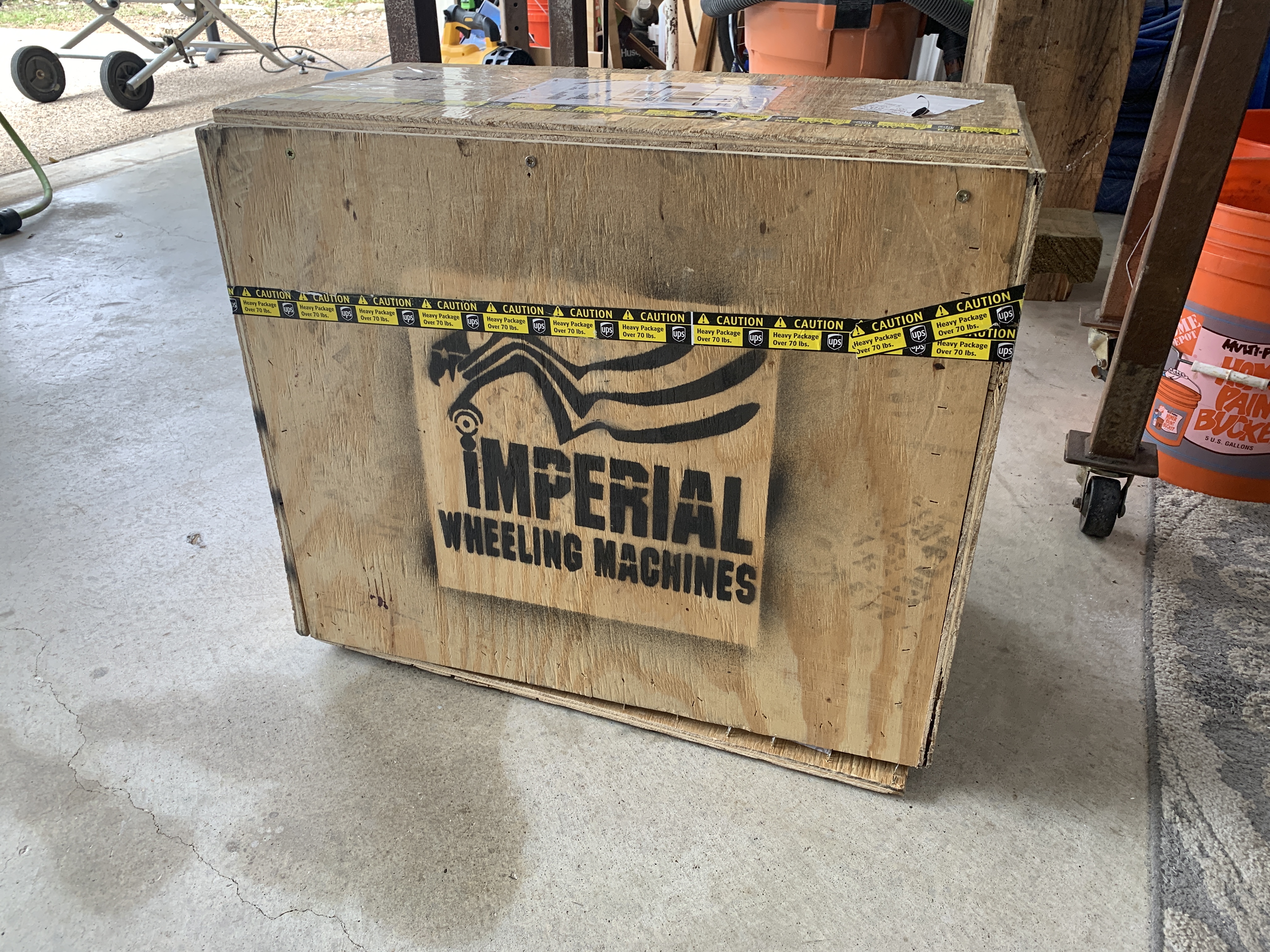
It's been a few weeks since the backorder was placed, but the new (and perhaps final?) tool for metalworking projects has finally arrived!!
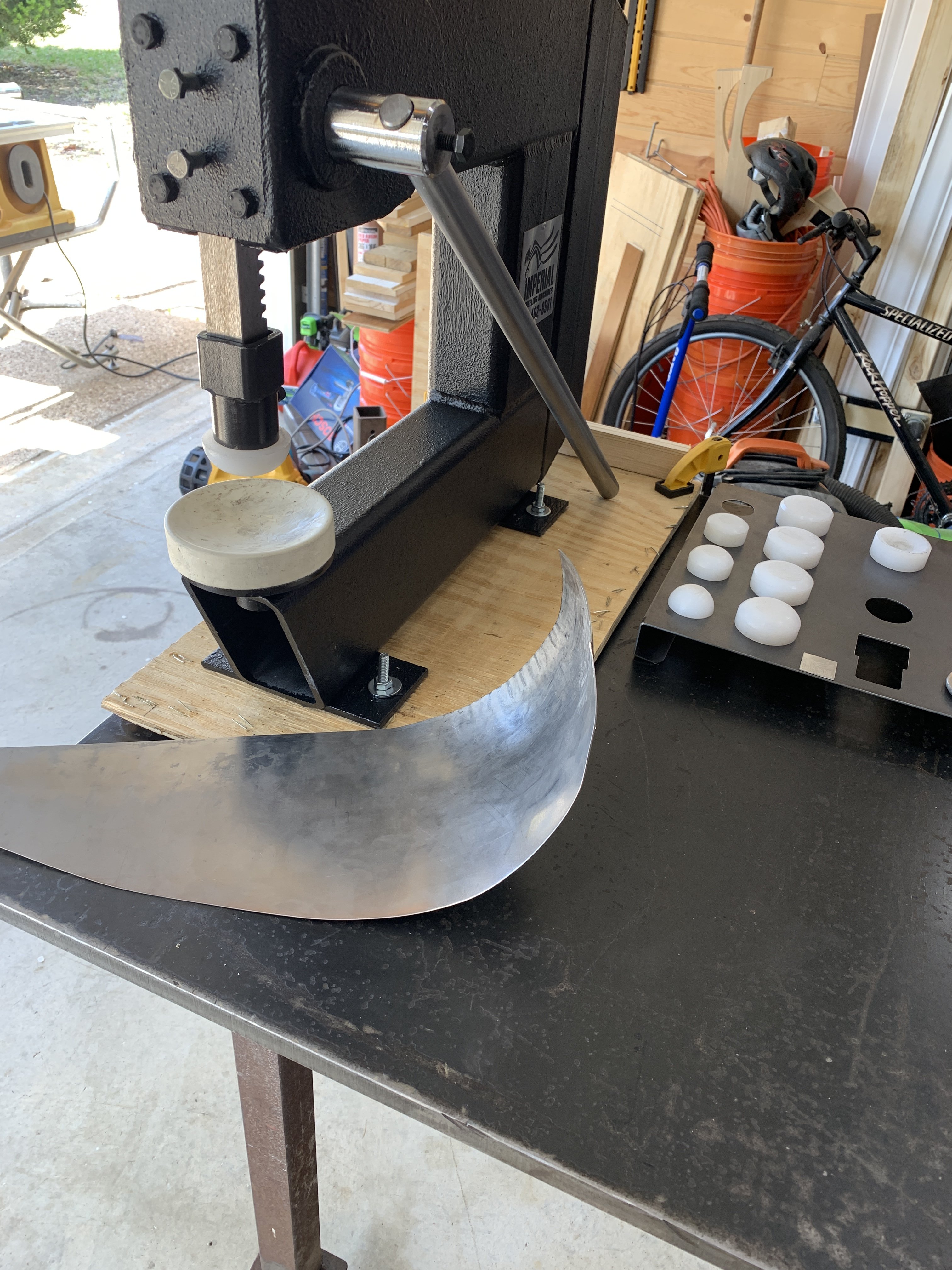
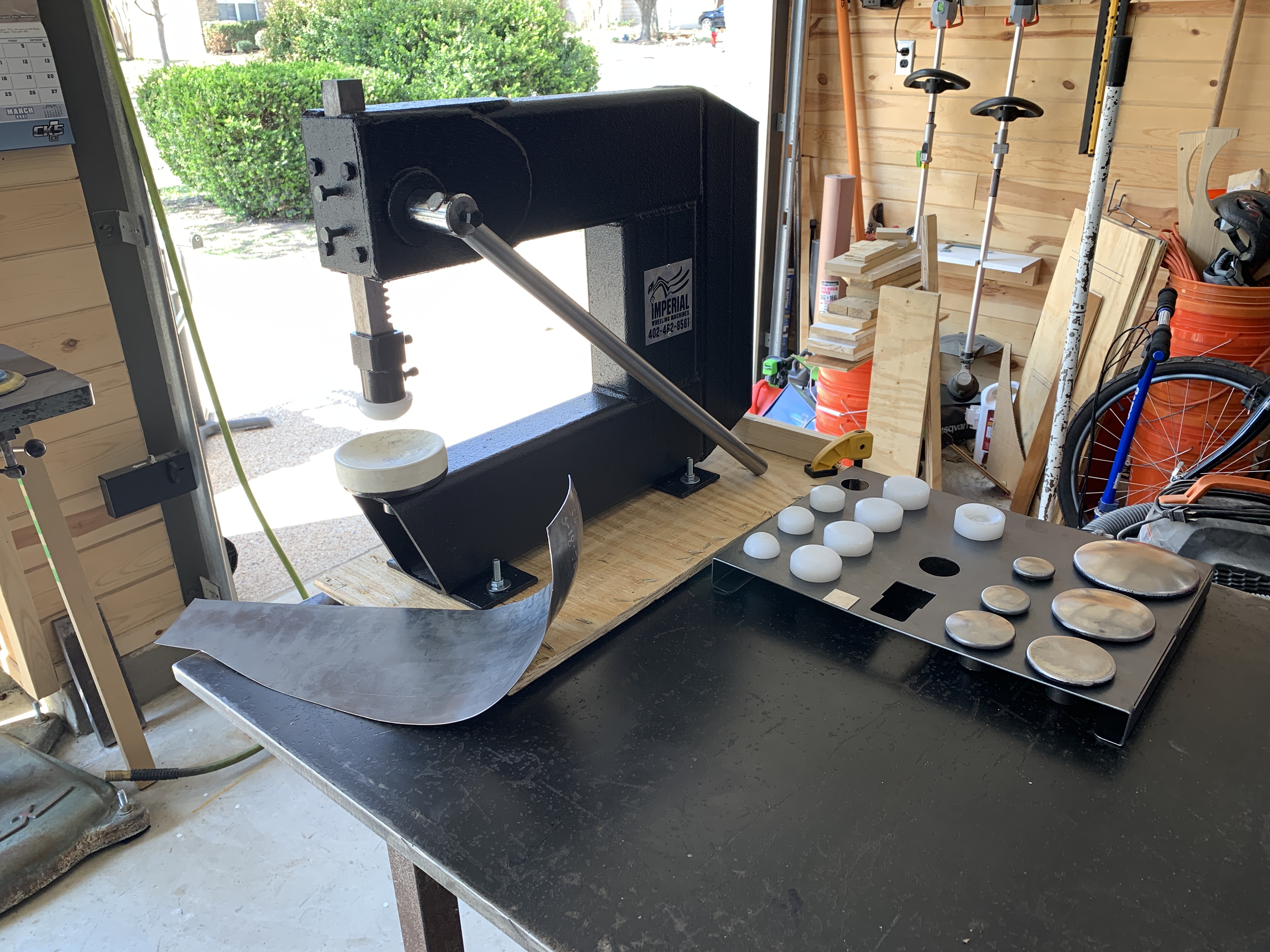
The Imperial Wheeling Machines fabricated arbor press.... this thing RULES!!!
The die set consists of a huge array of upper dies in various shapes and profiles, and a large lower cup made out of a really stiff rubber to crush the metal against. This replaces the traditional hammer & stump (or shotbag) part of metalforming with a much faster and quieter alternative.
For starters, I just put in one of the high-crown polyurethane upper dies and grabbed a scrap piece of metal to play around with. Starting maybe 2" in from the edge, just starting pulling down the handle and immediately got nice "taco shaped" wrinkles in the metal along one side.... Then, on a second pass just passed those high spots under the die, and crushed them down and gathered-up the metal perfectly, creating a really high-crown result in just a matter of minutes.
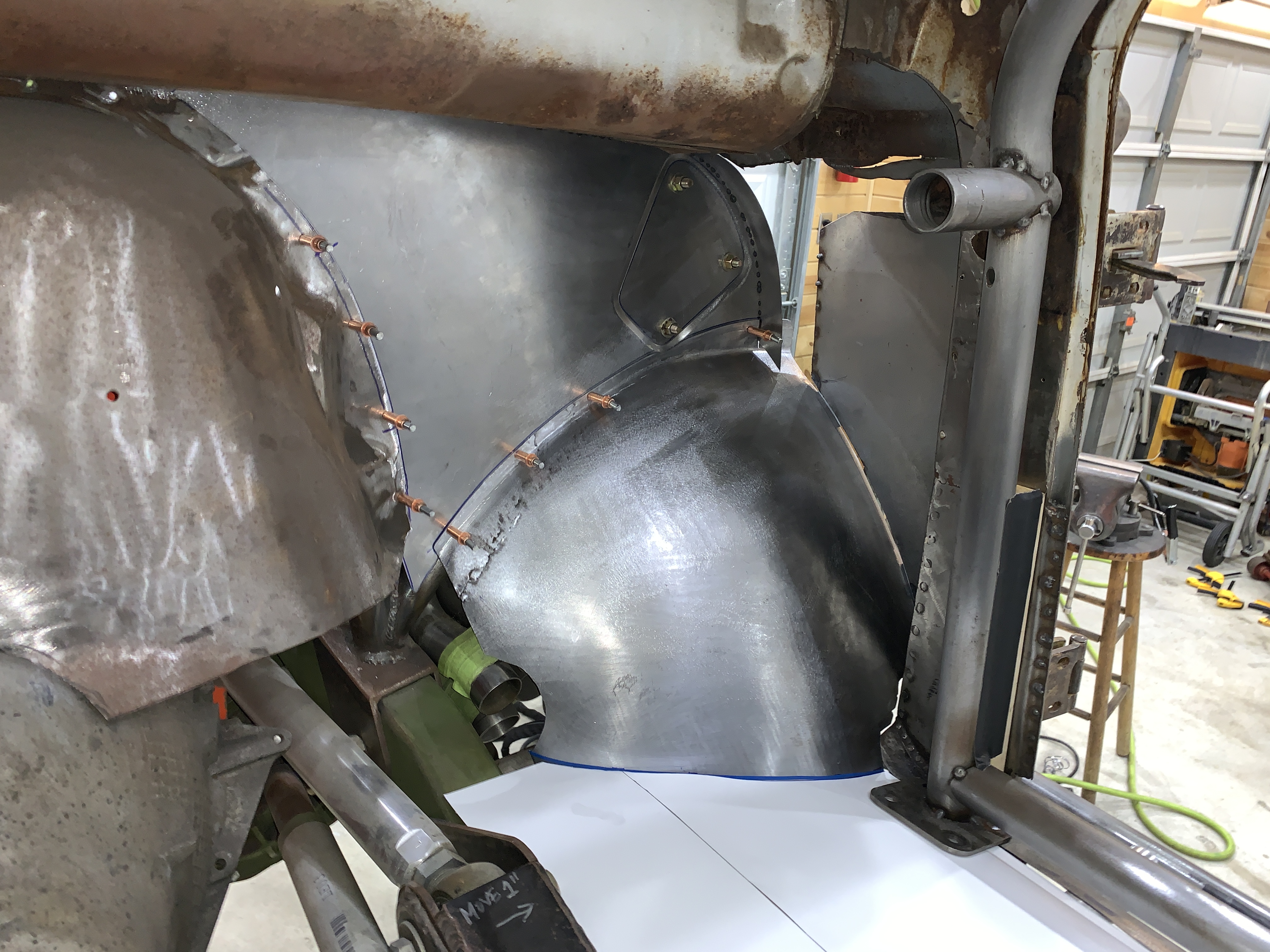
This kind of shape in 16GA would have taken me literally HOURS worth of hammering, sore arms and shoulders and noise that would have the neighbors calling my HOA!!!! Now it's possible to get a panel into a rough shape in maybe 15 minutes, and then another 15 minutes on the English Wheel to smooth-out the walnut dents. Can't wait to start on the driver's side footwell panel to see what sort of result I can get, and to compare the total time required vs. the 20 hours I spent on the first one.
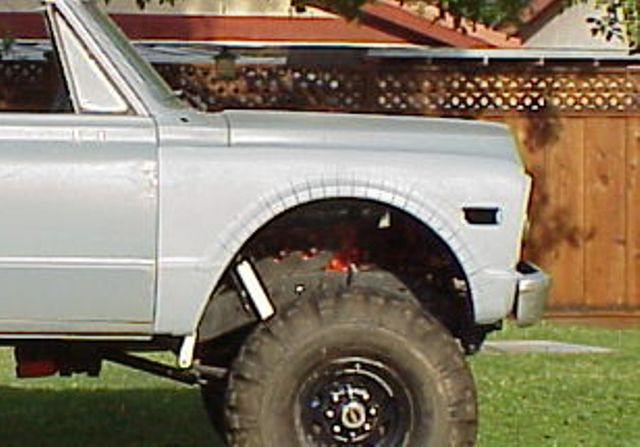
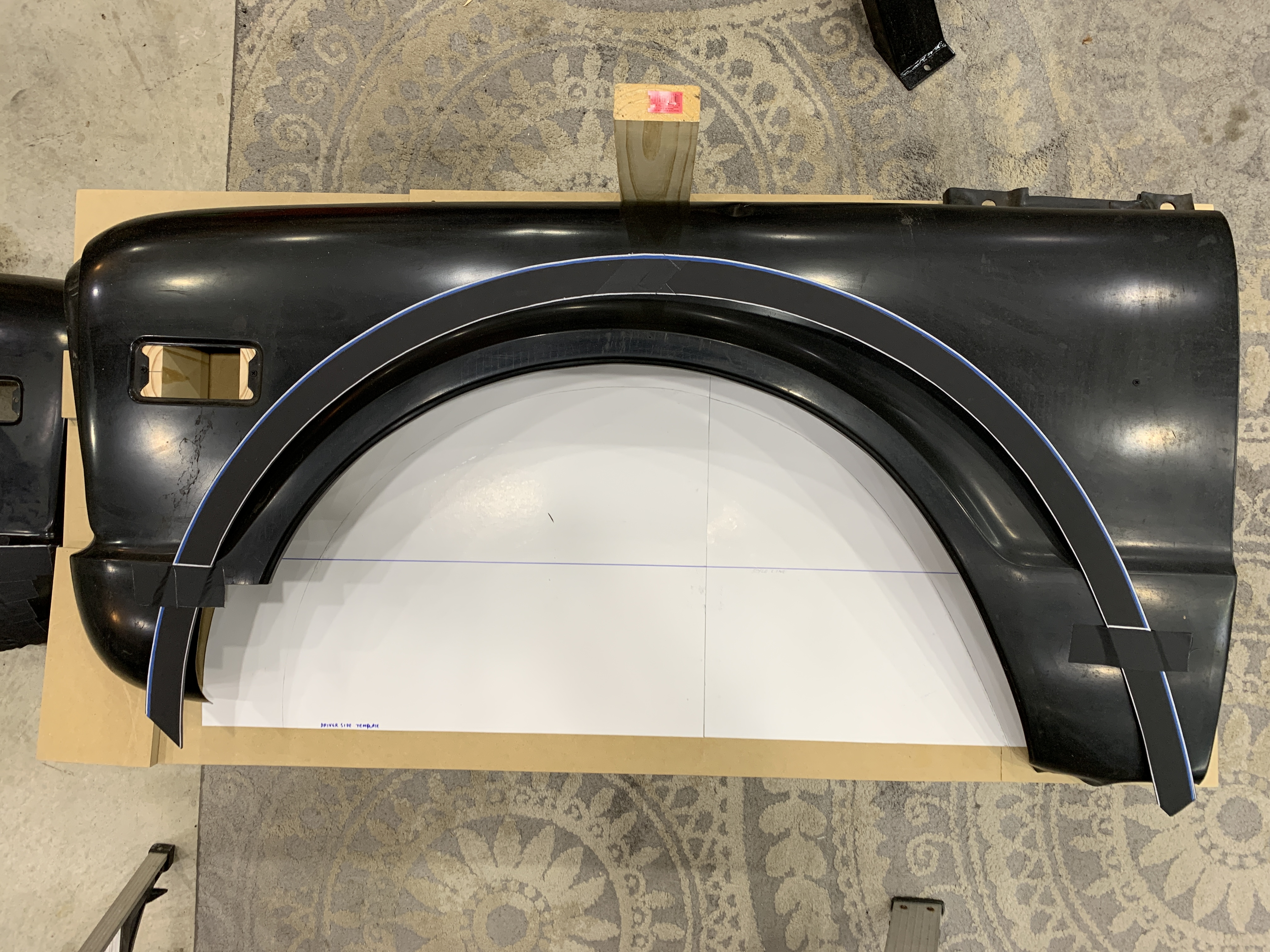
Spent most of the day yesterday building a new front fender fixture starting with a 30" x 60" sheet of 3/4" thick MDF. The 1st Gen fenders are really easy to fixture up because of the pre-existing holes for the front marker light and the rear two holes for the "K5 Blazer" emblem. Built standoffs for each of those to hold the fender in nice "neutral" position, and drywall screws turn out to be the perfect size to secure the fender using those predrilled holes.
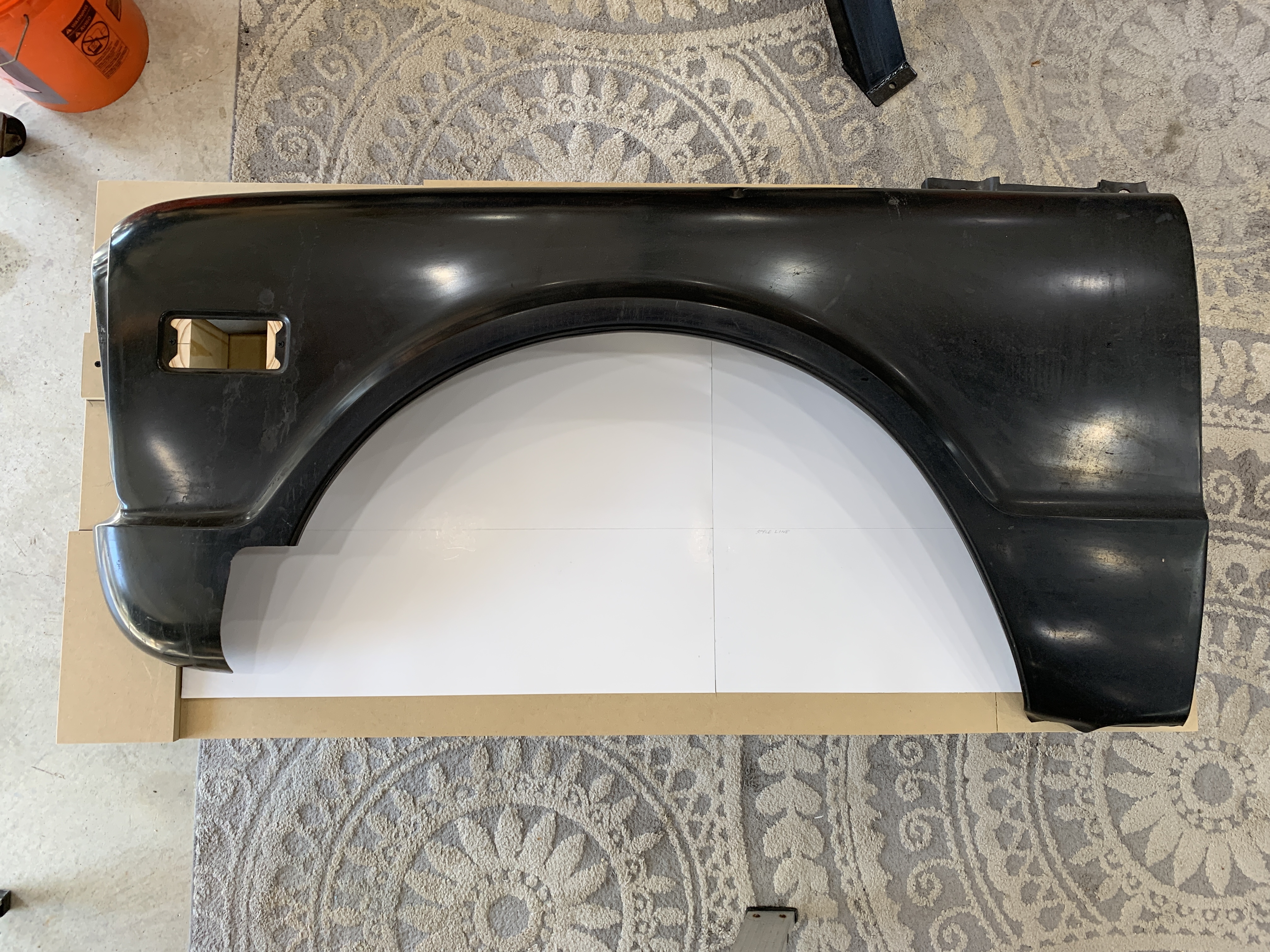
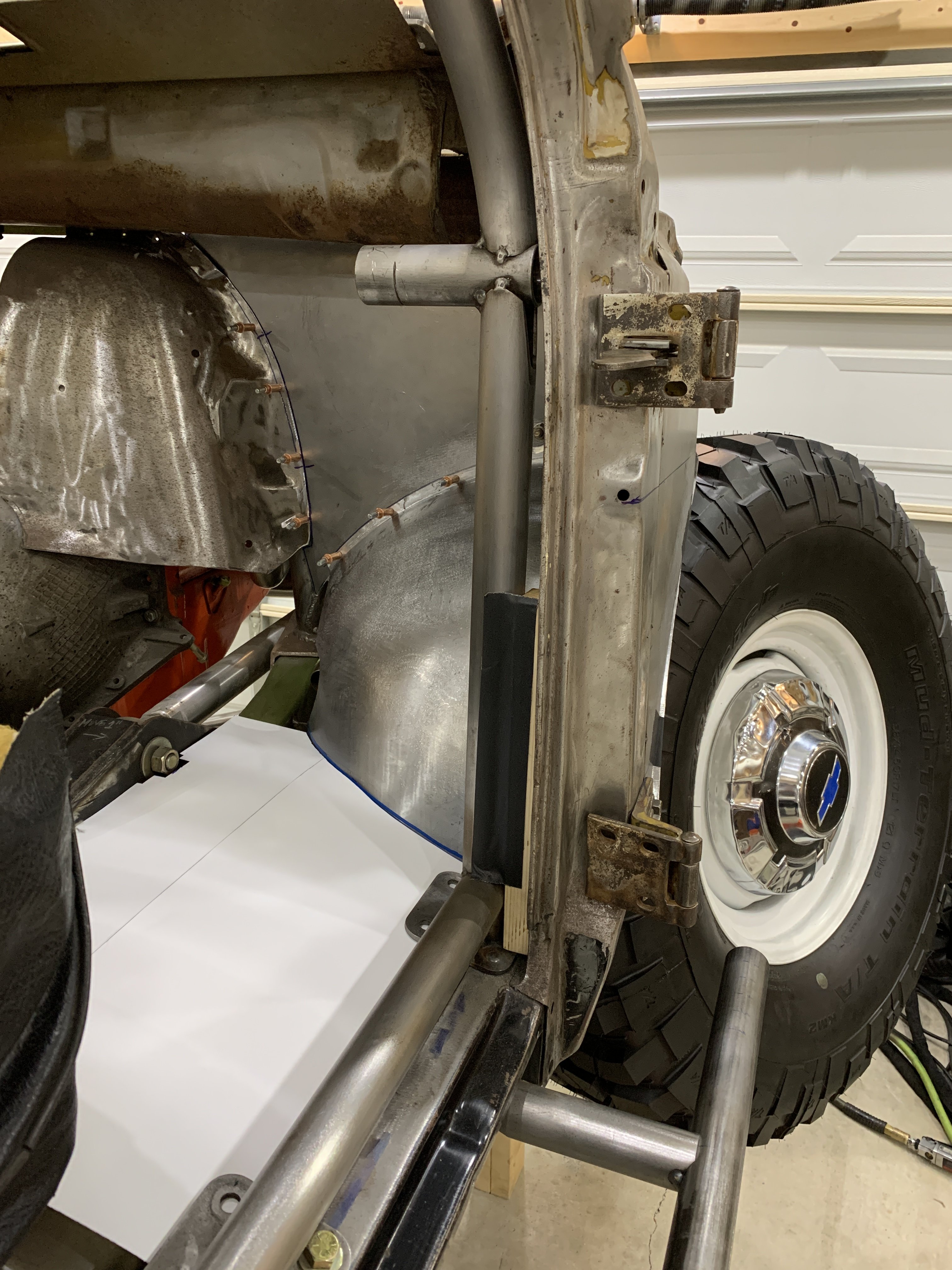
With the fender in position, some white heavy cardstock was slid in underneath and the factory fender curve was transferred down to the paper from above. From there it was a simple matter to remove that paper and then mark out a larger opening... scaling up the original profile a few inches larger all the way around. This will allow for a "Version 2" mock up of the fender with a more correct curvature, and if it looks the way I'm hoping then I can start using these paper templates to start cutting out actual metal fender arches and start working on building the fenders out of steel in the coming weeks.
-G