CK5
Register an account today to become a member! Once signed in, you'll be able to participate on this site by adding your own topics and posts, as well as connect with other members.
I'll check back later to see if you posted a pattern yet.

For now, I'm going to figure out where I am going to eat tonight. Don't feel like cooking anything tonight.
 
I'm at work til Mid. EST tonight.....3X baby.....wahoo.

I'll post up something when I get a new pattern.

Thanks Brian.
 
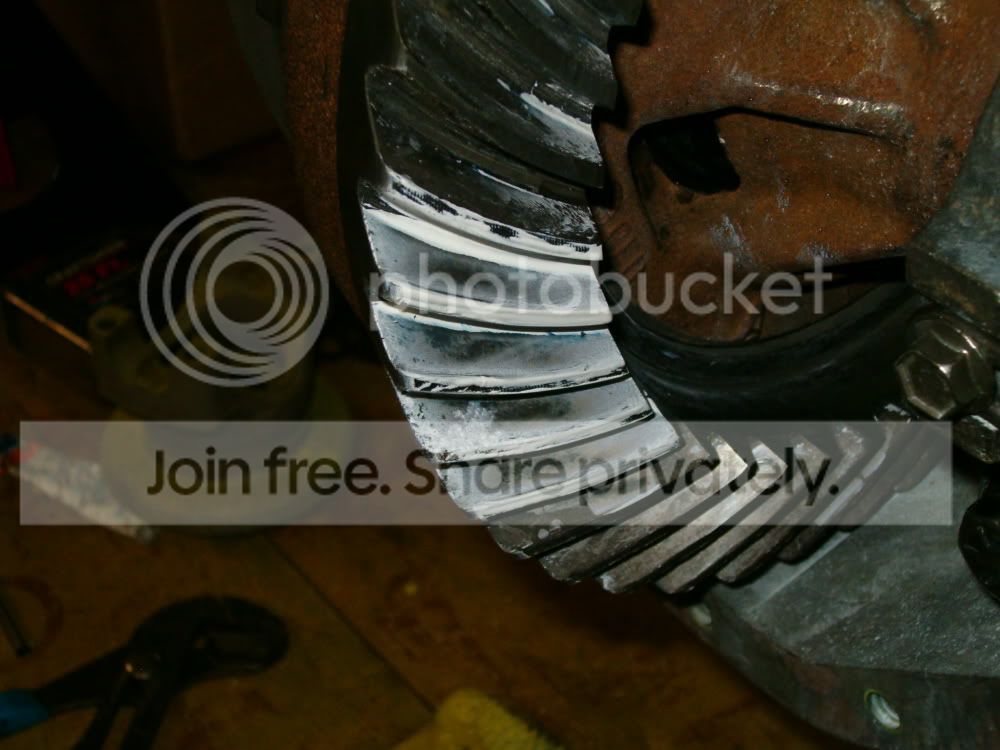
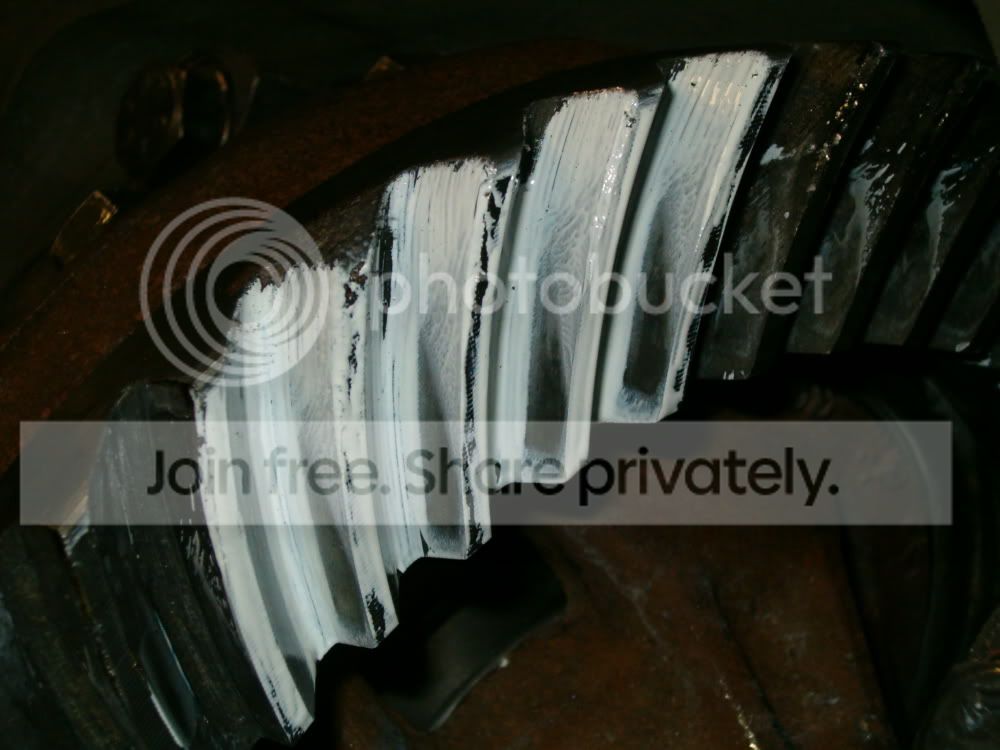
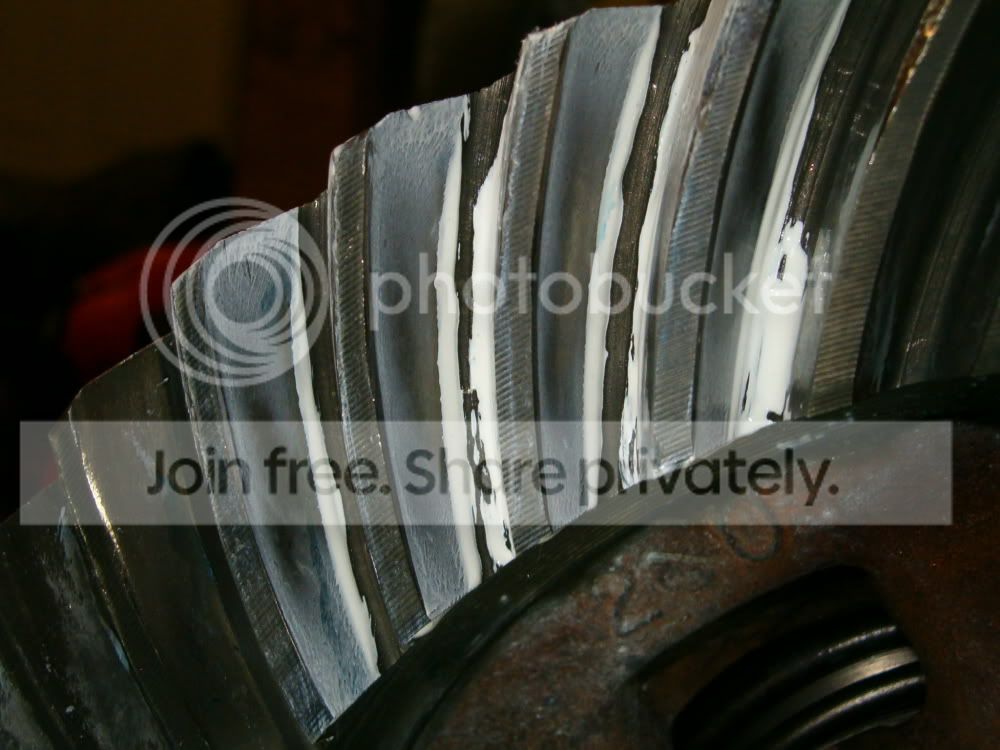
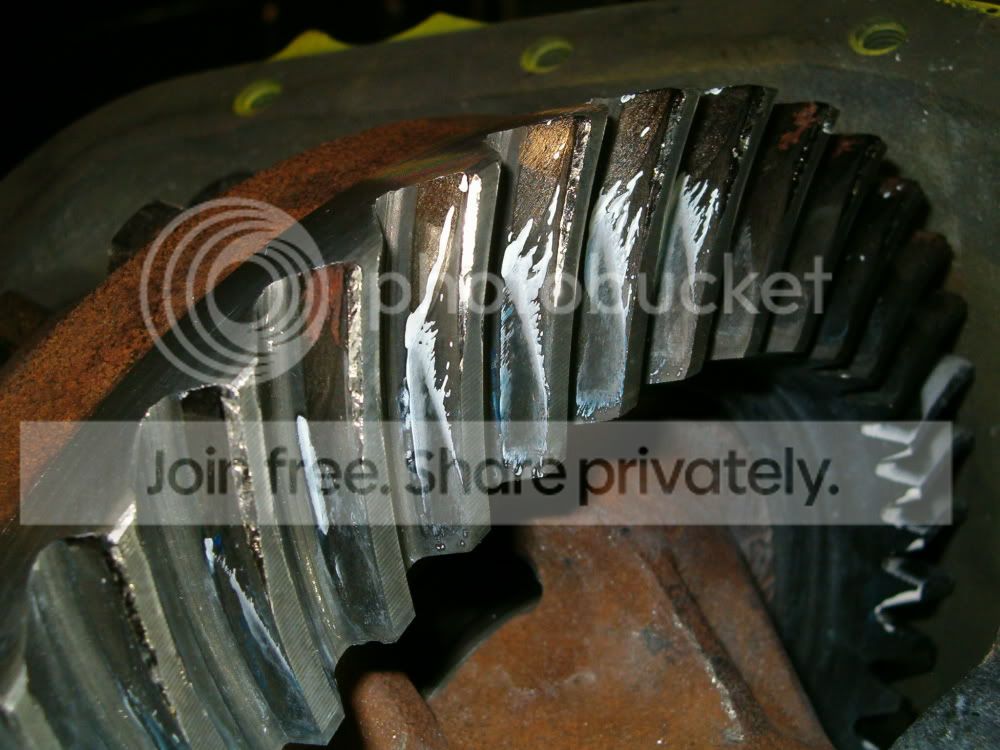
These 2 are with .022 pinion shim, and backlash reset to .007

HPIM1421.jpg


HPIM1420.jpg


I don't seem to be making any significant changes to the pattern.

Both are wide and long on the coast? side, but to far toward the toe.

Any suggestions.
 
Those look like used gears. If they are, do you know what the BL was before taking it apart. If you don't know, shoot for .008.

The pattern looks to shallow with .012 on the pinion and adding .010 huge change. I make changes in the pinion in increments of .002 - .004"
the pattern looks better with the .022 but still hard to read.

Ignore the toe to heel differences. It really does not matter that much. I have noticed that the cheaper gears do that more often (ie: genuine gear, ect...) and the better gears don't (spicer, Yukon). The BL is harder to get uniform on the cheaper gears also.
 
They are GM gears, I didn't check the b/l when I took em out of a different housing. In the other housing they had no pinion shims. The backlash is at .007 as of the last pinion shim change. That was only checked on one tooth though.
I should check in a few different locations?

I will try to use some of the Permatex compound tomorrow.
I will experiement more with it in the morning tomorrow, and post up more pics then.
 
I always check the BL every 90 deg on the 14ff. It is the best way to ensure the case halves did not have crap in the mating surface when put together.

I have seen more than one 14ff with no pinion shims so it is not out of the question.
 
That is a little bit too many shims on the pinion. Need to remove .004 or so and run it again. And get the pics a little closer and bigger so it is easier to read.
 
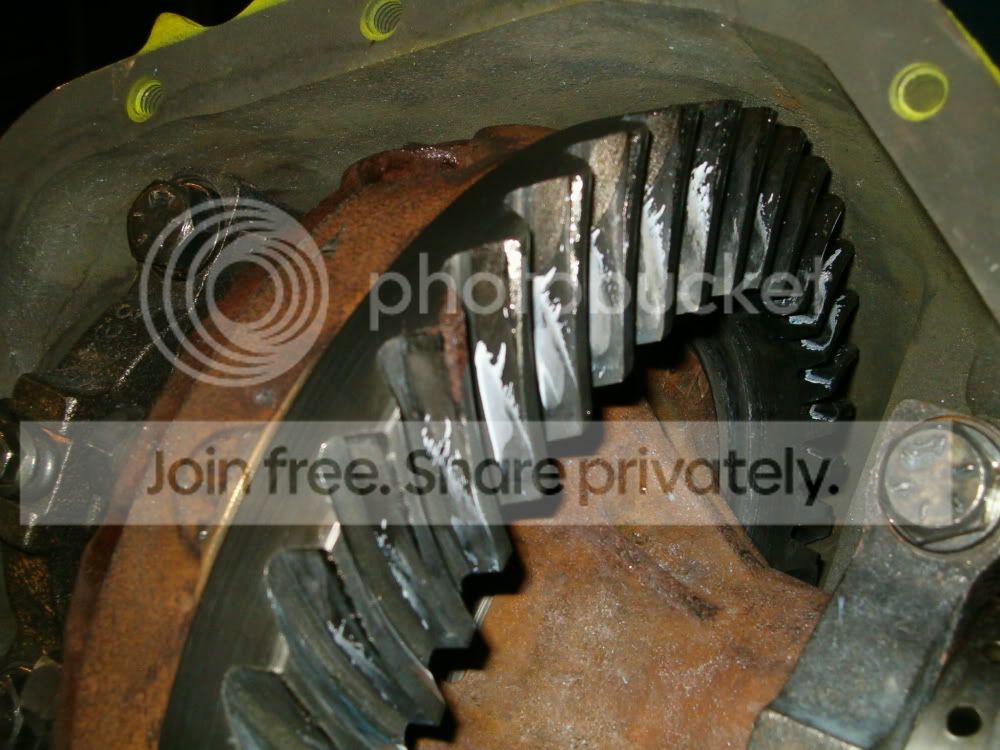
Another couple of shim changes, and I'm at .042 now, with .007-.008 backlash.

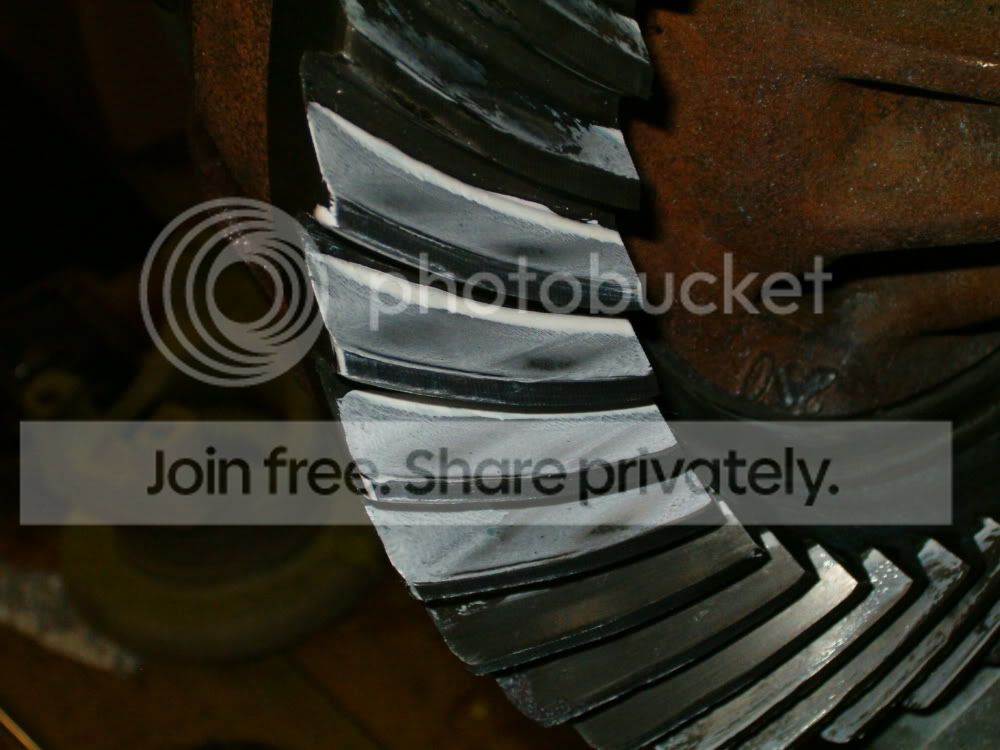
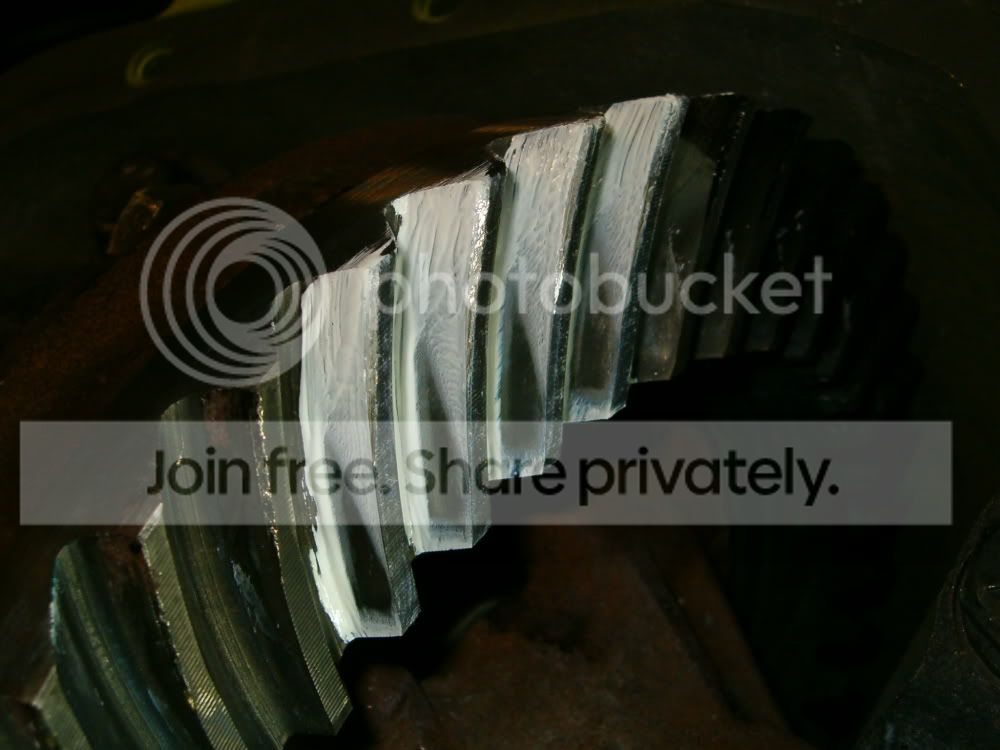
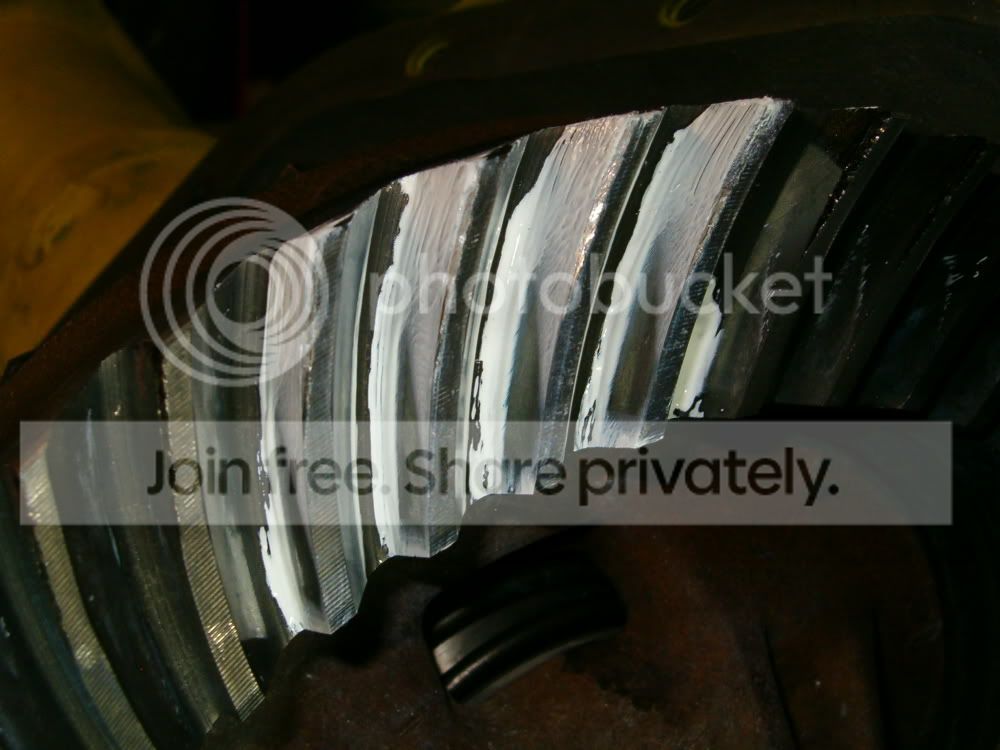
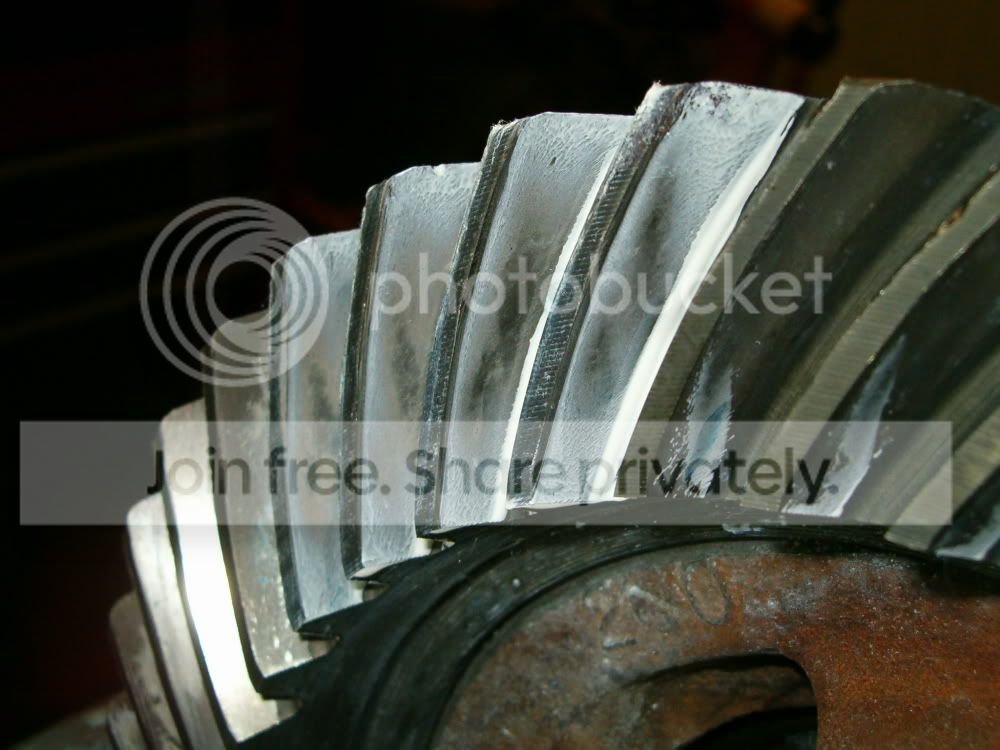
Again look closely at the paint, you can see the whitest part of the paint that hasn't been touched, and the grayish white where contact is made but not enough to remove the paint, and then the dark grey where the paint is removed.


HPIM1440.jpg


HPIM1439.jpg
 
That is a little bit too many shims on the pinion. Need to remove .004 or so and run it again. And get the pics a little closer and bigger so it is easier to read.


OK Brian, I'm going in the wrong direction huh?

I'll go down to .025, and keep the backlash about .008.

Stay tuned.
 
OK, I got .025, and .008-.009 b/l....downloading pics now. Will make them bigger, so it will be a few minutes'


Brian I know you said not to worry so much about the pattern being on the heel of the tooth, is that because under deflection the pattern will spread toward the toe of the tooth?
 
Last edited:
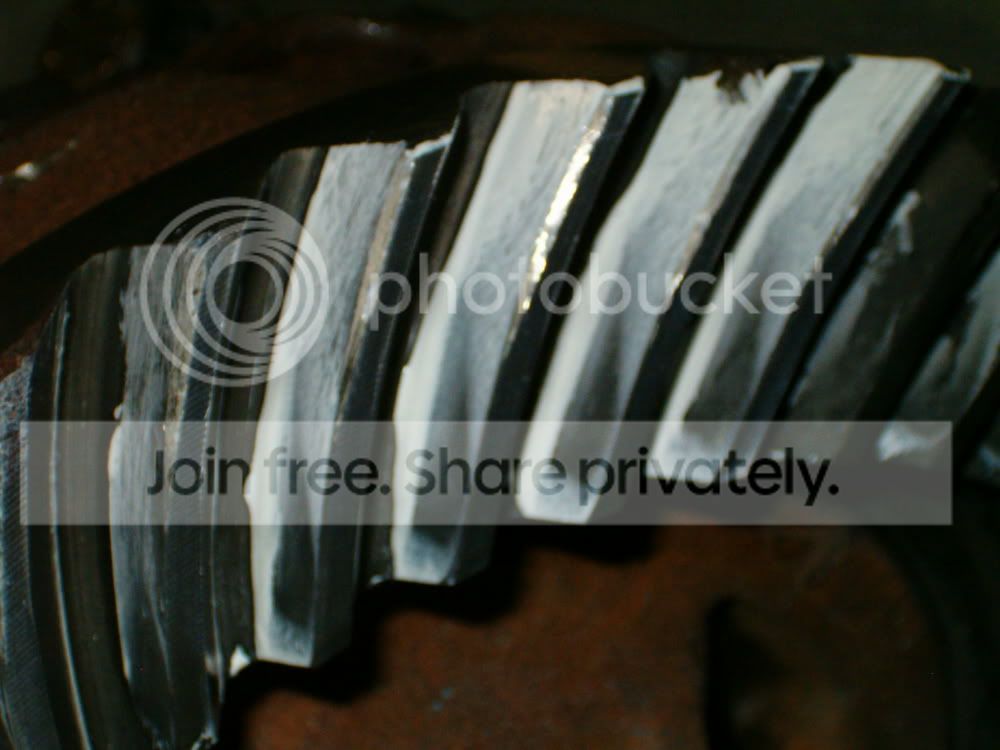
Here we have .025 pinion shim, with .008-.009 backlash....

HPIM1443.jpg


HPIM1441.jpg
 
That looks better but it still looks a little shallow. I would remove around .004-.006 and try again.
Are you rotating the pinion around while putting resistance on the carrier?
You should rotate the carrier around more than one full turn. That way you can see where the pinion will hit the gear teeth separate from where you put the marking compound. Sometimes that pattern is easier to read. It comes out almost like a negative of what you are looking for. Kinda weird but it does work.

The heel/toe placement of the pattern really doesn't have anything to do with deflection. Especially in a 14FF. Look at the third pinion bearing. That pretty much eliminates all pinion deflection, and the carrier is huge to the ring really doesn't deflect either. Especially with you turning it by hand.
Other than the cut of the gears, machining of the housing and carrier, I'm not exactly what causes the heel/toe of the pattern to change. I never really worry about it.
 
We have been rotating the ring gear through 3 revolutions, and cleaning the gears for each change.

Now the shim @ .020, and .007-.008 b/l:

HPIM1447.jpg

HPIM1448.jpg


The "negative"

HPIM1449.jpg
 
This may help explain a little about the patterns.
http://www2.dana.com/pdf/5717.pdf

What a co-incedence, I checked them out last night, and determined these gears are a face milled set, and then looked at the diagrams and it looks like the face milled chart isn't right. It has on the drive side:
Top toe, and root heel repeated. Any how that did show some stuff I wasn't really understanding, and obviously went in the wrong direction with earlier.
 
Seems like you need to shoot for around .022 on the pinion. It is hard to tell where the root of the gear tooth is in any photo, but it looks a little deep with .020 and a little shallow with .024
 
Here is the same set up, with the root of the tooth clean, no compound on it. I also cleaned the top of the tooth off, maybe that can help?

The paint goes down to the root of the tooth, but not into the flat bottom between teeth.

HPIM1450a.jpg


HPIM1481.jpg
 
Brian I must first thank you for your patience with me on this setup.
Second, I appologize for the crappy pics, and not having Yellow setup compound.
I have done some expierimenting with my camera today, and I think the pics are noticeably better now.

(I only have .010, .012 (2), .016, and .020 (2) shims)

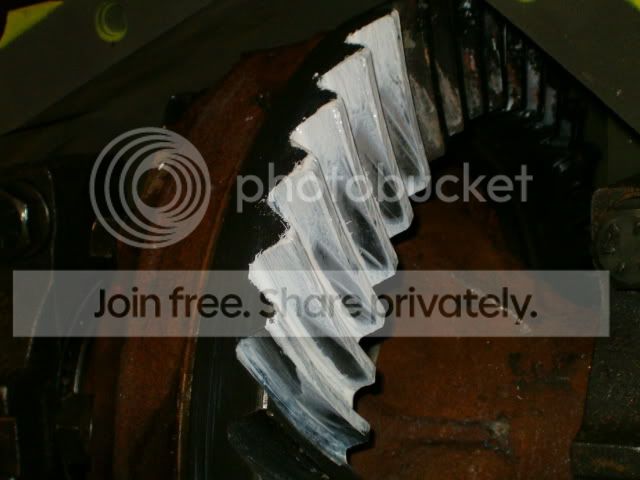
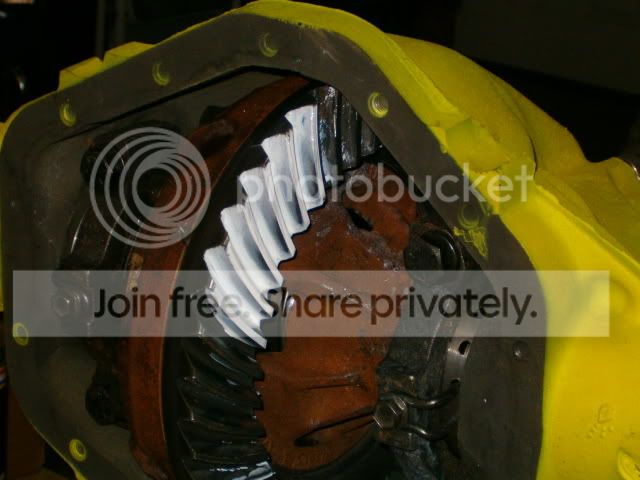
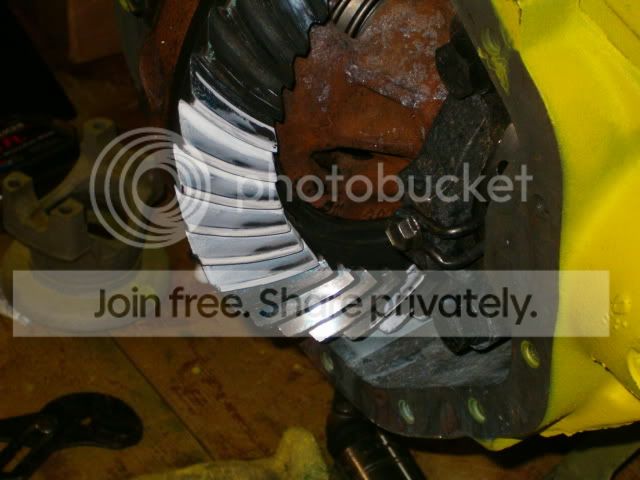
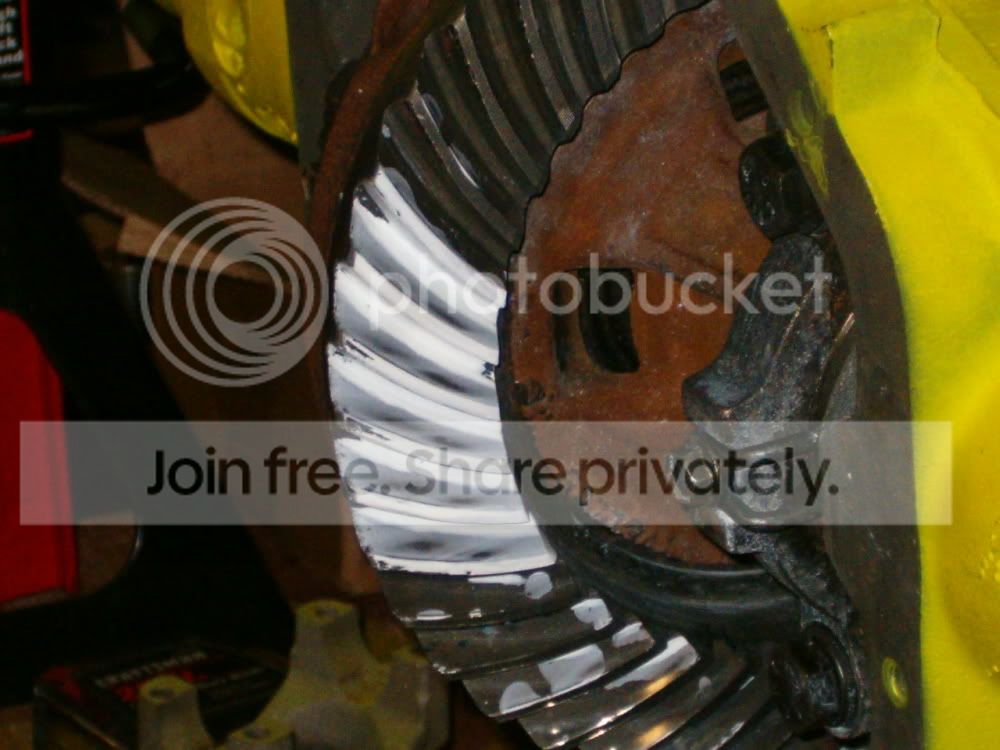
This is .016, and .008-.009 b/l:

HPIM1459a.jpg

HPIM1460a.jpg

HPIM1461a.jpg

HPIM1462a.jpg


And the negative on drive side:

HPIM1463a.jpg
 

Latest Posts

Top Bottom