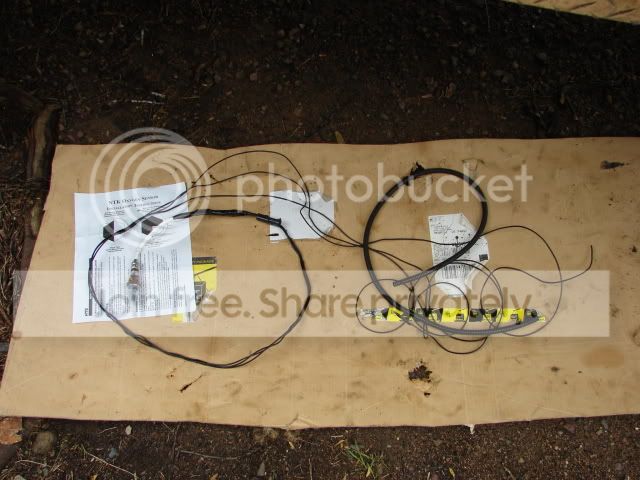
Check your oxygen sensor. It is not crossing hatching at all, just showing 0V at all times (range is 0 - 1V, 0V indicating a great deal of oxygen, 1V indicating no oxygen) which is causing the engine to think that the engine is very, VERY lean, and causing it to pour as much fuel on as it capable of to try and compensate.
The oxygen sensor is a zirconium oxide type, basically it works by allowing oxygen ions to cross a permeable membrane. When the oxygen on one side of the membrane is the same as the concentration on the other side, there is no push for the ions to pass through the membrane to equalize the concentrations on either side. This pressure is indicated by voltage. Since your sensor is showing 0V, there are little to no ions passing through the sensor. When there is a big difference in concentration, the ions rush through generating a voltage.
O2 sensors of this type must be kept very hot to work, as the heat opens the pores on the membrane to allow the oxygen ions to pass through. They are also easily poisoned by substances such as silicone, which plug them right up (hense sensor safe RTVs).
Cheap aftermarket O2 sensors often don't work right out of the box, I only use AC-Delco sensors when I replace them.
Other than that, I see that your IAC is infact working fairly closely at about 50 counts at idle. Ideal is around 25, but that is close enough as is, and indicates to me that you do not have a vaccum leak on your hands. Your MAP sensor readings are low, but we already know that they should be due to how the engine is running.
At this point I would replace your oxygen sensor and install a 195F thermostat. Fuel injected engines like to run hot, you won't see any gain in performance by running a cooler one. The concept there was to try and keep the air charge cooler, but with a controlled fuel mixture based on oxygen in the exhaust will do a much better job. A hotter engine is a more efficient engine.