I think you are trying to overanalyze the TIG amperage, yes you are right that the avg amperage is somewhere lower with pulse, but who cares. Use the amperage that gets enough heat but not too much, yes it will require a little higher when pulse is on vs when there is no pulse.
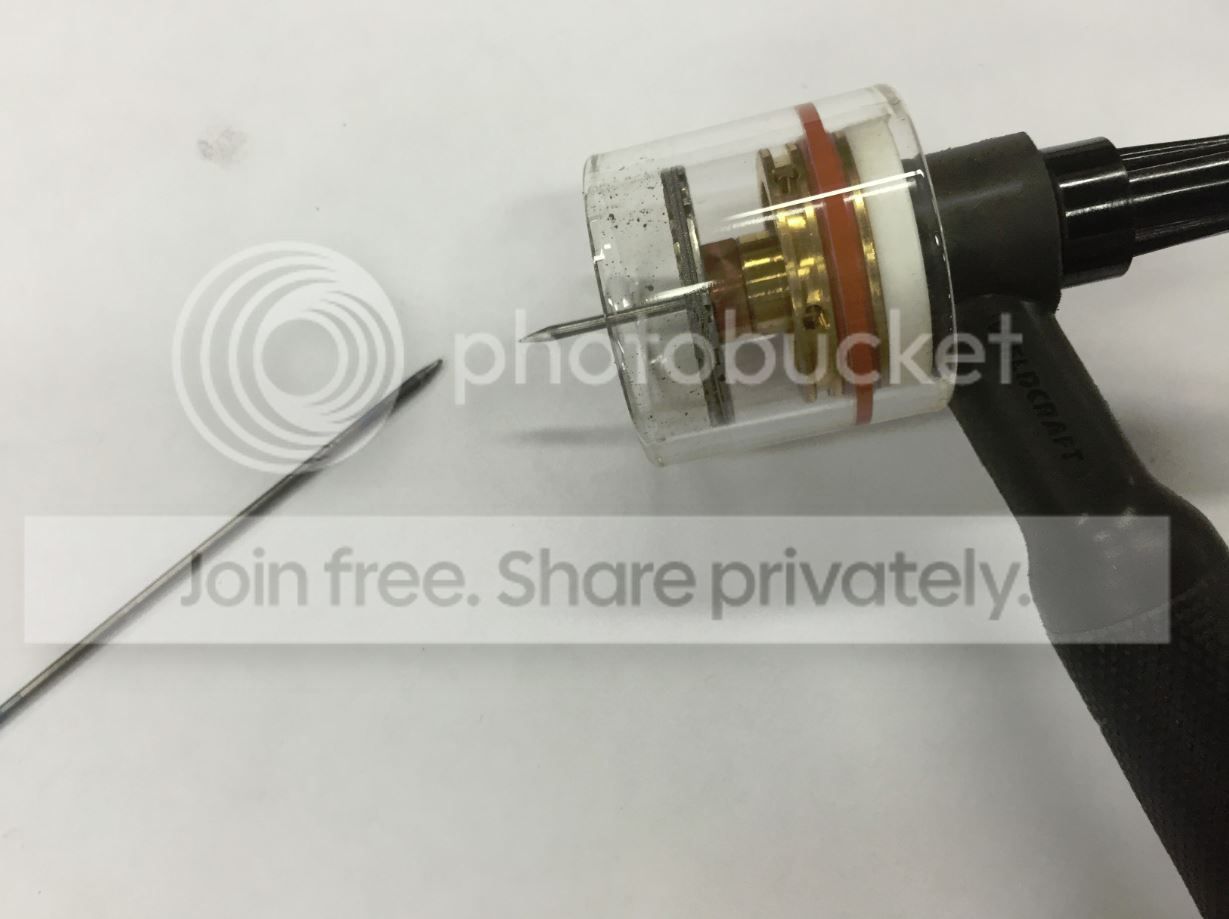
I think you are right that pulse can help take some of the extra heat out of the weld. I really like those pyrex tig cups with the huge gas coverage with stainless, they help out a lot as it covers the weld for a longer time as you pass over it.
If you are having a lot of doubts about the pulse, try it without, once you get that down, then turn it on and turn the amps up 10% or so and try it again. Don't forget you have a foot pedal, not a foot switch. Its very easy to forget that and just floor it or shut it off thinking of it as a switch. You should be varying your pedal position to keep the same puddle width as you progress. This means it takes less heat toward the end and more heat in the beginning of the weld, and varying in between.
When welding stainless exhaust tubing I found it helps if you get the gaps so tight that you don't even need to add filler. Although that is easier said than done.
Also, pay very close attention to your torch angle, the torch angle has a much larger effect than you would think.
Word.
I had a little "realtime FaceBook coaching session" last night on
That K5 Site group.

I was struggling with all the 1PPS stuff.... then I did some reading on WeldingTipsandTricks.com about TIG welding thin stainless... Jody suggests using a higher pulse setting (30 or higher) as well as 30% PEAK / 30% BACKGROUND with around 50 Amps (IIRC). So I tried that new setup for a while and fumbled around and wasn't making very good progress.
Finally, the angry FB crowd got impatient and said "Shut off the damn pulser and just weld!!!"

That was good advice.
I had been trying to break-down the process into small skills that I could learn before trying to combine two-hands and a foot pedal all at once. All I was trying to do was find a setup that would let me create a quick puddle, and then start trying to move it around and see if I could fill a gap (without filler rod) on tight fitments.
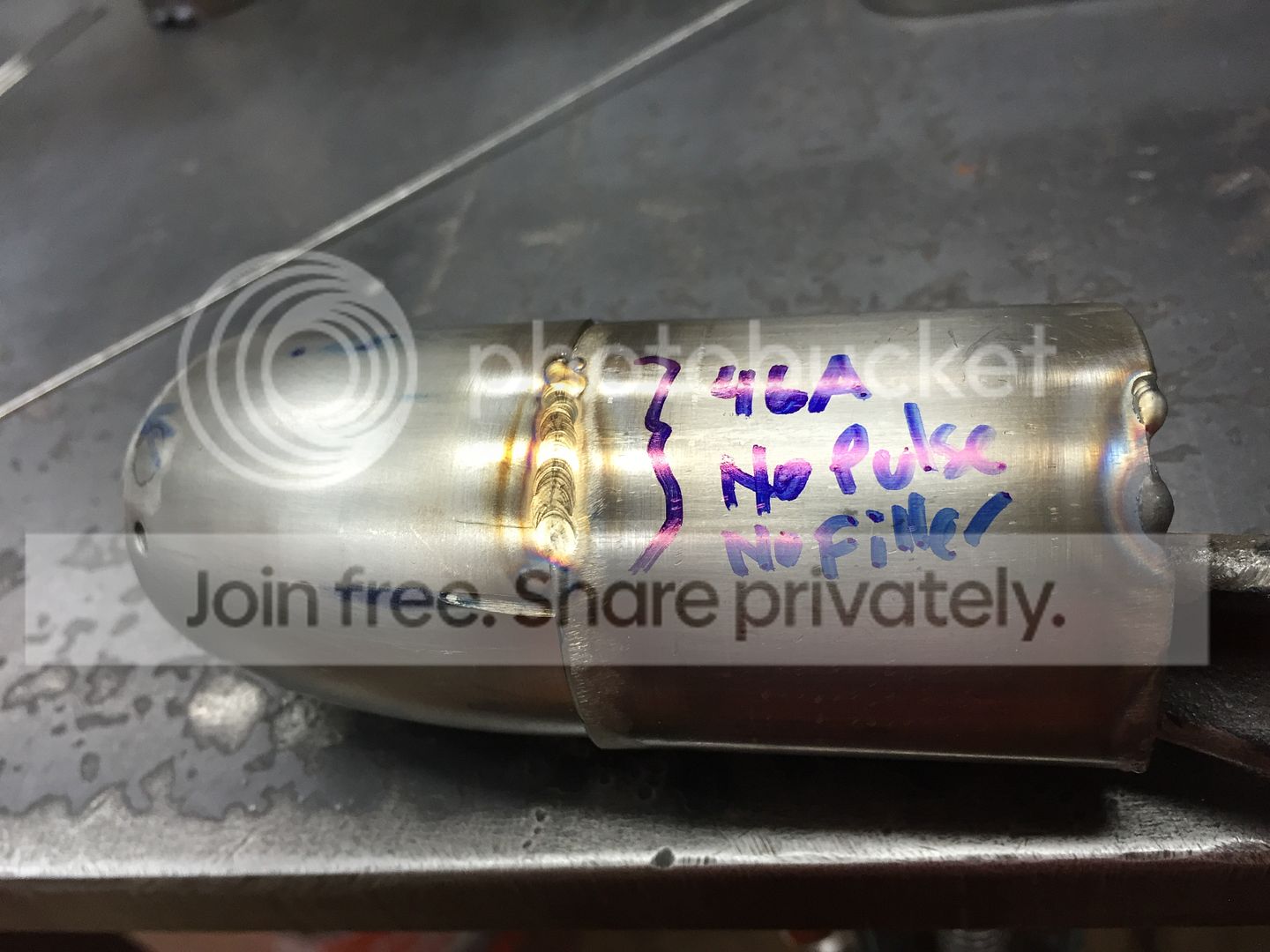
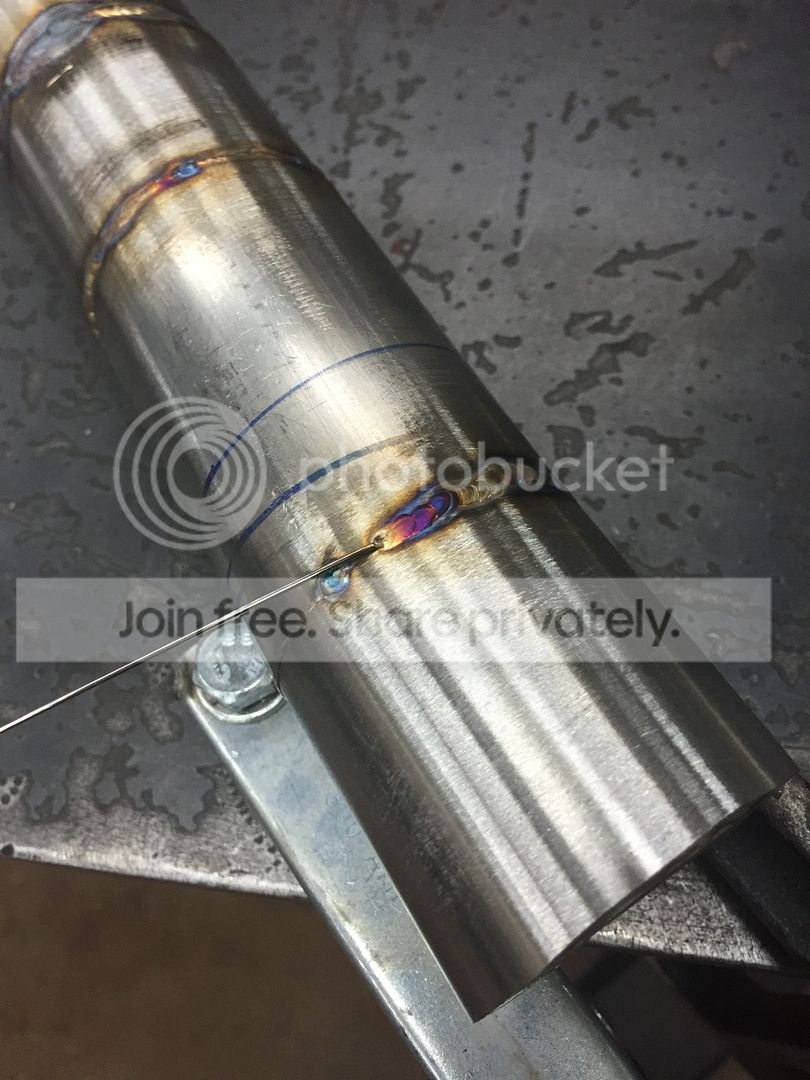
46A seemed to work pretty well (1/16" Tungsten 2% Lanthinated, 30CFH Argon flow, Pyrex cup):
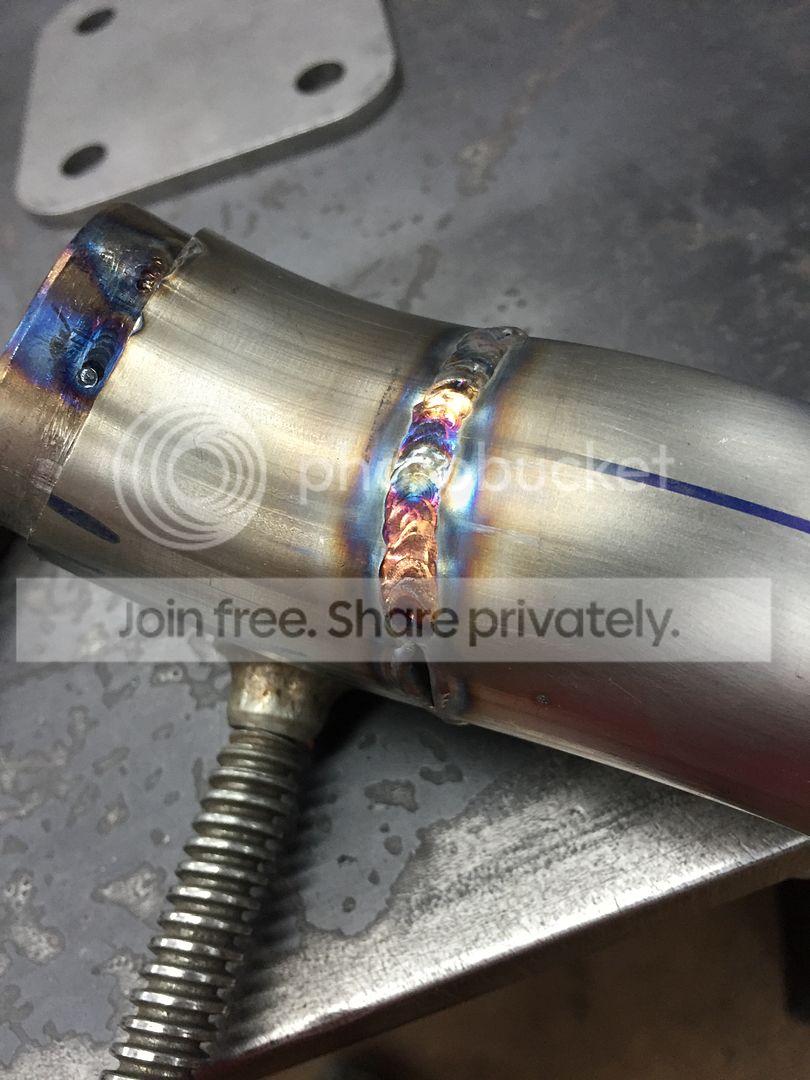
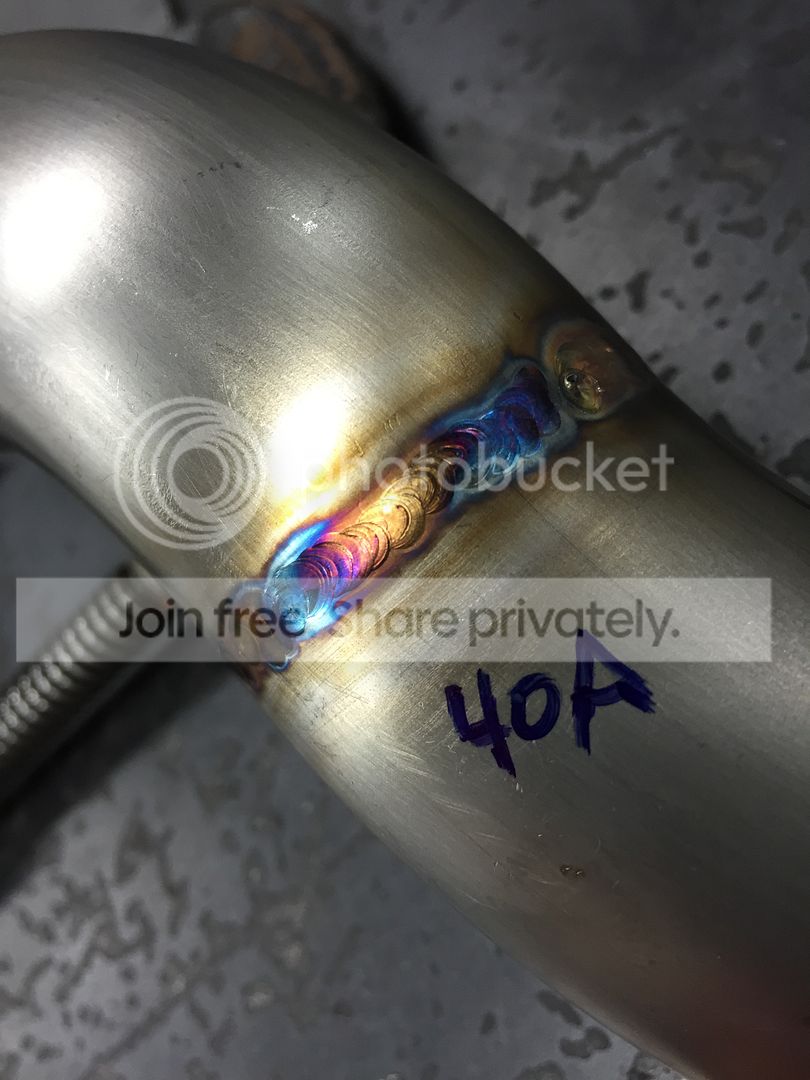
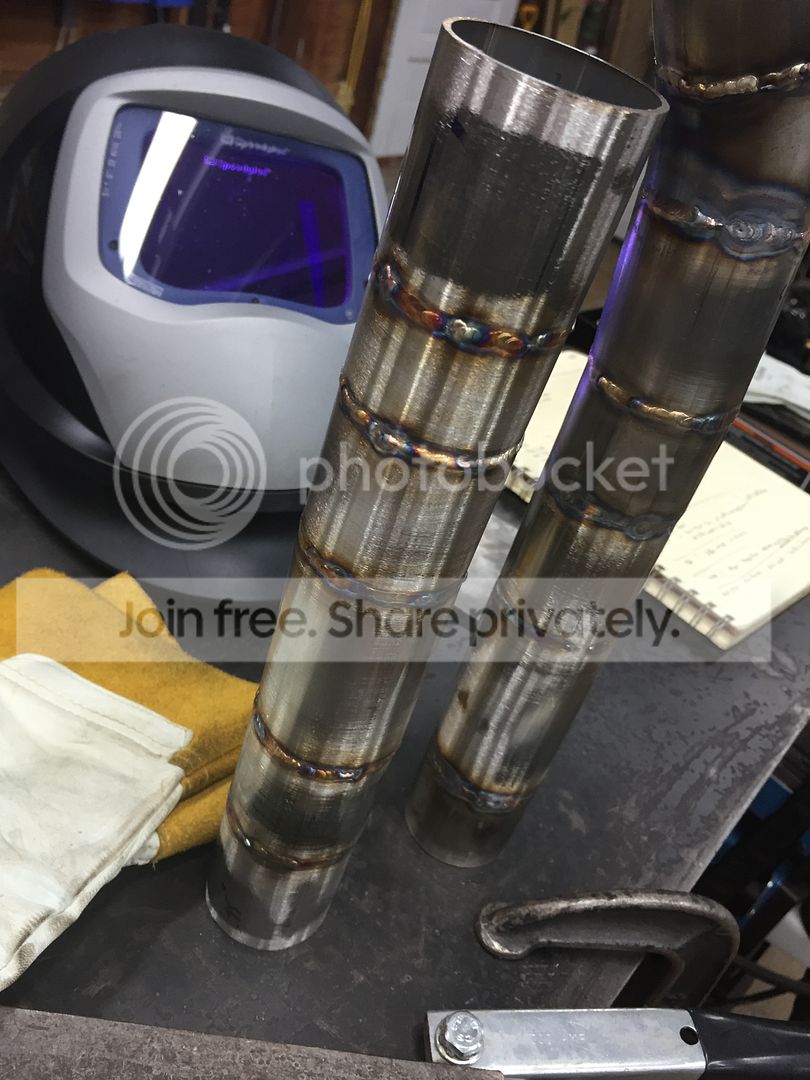
The coloring was a nice light-gold color and it seemed to flow pretty well also. I decided to turn down the amperage a little more to see what would happen and if I'd have more time to work the puddle before blowing-through... I went down to 43A.... and then eventually to 40A:
The weld color definitely was different.... more of a dark blue / purple hue than before. I don't know if that was a result of pulling away the post-flow shielding gas too early... or just that the weld was "cooler" at only 40A??

In any case, it was a relief to finally be fusing parts together instead of blowing through them. Another "lightbulb moment" was when I struck the arc about 1/32" away from the tubing gap (instead of directly on TOP of it!).... I don't know why I thought it was a great idea to always start in the middle of the gap, but obviously the molten puddle melts-away from the heat source so I'd always get a crater. By starting a puddle where there was good metal I could more easily "sweep" the puddle across and onto the gap where it would start to fill in, and if I swept slightly past the gap to the other side, I could maintain the puddle and then work it back the opposite way to slowly move down the seam and close it up (even without any filler rod).
This was a huge breakthough.
I sat there for about 3 hours last night just practicing, making mistakes, sticking the tungsten (A LOT!) and spending a lot of time walking over to the grinding wheel to resharpen the tungsten.... at the very end of the night I tried dipping some filler rod (.030" 308) into the puddle, but that process still feels REALLY awkward and clumsy. I guess I will try that tonight to see if I can get more comfortable with it.
-G