CK5
Register an account today to become a member! Once signed in, you'll be able to participate on this site by adding your own topics and posts, as well as connect with other members.
Ahh rust repair :doah:

I'd get your truck prepped and make your initial cuts on it first. Leave your patch as big as possible until you know how much of it you need. Unfortunately, when there's a hole already you're bound to find more around it that won't be salvageable. I'm guessing you'll need to cut out at least 4-5" past the hole to find metal that is thick enough to weld.

I'd buy a spot weld cutter too. They're cheap and won't heat up/warp the sheet metal like the grinder will when removing the spot welds.

Take lots of pics and ask as many questions as you need to :thumb: You got this :waytogo:
 
I didn't know such a thing existed. thanks! I'll check into it.

It's just a goofy looking drill bit that cuts through the spot weld. Much easier and cleaner than the grinder anyway. You can pick them up for around $20 most of the time.
 
You've got quite a bit of disassembly to get 100% access to that area (AC unit, cowl, fender, etc). Hopefully it doesn't reveal a larger project than you've planned for...

The hardest part will be finding an "index" to match up the old and new parts. I'd probably use that horizontal "spine" below the fender mount bolt hole and cut it right along the peak. That will help avoid warpage when you weld it back, and should provide a good starting point to get the new panel aligned.

-G
 
As soon as I seen the area of rust, I thought that it was going to be a double layer. I went through some of that area when I closed up the heater hole.

The way I see it, you have two options. Split the the new donor piece into two separate pieces and weld in the inner one first, or cut up the new donor piece so that you have some laps at the ends and can weld the inner one in still and add some metal to the ends later.

I personally would split them into two first. There is no way to finish weld the inner layer with the outer layer still on top of it completely. You just won't be able to get the gun in the cowl hole to get some good tacks on it.

If this doesn't make sense, just ask. Maybe I'm wrong though and someone can see a easy way to do this.

By the way, go grab a 12 pack. You'll need it after you start cutting into your rig for the first time. :thumb:
 
The nice thing is that you're also working in a really inconspicuous area.... so even if things go horribly wrong, it's not likely to ever show. That should help give you the courage to touch that cutoff wheel to your truck. :D

-G
 
You've got quite a bit of disassembly to get 100% access to that area (AC unit, cowl, fender, etc). Hopefully it doesn't reveal a larger project than you've planned for...
yeah, not thrilled about that. once I get started the truck is undrivable until I finish. :(

The way I see it, you have two options. Split the the new donor piece into two separate pieces and weld in the inner one first, or cut up the new donor piece so that you have some laps at the ends and can weld the inner one in still and add some metal to the ends later.

I personally would split them into two first. There is no way to finish weld the inner layer with the outer layer still on top of it completely. You just won't be able to get the gun in the cowl hole to get some good tacks on it.
yeah, I plan on cutting the spot welds and splitting the piece. cutting the donor piece out of the junkyard was a royal bitch and I don't see any way of welding the inner piece while it's still attached to the outer.

The nice thing is that you're also working in a really inconspicuous area.... so even if things go horribly wrong, it's not likely to ever show. That should help give you the courage to touch that cutoff wheel to your truck. :D
lol, there is that at least. part of the reason I'm starting there is for that reason. :whistle:
 
400126_4730777440159_1138426448_n.jpg

it's blazer drivin' weather!
 
New shoes NICE! Looks like your heater box has cracked off the same ear as mine did. Not too hard of a fix, I just drilled a couple small holes and epoxied in a couple welding rod reinforcements.
 
I chickened out on the on the heater box area repairs for now and decided to work on something that was a little harder to screw up. :D

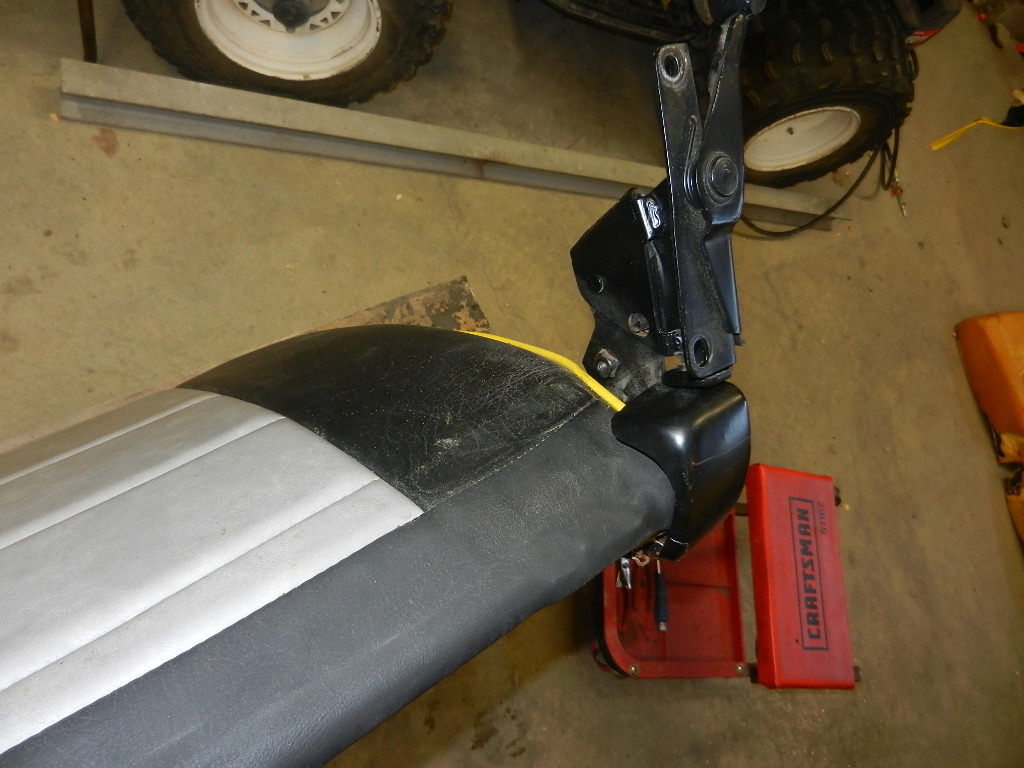
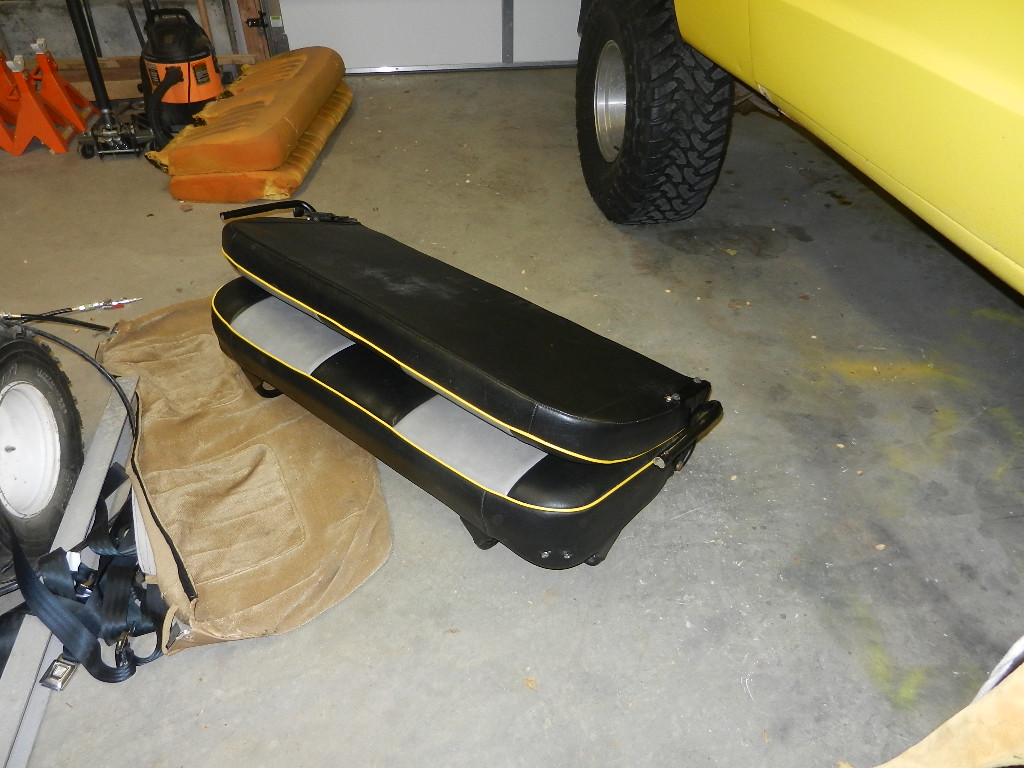
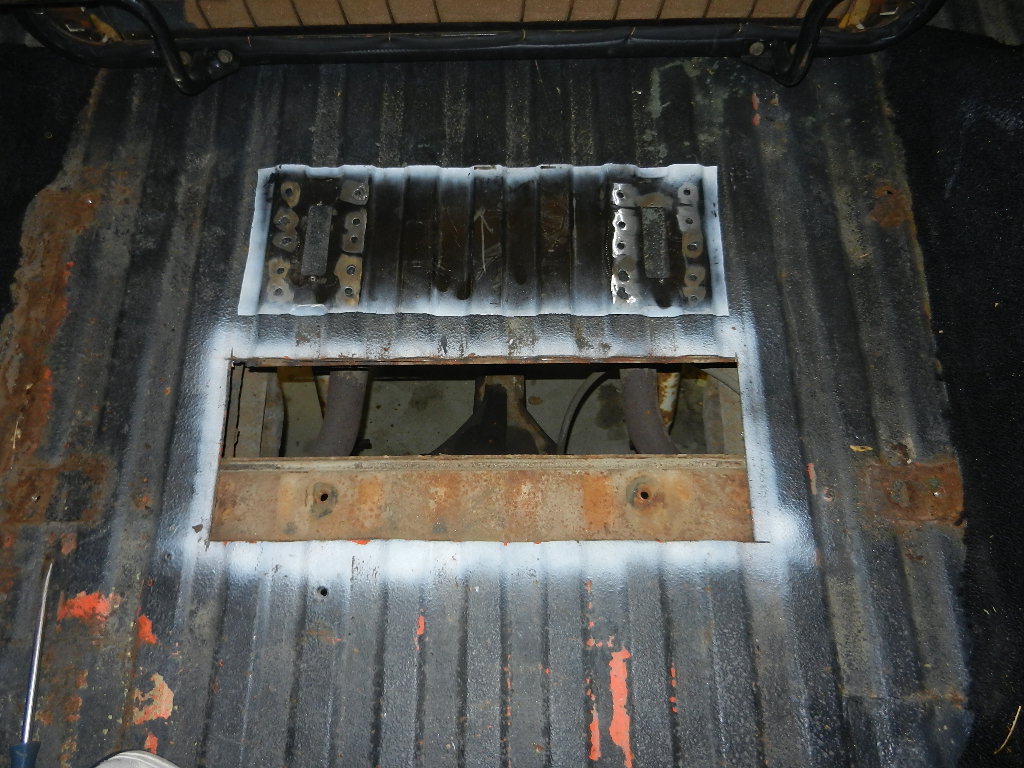
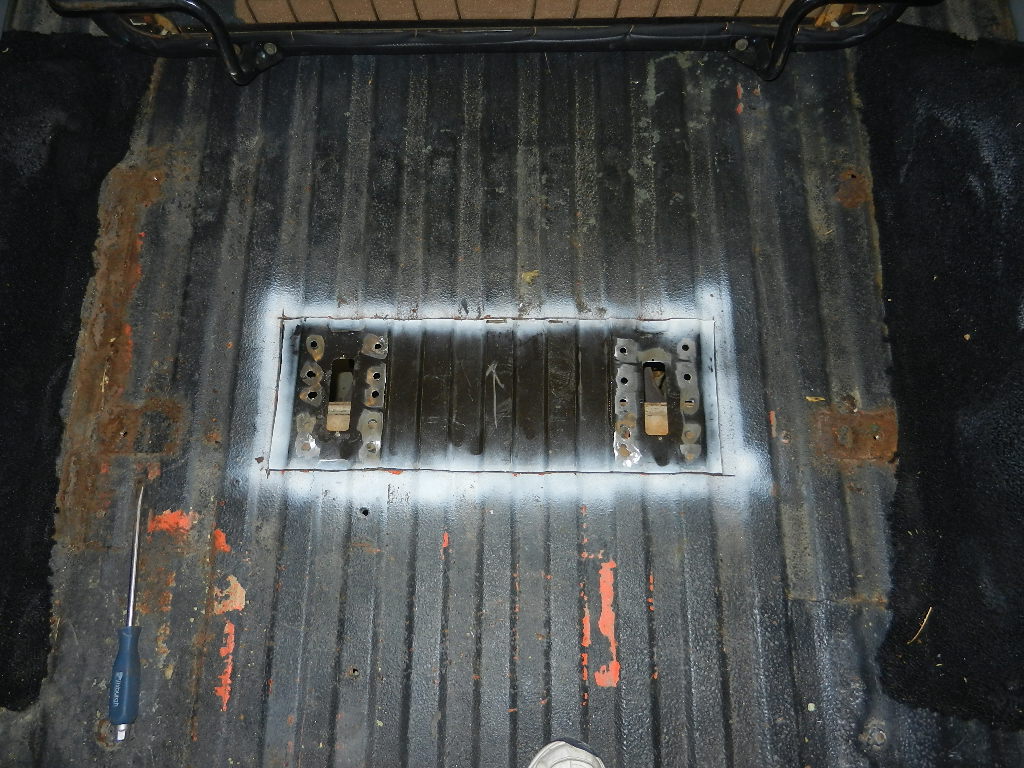
I always wanted to do the rear seat mod to make easier to remove the seat, so I decided to tackle that instead. Since I already had my seats recovered last year, I couldn't just slap in a newer seat, so I modified mine.

add hinges to bottom.
rear_seat_mod_006.JPG


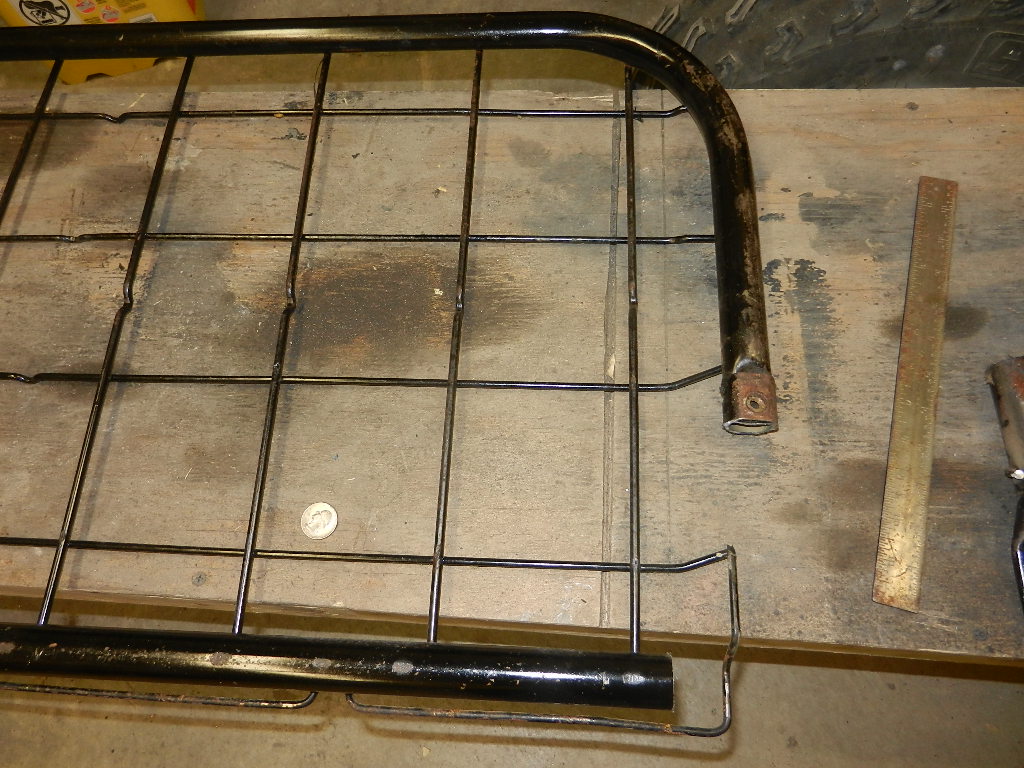
cut corners out of back and switch for corners that fit the hinges.
rear_seat_mod_010.JPG


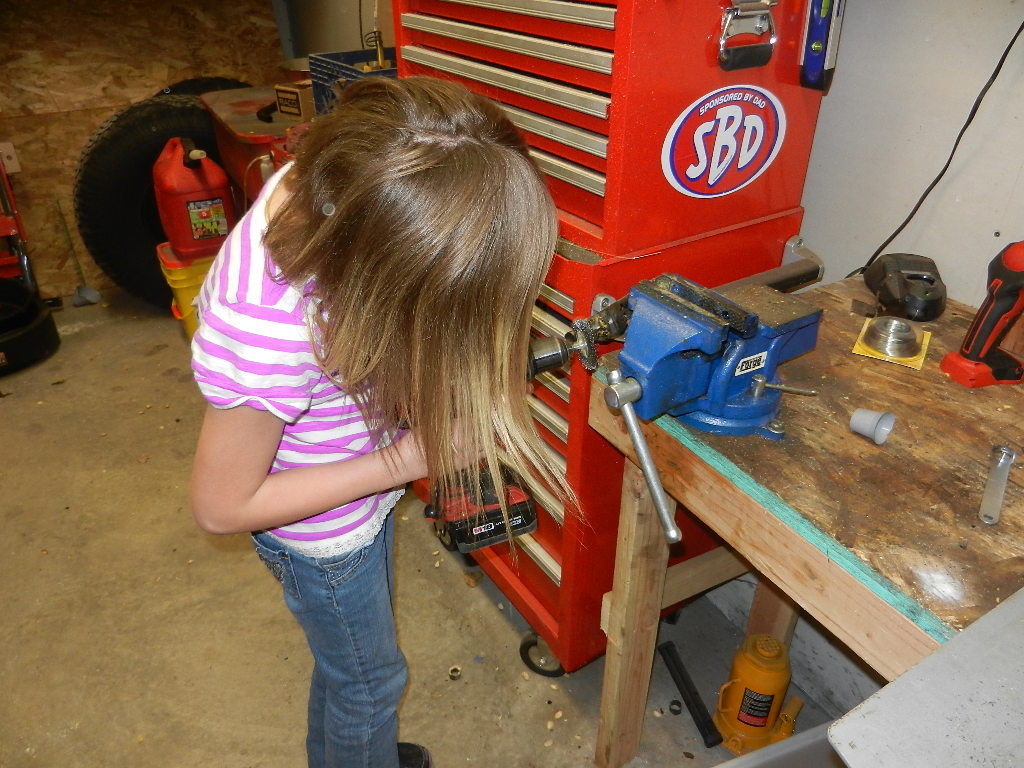
get some help from my daughter cleaning up the parts. :thumb:
rear_seat_mod_011.JPG


finished with seat mods:
rear_seat_mod_013.JPG

rear_seat_mod_014.JPG


started welding in the quick disconnect pockets:
rear_seat_mod_016.JPG

rear_seat_mod_015.JPG


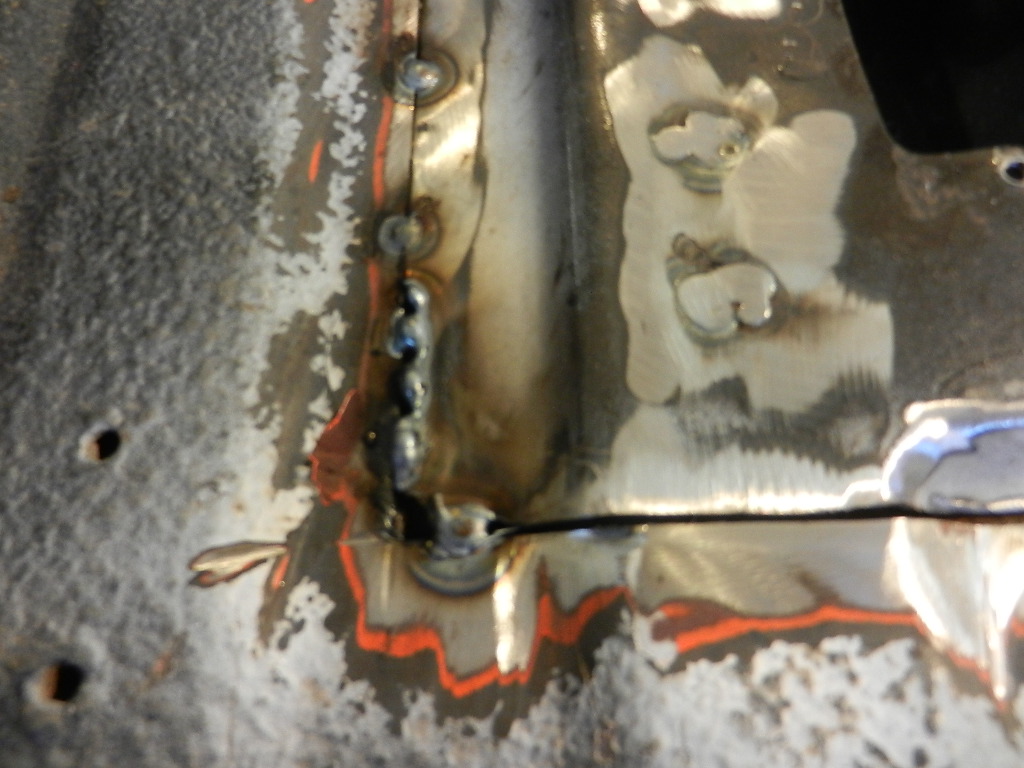
I'm glad I started here because welding sheet metal sucks!
rear_seat_mod_019.JPG


rear_seat_mod_021.JPG


I think I'm getting a bit better, but I'll take any welding hints you guys are willing to pass along.
so far if I'm burning through I turn down the heat and wire speed and if the welds aren't laying flat I turn up the heat.
sometimes when I burn through I think it's because I get ahead of the puddle, if that makes any sense. :confused:

I'm not done with it yet, and it's nothing compared to what a lot of you guys are doing, but it's something. :D
 
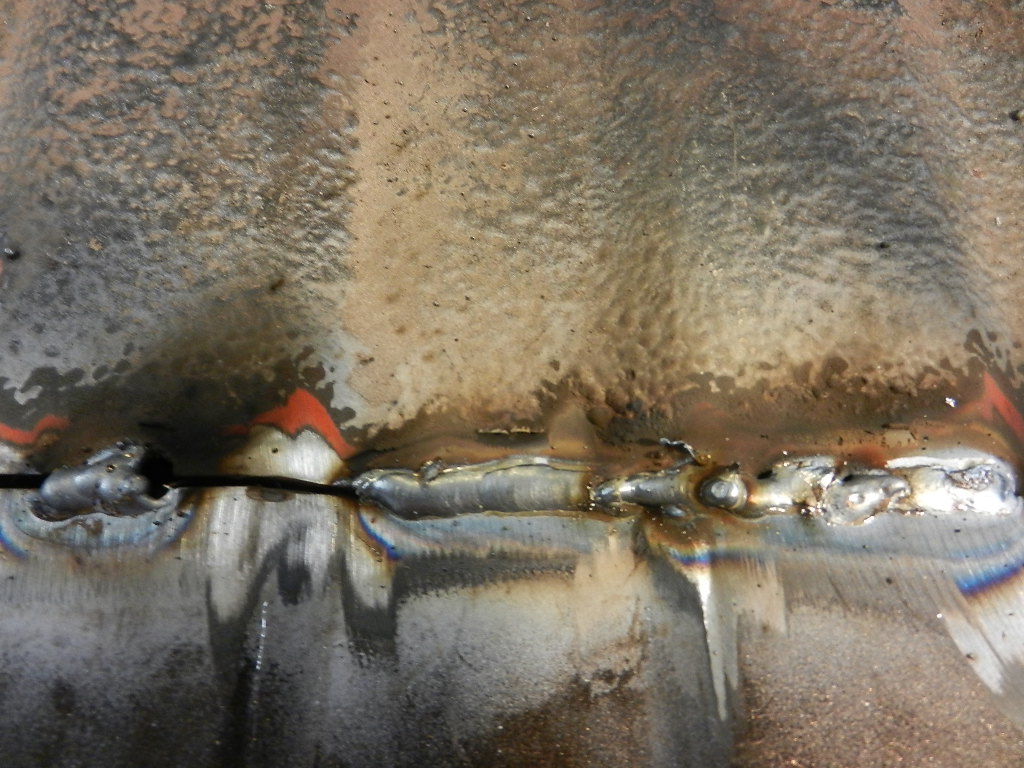
The stitch welds look good on that sheetmetal. The problem appears to be that you tried for a continuous bead. That's a no-no on sheetmetal....... No shortcuts allowed! :)

You have to just keep stitching around the perimeter, adding a weld next to each of the previous ones. I usually try to overlap the existing weld by maybe 1/3 to burn into it a little. This helps prevent burn through because the weld is usually a bit thicker than the sheetmetal is so it tends to be a bit more forgiving. Plus by doing a slight overlap you won't end up with little pinhole gaps between the individual stitch welds.

Keep at it.... Practice is key, there's no way around that.


-G
 
Nice work Ash. If I weren't planning on 4 buckets in mine, I'd be doing this as well in the future.

Like Greg said, have to stitch sheet metal unfortunately. It's time consuming, but otherwise your finished product will look like this ~ even if you can manage to not burn through every couple inches...
 
Nice Mod Ash!! Way to get after it. :waytogo:


Just like the boys said. It's all about tack here, tack there, tack everywhere. Let cool, drink a beer, tack 1/4" from where you started, tack a 1/4' from where you started over there, too.

Just keep moving around the patch with short little bursts of weld till you have a six pack down and a continuous set of weld bumps around your patch.

Then it's all about the Roloc disks for me on the clean up.

It's just a slow process that is nice and relaxing with beer and tunes. :whistle: :woot:
 
thanks guys. for what I'm using the truck for I think this will be a nice "quality of life" mod for me.

as far as the welding goes, I was trying to run about an inch or so bead before moving to a different spot. that seemed to work ok (once I got the heat and wire speed right) in the middle of the panel side and as long as both panels were touching. I had much more problems in the corners and in places where there was a small gap to bridge.

is there a good technique for bridging gaps? I'm trying to build up on one side and just slowly fill it in over several passes but is there some settings I should be changing too that would help?
 
You got lucky welding 1" at a time. You'd be better off "forgetting" that technique now before it becomes a bad habit that you can't break.... when you start doing welding in areas that are more visible you'll have panels that look like wavy Lays.

To bridge a gap, I usually attack it perpendicular (across the gap) with a really shallow gun angle and aim for the metal on the far side of the gap with the wire. As the weld starts, it will grow back towards you and usually will bridge across to the near side of the gap and connect them together. If I can get a few of those in different spots and the two panels didn't shift out of plane I'll go back to welding "along the seam" (parallel to the gap) using the 1/3 overlap technique I described previously. The first stitch weld becomes the basis to build from and the subsequent welds will usually "flow out" to grab the metal on each side of the gap and connect them.

Don't get hasty! If you rush and try to pour too much heat, or do too many of those welds at once, you'll blow through. I usually watch the color of the weld and wait until all the red is gone for a couple seconds before trying to stack another weld in there. Remember, as the metal gets hotter it welds a lot faster.... so the cadence of your welding has to change from when you were welding cold sheetmetal. The trigger pulls generally get a lot quicker as you work your way around that panel.

-G
 
cool, thanks for the help Greg. I'm with ya on the wavy panel too. I've noticed how much the one I'm working on has warped because of it. It doesn't matter on this panel, so I'm glad I started there for sure.
 
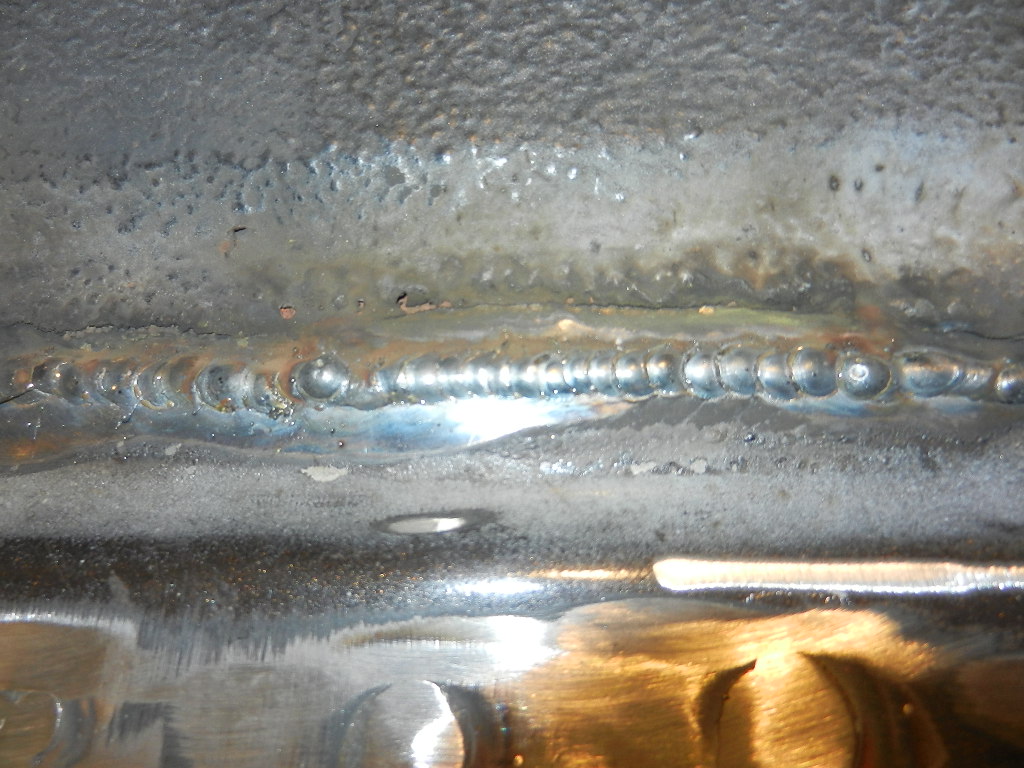
thanks again for the welding tips all, it's made a huge difference!

welding_1.JPG


once I got the hang of tack welding and letting the red go away before moving on to the next one, I found that I was able crank up the voltage a bit and get a smaller, flatter weld with better penetration.

really appreciate it. :thumb:
 
Nicely done brother!

That's what this site is all about. :waytogo:


-G
 

Latest Posts

Top Bottom